|
1
|
|
|
2
|
- Lizzie—“Angel in the House”
- “Placid,” “content,” “like a royal virgin town”
- Resists temptation
- Content with domestic duties
- Laura—“Fallen Woman”
- “Like a leaping flame,” a “restless brook,” a “vessel at launch when
its last restraint is gone”
- Succumbs to temptation
- “Sick” of domestic duties
|
|
3
|
|
|
4
|
- Forbidden Fruit
- Forbidden experience (lines 40-45)
- Illicit sexuality—erotic imagery, punishment typical of fallen women
(lines 141-162)
- Goblin Men
- Temptation of “evil gifts” (line 66)
- Men who sexually seduce and abandon women
|
|
5
|
|
|
6
|
- Laura’s golden curl
- Symbol of femininity, female sexuality
- Item of sale—woman selling herself on sexual “market”
|
|
7
|
|
|
8
|
- Lizzie as Christ figure
- Deliberately enters the realm of evil (the glen)
- Passively endures attack
- Sacrifices herself for her sister’s redemption (lines 396-421)
|
|
9
|
- Lizzie as “female hero”
- Imagery of attack is suggestive of rape
- Heroism depicted in erotic terms (lines 408-421, 464-474, 491-523)
- Tension between spirituality and sensuality
|
|
10
|
|
|
11
|
- Reinforces Victorian domestic ideal
- Lizzie’s heroism is based in self-denial
- Lizzie and Laura become wives and mothers (lines 543-567)
|
|
12
|
- Critiques Victorian domestic ideal
- Laura is redeemed
- Laura’s longing is sympathetically portrayed
- Erotic imagery suggests intense desire and dissatisfaction with
self-denial
|
|
13
|
|
|
14
|
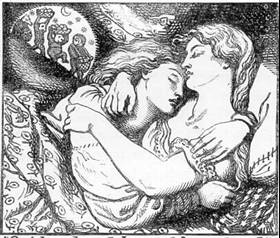
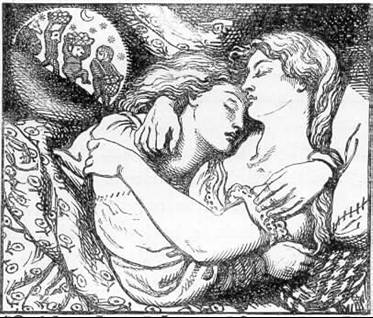
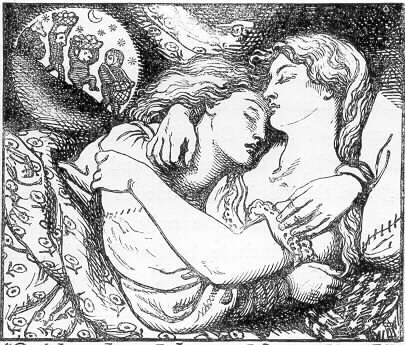
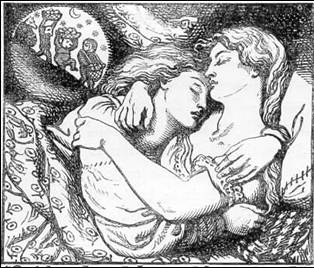
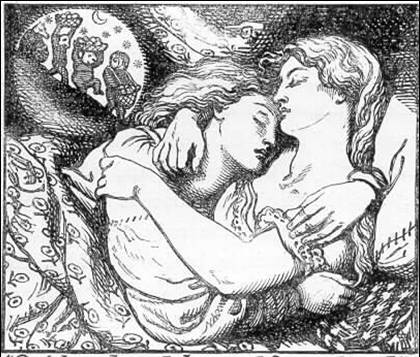
- Erotic imagery of the sisters’ relationship, message of female
solidarity
- No biographical evidence that Rossetti was lesbian
- Subconscious expression of lesbian desire?
|
|
15
|
- Repressed sexuality of Victorian culture emerging in “safe” imagery of
sisterly affection
- Expresses longing and deprivation that accompany the Victorian domestic
ideal
|

 Notes
Notes