|
|
|
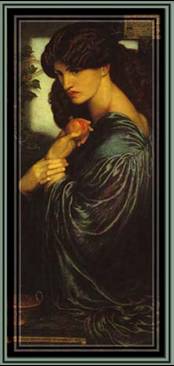
Proserpine
by Dante Gabriel Rossetti
|
|
The above
painting also contains connotations of the “fallen woman.” It depicts Proserpine or Persephone, the
daughter of the Greek fertility goddess and earth mother Demeter. Persephone was kidnapped by the god of the
underworld and forced to remain in Hades as his bride, although she was
allowed to return to the earth annually for a short visit. Her return heralded the coming of spring.
|
|
She is depicted
eating a pomegranate, the forbidden fruit of Hades. Consuming the fruit condemned her to an
eternity in the underworld. Compare
this depiction with Laura in “Goblin Market.”
Note that the painting (as well as the poem) uses sensual imagery—the
loose-flowing gown and hair, the full red lips, and the ripe fruit from which
the woman has just taken a bite. Does
the sensual, erotic imagery of Christina Rossetti’s poem conflict with the
moral message of renunciation and self-sacrifice?
|