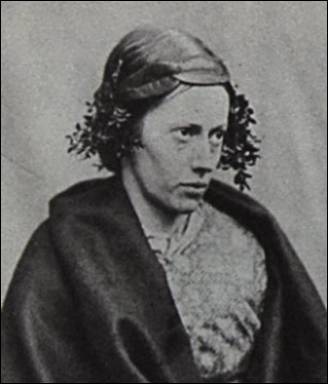
| This is Dr. Hugh Diamond's
photograph of a young female patient taken during the 1850's in an asylum for
the insane. The image, reproduced by Elaine Showalter in "Representing
Ophelia," is Plate 32 in The Face of Madness: Hugh W. Diamond and the
Origin of Psychiatric Photography, ed. Sander Gilman. The image of the
sexually obsessed Ophelia had so thoroughly saturated the popular imagination
that the fictional character and the real madwoman had become one, as in this
photograph where the young woman has been garlanded in flowers and leaves for
her portrait. |
|
| "The iconography of the
Romantic Ophelia" was so fixed in nineteenth-century culture that,
according to Showalter, one way for a young woman to express her
psychological anguish was to imitate Ophelia, and "where the women
themselves did not willingly throw themselves into Ophelia-like postures,
asylum superintendents, armed with the new technology of photography, imposed
the costume, gesture, props, and expression of Ophelia upon them" (86).
As Oscar Wilde had observed, life imitates art--at least in the incident of
this young woman. |