|
1
|
|
|
2
|
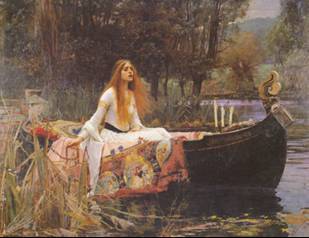
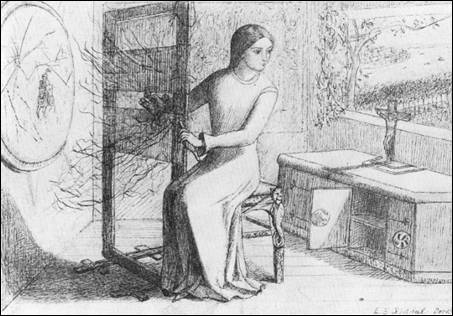
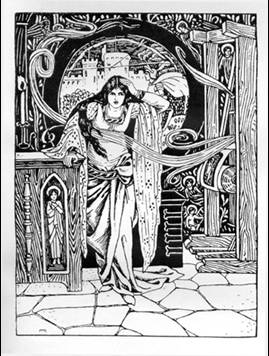
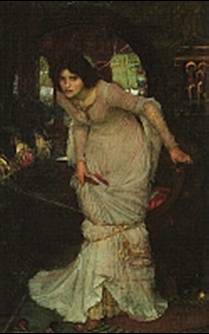
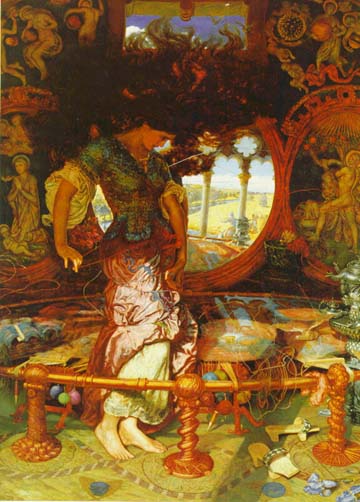
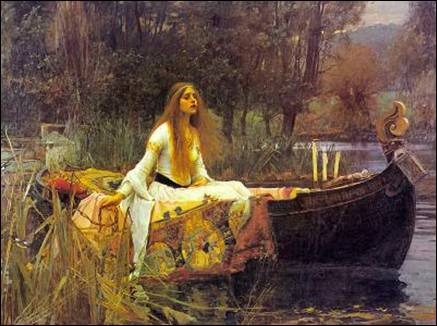
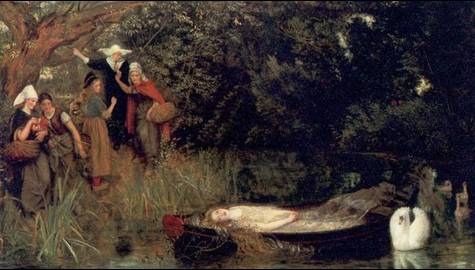
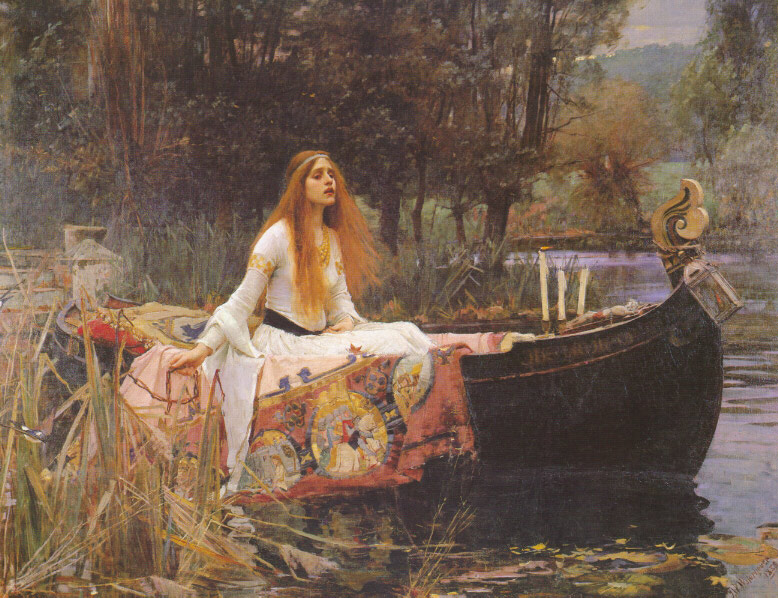
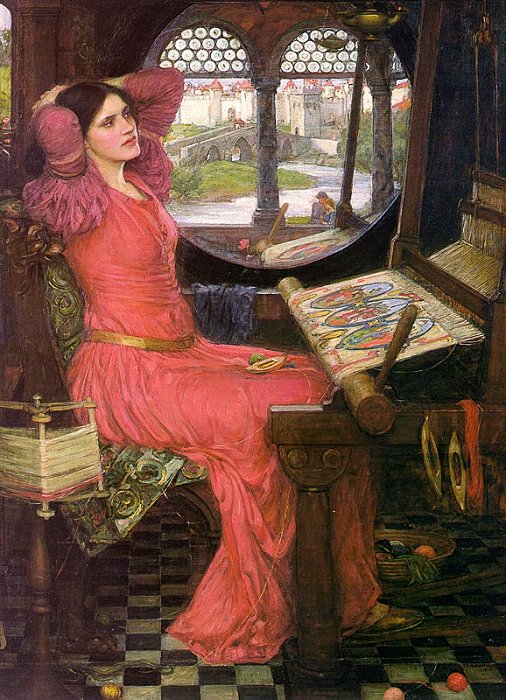
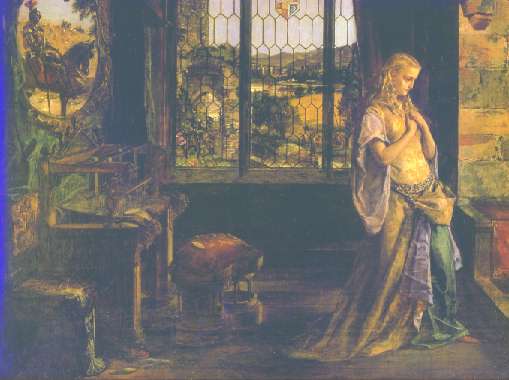
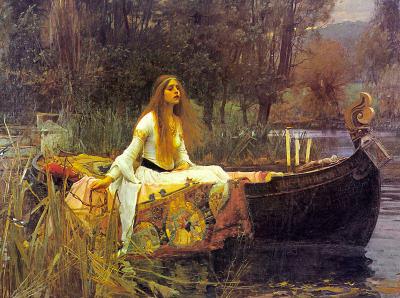
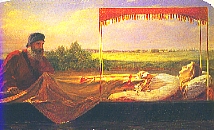
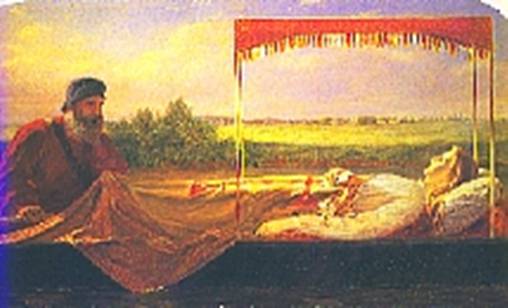
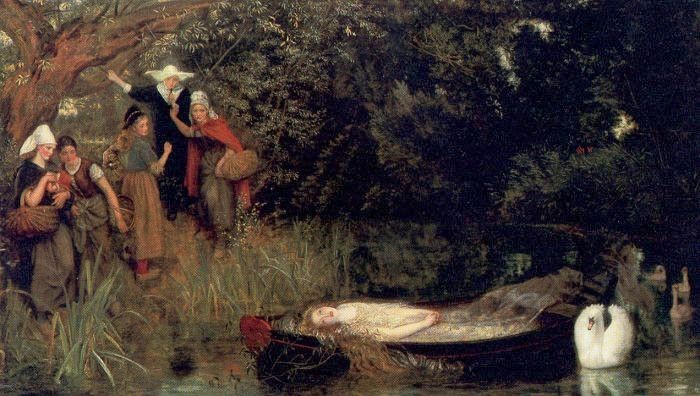
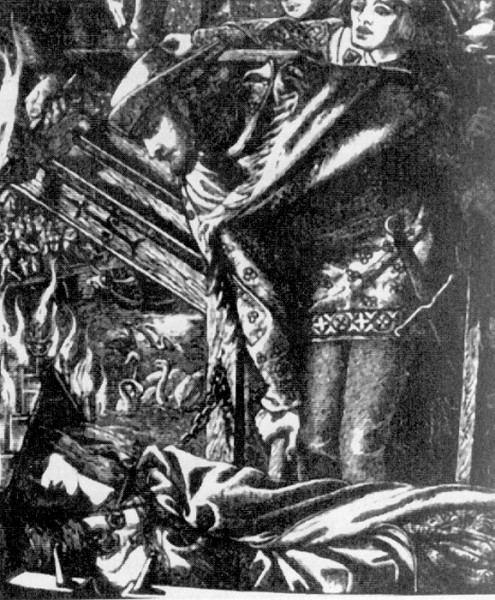
- Based on medieval legend of Elaine, the Lily Maid of Astolat.
- Elaine died of love for King Arthur's greatest knight, Sir Lancelot.
- Illicit affair of Lancelot and Queen Guinivere led to civil war and
destruction of Camelot.
- Elaine's death foreshadowed destruction of Camelot.
|
|
3
|
- Arthur's ideal kingdom Camelot is analogous to Victorian society
threatened by loss of traditional beliefs.
- Tennyson's Lady could represent the artist's role in society.
- tension between "private and public voices" in art
- desire to create art as a private expression of beauty/emotion vs.
desire to express a social message in art
|
|
4
|
- Ballad—medieval poetic form, intended to be sung
- Uses repetition of words and sounds (alliteration and assonance) for
dramatic effect
- Repetition enhances sense of monotony, imprisonment, stagnation
- Parts 1 & 2—Isolation/Imprisonment
- Parts 3 &4—Active Participation
|
|
5
|
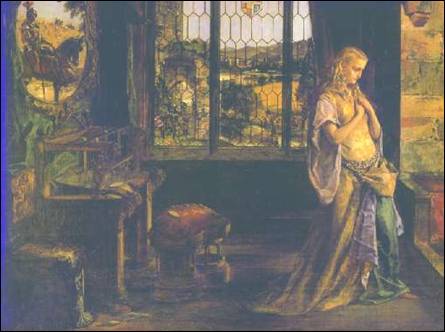
- Island of Shalott—stillness, remoteness
- Lady’s castle/tower—isolation, imprisonment
- River—activity, passage of life/time
- Road to Camelot—involvement in human life
|
|
6
|
|
|
7
|
|
|
8
|
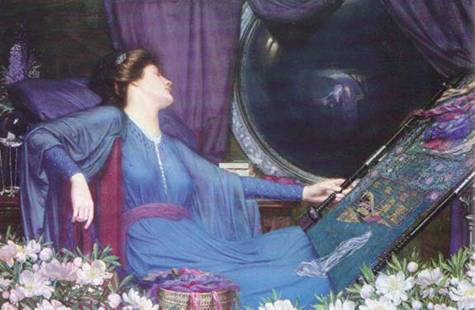
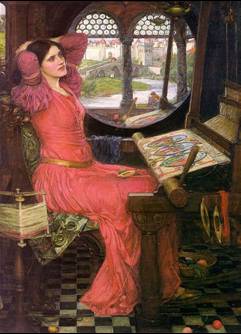
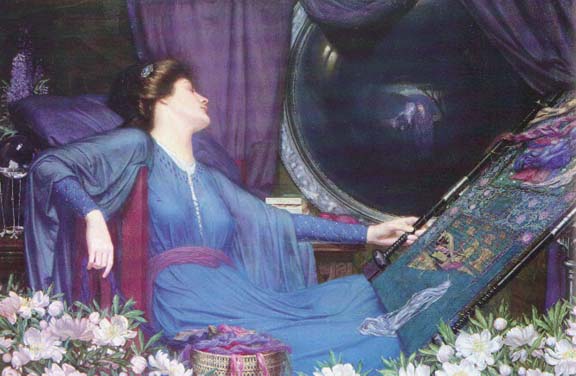
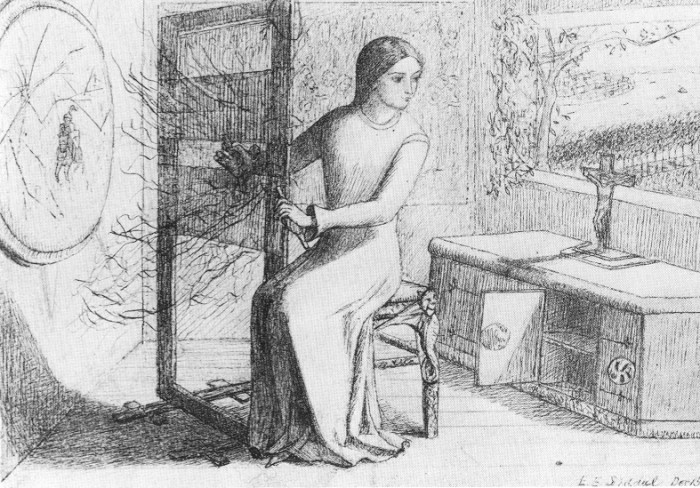
- Weaving—“a magic web”
- Symbol of art
- Imaginative reflection of “real world”
- Creative and destructive (can entrap the artist)
- Mirror—reflects “shadows of the world”
- Distancing effect of artist’s perception of reality
- Provides shadows instead of substance
|
|
9
|
|
|
10
|
- The Curse—do not “look down to Camelot”
- Contaminating effect on art of involvement in mundane life
- Concerns for audience and social relevance can ruin an artist’s
personal imaginative expression
|
|
11
|
|
|
12
|
|
|
13
|
|
|
14
|
|
|
15
|
- Sir Lancelot—the blind, shallow audience
- Images of dazzling light
- Images of superficial materialism
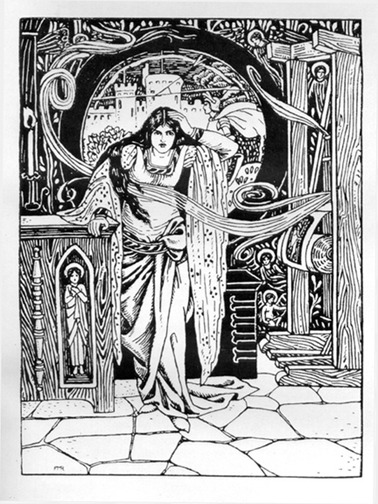
- The Lady—the withdrawn, misunderstood artist
- Images of creativity and imagination
- Images of imprisonment and stagnation
|
|
16
|
|
|
17
|
|
|
18
|
|
|
19
|
|
|
20
|
- You are listening to Celtic singer Loreena McKennitt's musical version
of Tennyson's poem
- How do changes in rhythm, tone, and vocals from one section of the song
to another embody the poem's thematic duality--the conflict between a desire
to withdraw from the world into artistic isolation and a desire to
participate in life and community?
|

 Notes
Notes