
Common Mistakes to Avoid When Choosing a Graduate School
Avoid the most common mistakes when choosing a graduate school. Learn how to evaluate program fit, funding options, faculty support, and career outcomes so you can make a confident, informed decision.

How to Choose the Right Graduate School for Your Goals
Choosing a graduate school is one of the most important academic and financial decisions you will make. The right program should support your research interests, provide strong mentorship, offer clear career outcomes, and fit within your budget.
By understanding what to look for—and what to avoid—you can make a confident, informed decision.
Mistake #1: Choosing a Graduate School Based Only on Rankings
One of the most common mistakes is selecting a program based solely on rankings.
While rankings can provide a general overview of reputation and research output, they do not always reflect what matters most to you as a student. Factors like faculty mentorship, specialization, class size, and research opportunities often have a greater impact on your experience.
A highly ranked program may not offer the specific focus you need or the level of support you expect. In many cases, a smaller or lesser-known program can provide more hands-on experience and closer relationships with faculty.
How to avoid this mistake:
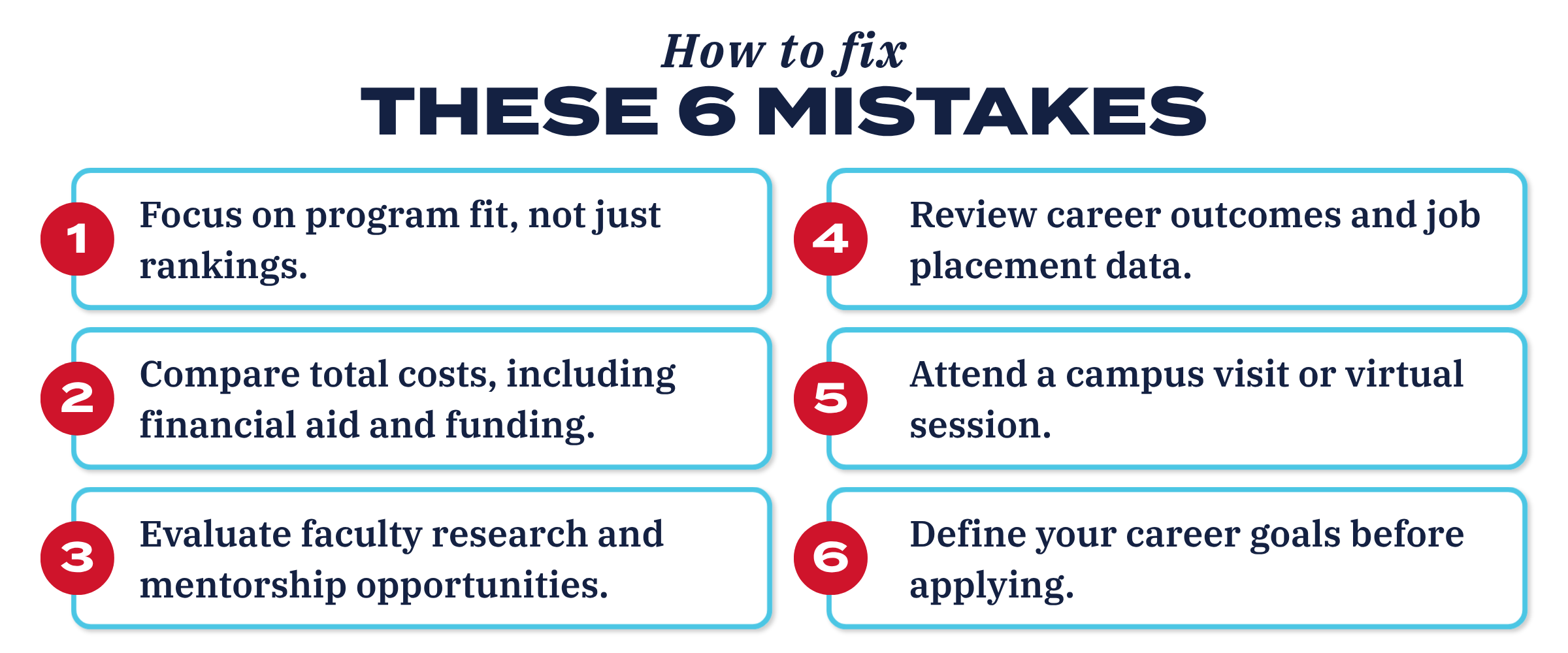
Use rankings as a starting point, but prioritize program fit, faculty access, and available resources when making your decision.
Mistake #2: Ignoring Program Costs and Funding Options
Another major mistake is underestimating the true cost of graduate school.
Tuition is only one part of the equation. Additional expenses such as fees, books, housing, and living costs can significantly increase the total investment.
Many students also overlook funding opportunities like scholarships, assistantships, and tuition waivers, which can greatly reduce out-of-pocket costs.
How to avoid this mistake:
Look at the full financial picture.
Ask programs:
- What funding options are available?
- What does the stipend cover?
- How much tuition is waived?
Understanding these details will help you compare programs more accurately and avoid unexpected financial strain.
Mistake #3: Not Evaluating Faculty and Research Fit
Choosing a program without researching faculty is a critical mistake.
Faculty mentorship plays a central role in your graduate experience. If your research interests do not align with available faculty, you may struggle to find guidance, support, or meaningful opportunities.
Strong faculty fit often leads to better research outcomes, stronger recommendations, and more career opportunities after graduation.
How to avoid this mistake:
Review faculty profiles, read recent publications, and reach out to potential advisors. Speaking with current students can also give you insight into mentorship styles and department culture.
Mistake #4: Overlooking Career Outcomes and Job Placement
Graduate school is not just about earning a degree—it is about what happens after you graduate.
Some programs do not clearly communicate job placement rates, internship opportunities, or alumni outcomes. Ignoring these factors can leave you uncertain about your return on investment.
According to the Bureau of Labor Statistics, individuals with advanced degrees tend to have higher median earnings and lower unemployment rates than those with only a bachelor’s degree. However, outcomes can vary significantly by program and field.
How to avoid this mistake:
Research:
- Job placement rates
- Internship opportunities
- Alumni networks
- Career support services
Choose a program that demonstrates strong, transparent career outcomes.
Mistake #5: Skipping Campus Visits or Virtual Information Sessions
Relying only on a website or brochure can lead to an incomplete understanding of a program.
A graduate program may look ideal on paper but feel very different when you interact with faculty, staff, and students. Skipping a visit—whether in person or virtual—means missing valuable insight into the program’s culture and environment.
How to avoid this mistake:
Attend a campus visit, virtual tour, or live Q&A session. These experiences can help you evaluate whether the program feels like the right fit.
Mistake #6: Applying Without Clear Career Goals
Applying to graduate school without a clear sense of direction is a common but costly mistake.
Without defined goals, it is easy to choose a program that does not align with your long-term plans. This can lead to wasted time, money, and effort.
How to avoid this mistake:
Before applying, ask yourself:
- Why do I want a graduate degree?
- What skills do I want to gain?
- What career path am I working toward?
Clear goals will help you choose a program that supports your future.
Frequently Asked Questions About Choosing a Graduate School
How do I choose the right graduate school?
Choose a graduate school by evaluating program fit, faculty expertise, funding options, and career outcomes. The best program aligns with your academic interests and long-term goals.
Do graduate school rankings matter?
Rankings can be helpful, but they should not be the deciding factor. Program fit, mentorship, and available resources are often more important.
How much does graduate school cost?
The cost of graduate school varies widely depending on the program and funding. In addition to tuition, consider fees, housing, and living expenses. Many programs offer scholarships, assistantships, and tuition waivers.
What should I look for in a graduate program?
Look for strong faculty alignment, clear career outcomes, funding opportunities, and a supportive learning environment.
Explore Graduate Programs That Fit Your Goals
Choosing the right graduate school becomes much easier when you focus on what matters most: fit, affordability, and career outcomes.
- At the University of Mississippi, graduate programs are designed to support your academic interests while providing funding opportunities, faculty mentorship, and career-focused outcomes.
Explore available programs to find the one that aligns with your goals and sets you up for long-term success.
Final Thoughts
Mistakes in the graduate school search are common—but they are also avoidable.
By focusing on program fit, understanding costs, researching faculty, and evaluating career outcomes, you can make a decision that supports both your academic journey and your future career.
Taking the time to choose carefully now can lead to lasting benefits for years to come.