
Faculty Learn to Encourage Active Learning at Campus Institute
Mobile Institute on Scientific Teaching teaches Ole Miss faculty active learning strategies
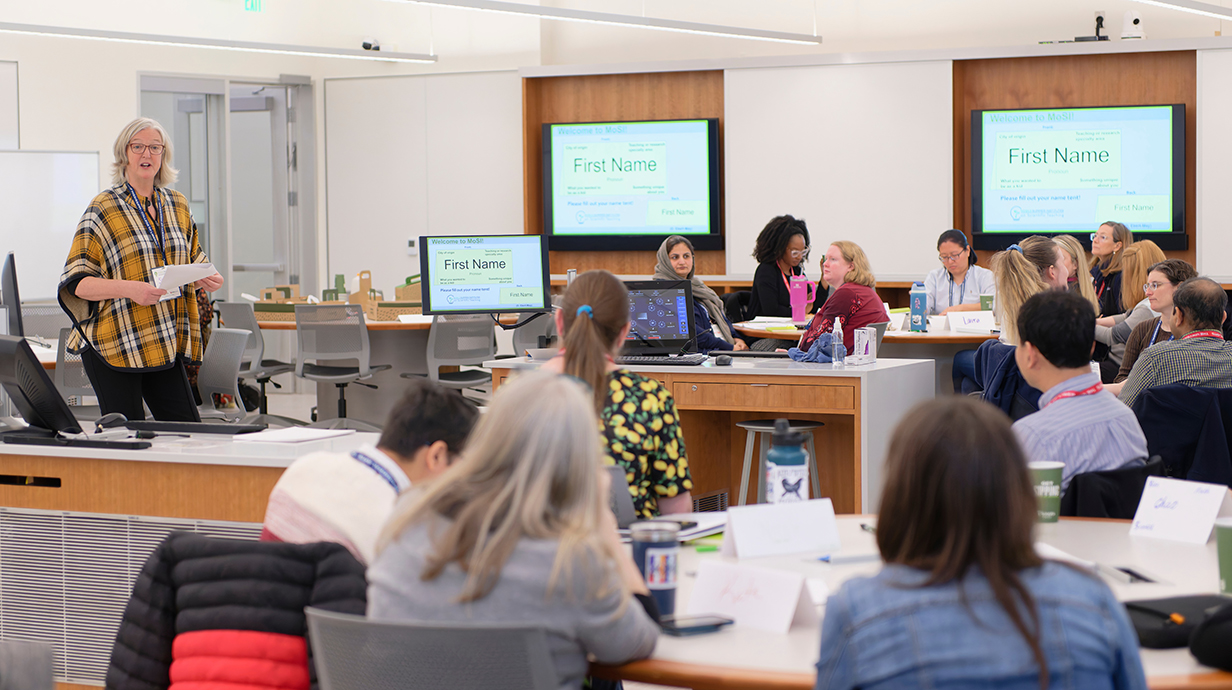
OXFORD, Miss. – As students enjoyed the last of their winter holiday break, 33 University of Mississippi faculty members honed their teaching skills at the university's inaugural Mobile Institute on Scientific Teaching.
The College of Liberal Arts and Center for STEM Learning brought the institute, known as MoSI, to campus using funding from a Howard Hughes Medical Institute IE3 grant.
The workshop ran Jan. 13-17 in the Jim and Thomas Duff Center for Science and Technology. Participants gained a variety of teaching strategies, each tailored to create a more student-centered classroom and encourage active learning.
Beckie Symula, associate instructional professor of biology, has experience as a participant and facilitator of scientific teaching at multiple institutions. She was a key team player in bringing the MoSI experience to campus.
"I wanted the experience to help faculty build community with folks across STEM disciplines," she said.
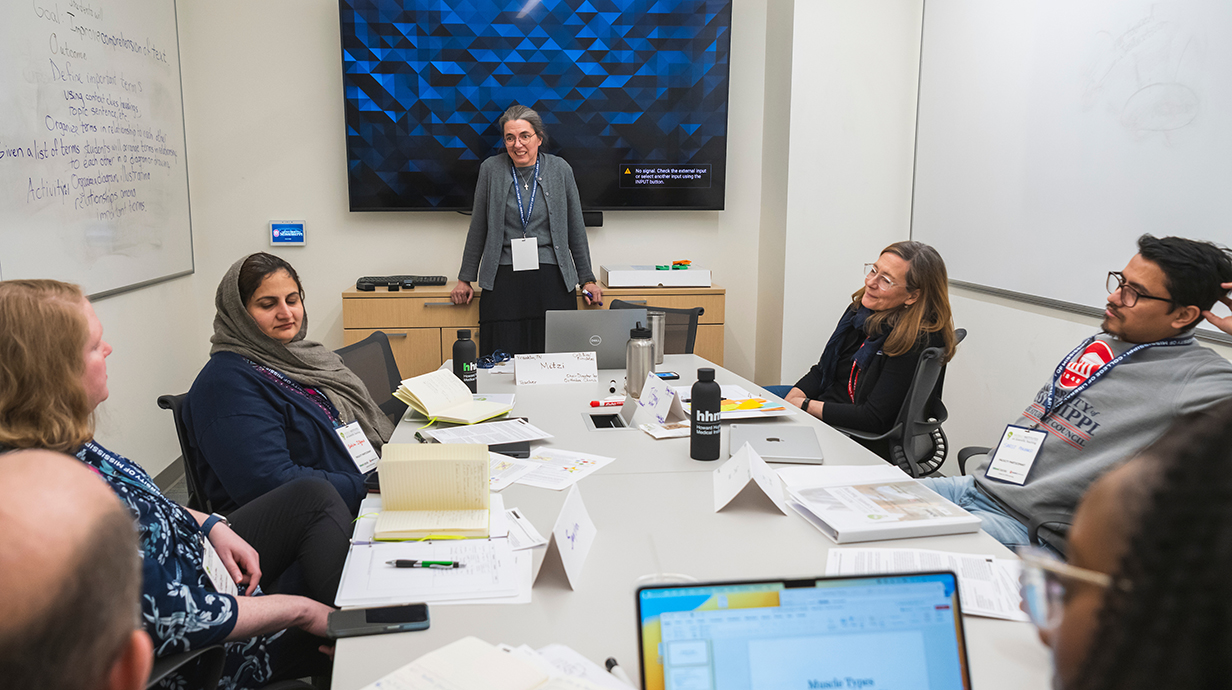
Faculty members work in small groups on teaching activity projects at Mobile Institute on Scientific Teaching event. Photo by Srijita Chattopadhyay/Ole Miss Digital Imaging Services
Susan Pedigo, professor of chemistry and biochemistry who trained at a mobile institute two years ago, was also part of the team that helped bring the institute to Ole Miss.
"I loved the multifaceted aspect of the workshop focusing on creating a cooperative environment with colleagues and engaging the practice of backwards design to communicate complex topics in the classroom," she said.
Kirsten Dellinger, associate dean for access and strategic initiatives in the College of Liberal Arts, said she gained valuable insights from the sessions.
"One of the fundamental elements of the program was thinking about backwards design and the importance of peer feedback on teaching," Dellinger said.
Backward design challenges educators to identify what they want their students to learn and then plan goals and ways to measure that learning, she explained.
Instead of planning a lecture, participating faculty members designed activities to engage students and develop the desired skills. Feedback from peers helped improve their lessons with active learning in mind.
Research shows that active learning and backwards design increases how well the students learn and remember what they were taught, Dellinger said. It also improves grades over time and lessens the gap between students who have lots of resources and those who do not.
Biology instructor Laura McLellan applied for the institute because she said the classroom is meant to be engaging to students.
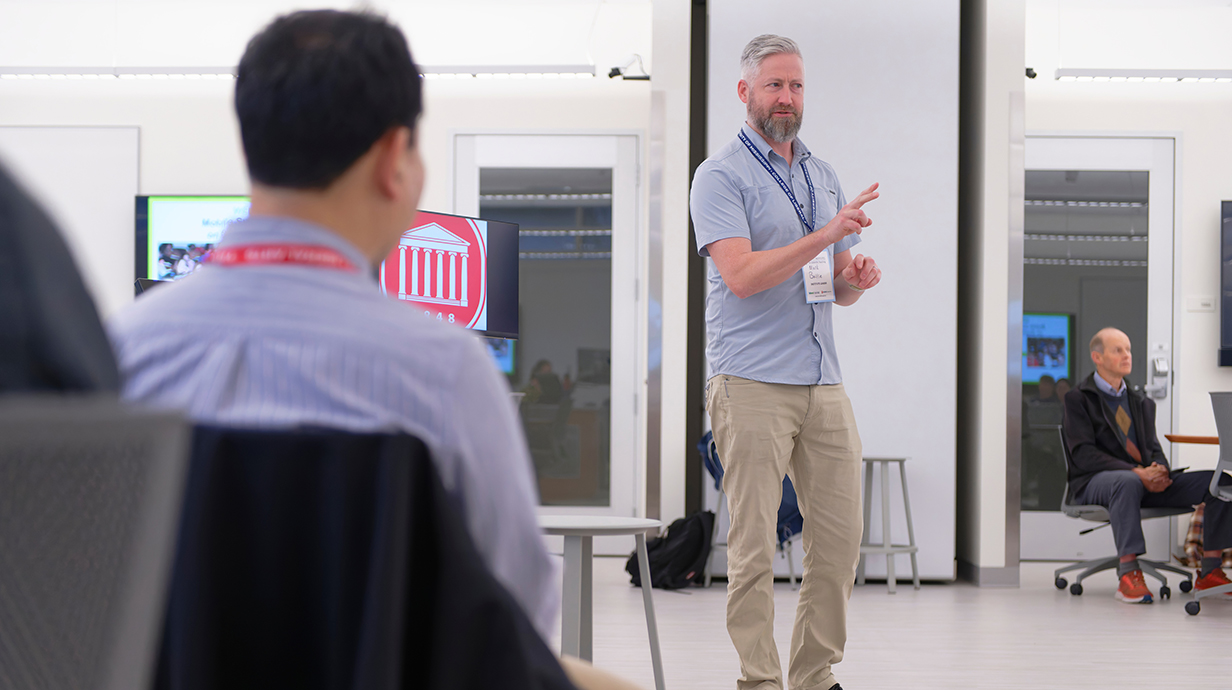
Mark Baillie, assistant professor of chemistry and director of the STRIVE program at the University of Arkansas at Little Rock, discusses goals and concepts at the Mobile Institute on Scientific Teaching at UM. Photo by Hunt Mercier/Ole Miss Digital Imaging Services
"Any way that I can grow my knowledge of that or add more tools to my tool belt of being engaging and create more active learning, then I want to do it," she said.
"(The training) made me think how can I make my class more engaging for students – what lab or hands-on task can I have them investigate, rather than me just lecturing."
Tim Menzel, instructional assistant professor of biology, wanted to participate in the sessions because he is teaching two sections of an active learning class this semester.
"MoSI gave me an opportunity to practice the process with expert guidance and peer feedback," he said.
Sixue Chen, biology chair and professor of biology, participated to learn about the innovative teaching approaches and techniques. He also wants to encourage faculty.
"I want to recognize and incentivize faculty effort in developing evidence-based active learning activities and implementing them in their classrooms and improve our teaching evaluation processes," he said.
Dellinger hopes that faculty participants take what they gained back to their classrooms by picking an aspect of their instruction and making it more student-centered using active learning techniques. She and her team plan to work with MoSI participants to build an ongoing STEM learning community at Ole Miss.
After completing their training, participants received the National Institute for Scientific Teaching designation of scientific teaching fellow, and those who helped lead the program were designated as scientific teaching mentors.
The committee wanted to celebrate the importance of teaching and what it means to students, said Valeria Ross, project manager for access and strategic initiatives for the College of Liberal Arts.
"While we're a research institution, teaching is a big part of our core reason for being because we want our students to be successful," she said.
Top: Kirsten Dellinger (left), associate dean for access and strategic initiatives in the College of Liberal Arts, welcomes participants to the Mobile Institute on Scientific Teaching in the Jim and Thomas Duff Center for Science and Technology. Photo by Hunt Mercier/Ole Miss Digital Imaging Services
By
Marisa C. Atkinson
Campus
Published
February 03, 2025