
Fellowship Backs UM Student's Cancer Drug-Delivery Research
Funding supports Kenneth Hulugalla's effort to improve cancer treatments
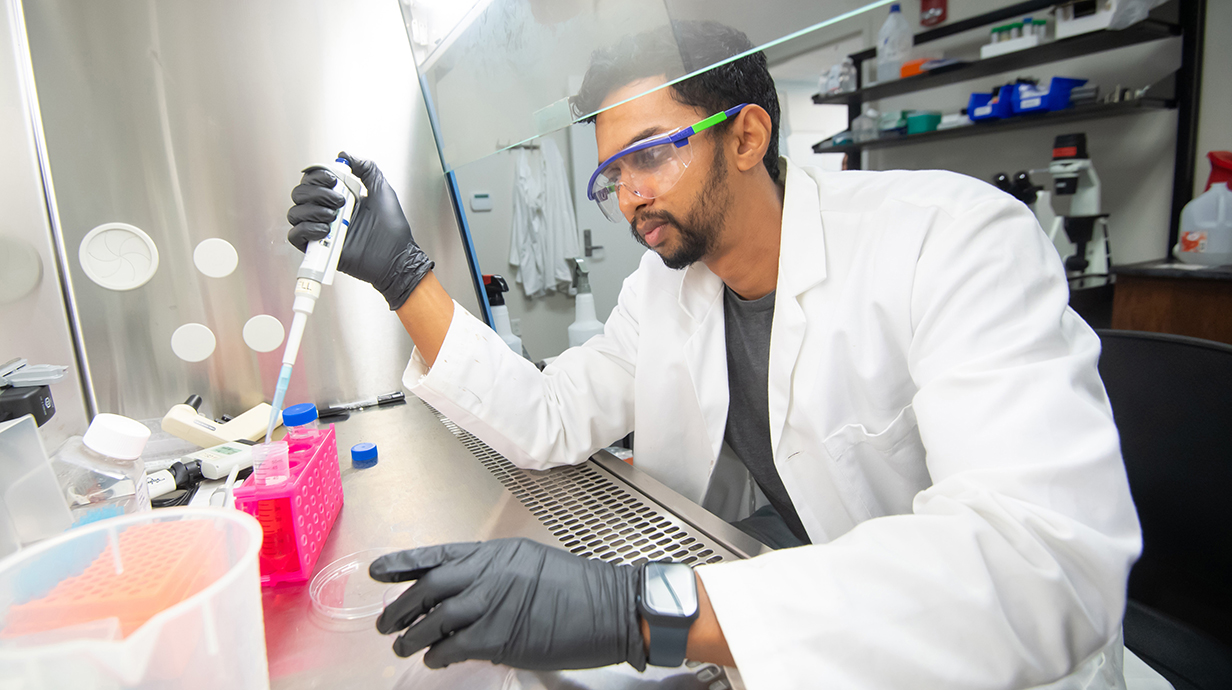
OXFORD, Miss. – The PhRMA Foundation has awarded University of Mississippi graduate student Kenneth Hulugalla its Predoctoral Fellowship in Drug Delivery, which will support his research to develop new ways to get cancer-fighting medications to tumors.
The Pharmaceutical Research and Manufacturers of America Foundation offers up to $30,000 per year to students completing their doctoral degrees. Hulugalla, a fourth-year biomedical engineering doctoral candidate from Kandy, Sri Lanka, is the first Ole Miss student to receive the fellowship.
"The foundation looks for projects that could actually make it to clinics if they get the funding to do that," Hulugalla said. "I really consider it a privilege to be awarded the fellowship because it's reinforcement from people who brought impactful drugs into the market, and it's rewarding to see that the work you're doing matters."
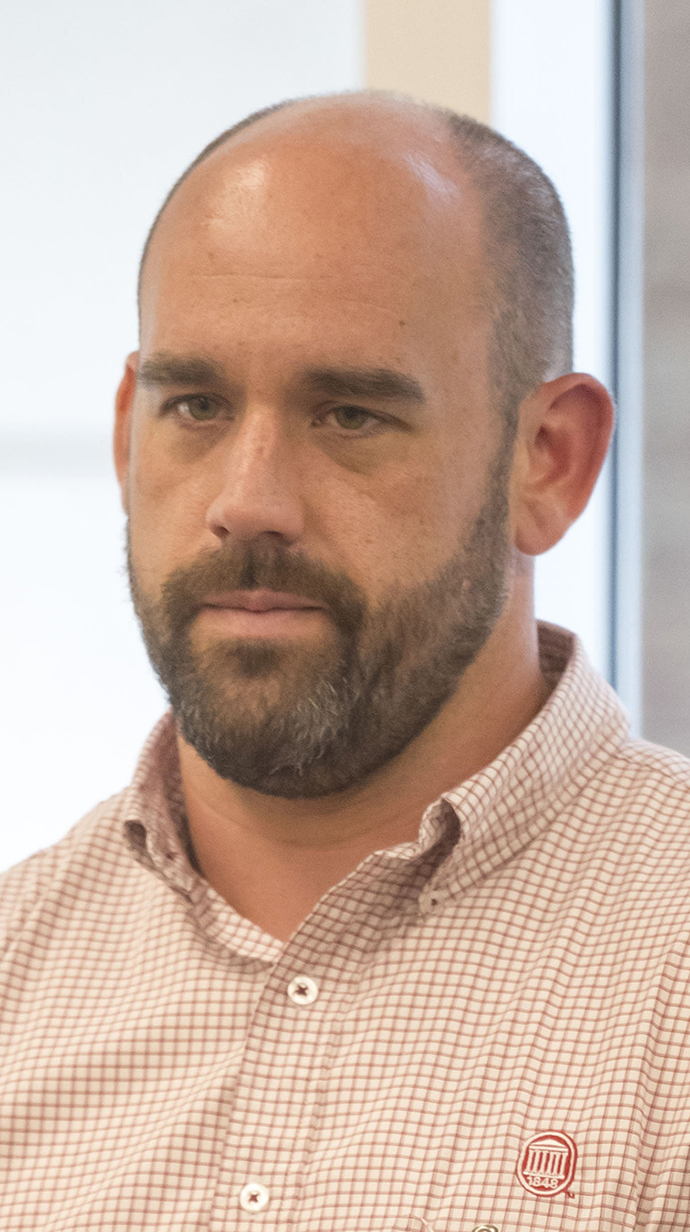
Thomas Werfel, associate professor of biomedical engineering, is Hulugalla's research adviser and supported his application for the fellowship.
"This is a very competitive national fellowship, only given to a handful of graduate students working in the field of drug delivery each year," he said. "Kenneth's recognition as a PhRMA fellow is a major recognition of his talent, excellent work to date and potential to be a leader in this field of research."
Hulugalla's research focuses on delivering cancer medication directly to tumor cells in particularly aggressive cancers, such as triple-negative breast cancer. In 2024, Hulugalla and Werfel published research showing that nanoparticles coated in a sugar-like substance can more effectively deliver cancer-fighting medication.
"The first part of our research found that when we use these sugar molecules like glucose, they bypass immune system recognition, and they can make their way to the tumor," he said. "But the problem that we encountered was that every human is so different.
"Based on your disease state, your age, your sex – a number of factors – the composition of proteins in each individual person's body is going to be different. That also affects how the body reacts. If we're making a one-size-fits-all carrier, that's usually not the best solution."
Hulugalla and Werfel are planning to collaborate with the University of Mississippi Medical Center and oncology clinics to use real patient serum – fluid in the blood that does not include blood cells or clotting proteins – to study different protein combinations. Their work could lead to cancer medication that is tailored to fit the person who needs it.
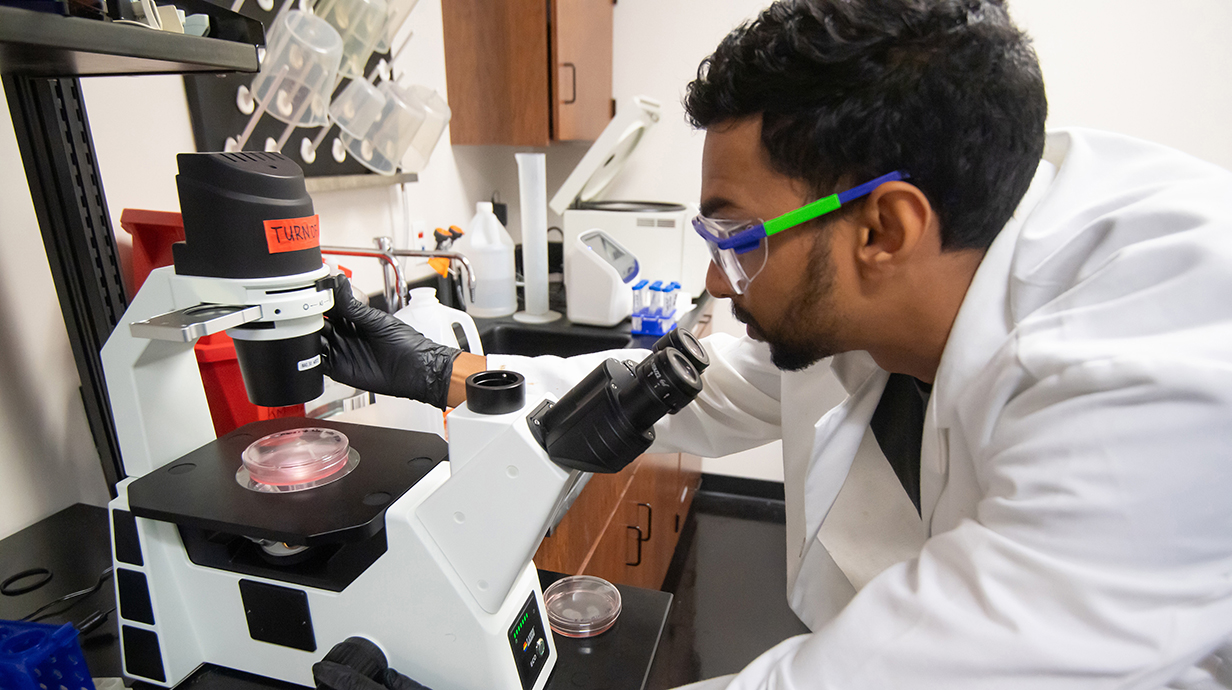
Kenneth Hulugalla works in researcher Thomas Werfel's lab. Photo by Kevin Bain/Ole Miss Digital Imaging Services
"This could be a major improvement because all trials to date have used a one-size-fits-all approach to choosing materials to deliver drugs to a set of patients," Werfel said. "We believe that the variability between patients is one of the major reasons that the effectiveness of the materials varies so much.
"I believe Kenneth's project was chosen because it does truly represent a paradigm shift in how materials are designed in a patient-specific manner to give the best possible chance of clinical success."
Triple-negative breast cancer is one of the most aggressive forms of cancer. If the researchers can successfully find ways to address it, they could begin to use those strategies in other cancers, too.
"When people say, 'We're curing cancer,' it's really complicated, because it's not one disease," Hulugalla said. "It's a multitude of different diseases, so it's almost impossible to totally cure.
"What we're hoping is that if we can find approaches that work well in really aggressive types of cancer, we can take those good things from that technology and apply them to other cancers."
Top: Kenneth Hulugalla, a fifth-year doctoral student in biomedical engineering from Sri Lanka, has been awarded a PhRMA Predoctoral Fellowship in Drug Delivery. The award will help him continue work to improve cancer drug delivery in the body. Photo by Kevin Bain/Ole Miss Digital Imaging Services
By
Clara Turnage
Campus
Office, Department or Center
Published
December 23, 2025