
Ole Miss Researcher Who Dives for Discovery Named Sigma Xi Fellow
Marc Slattery honored for connecting coral reef chemistry to potential medications, mentoring students
OXFORD, Miss. – Scuba diving. Sponges. Coral reefs. Sigma Xi fellow. One thing ties them all to the University of Mississippi: Marc Slattery.
With a nearly lifelong love of marine life, Slattery studies sea creatures in hopes of finding new ways to treat cancer. His research and student mentorship have been recognized nationally by Sigma Xi, the scientific research honor society, which selected him among 18 fellows nationwide.
The Sigma Xi fellows program recognizes members who have accomplished exceptional results in their research, demonstrated sustained mentorship and scholarship, and contributed to the mission of the honor society.
Slattery was selected for his groundbreaking work into how ocean creatures and coral reefs use chemicals to survive and then connecting this research to new medical discoveries, all while guiding and supporting others.
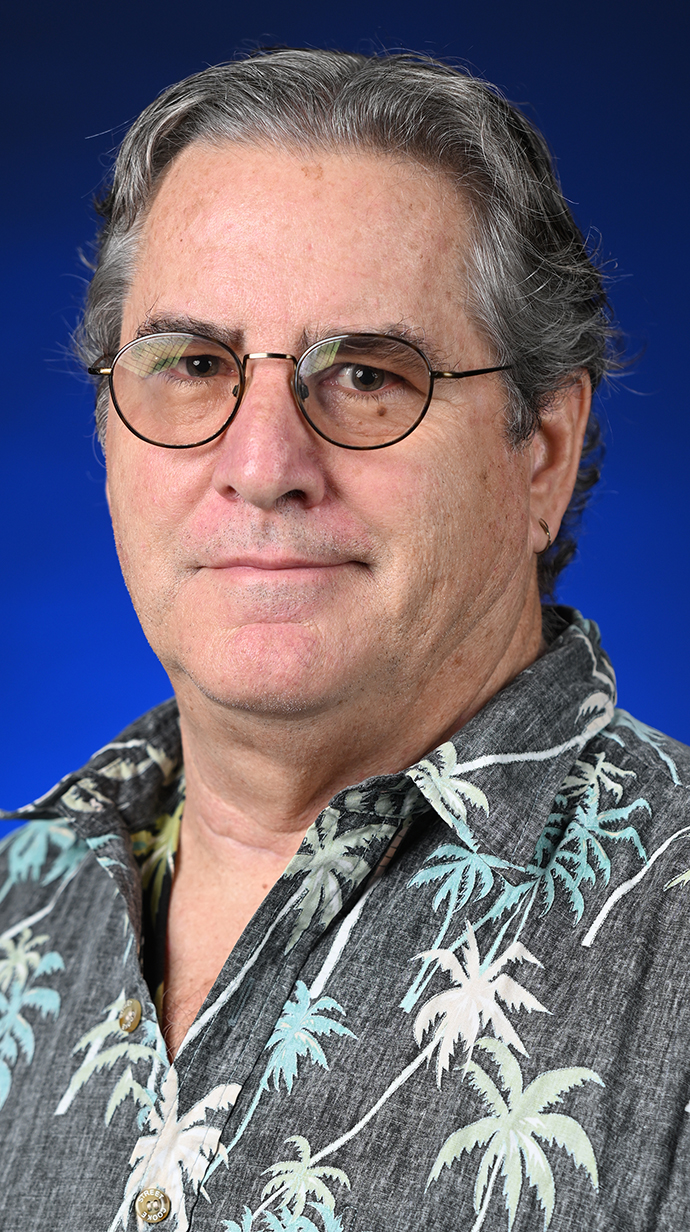
"Receiving this award means the world to me," said Slattery, professor of pharmacognosy and environmental toxicology in the Department of Biomolecular Sciences.
His love for marine biology began at a young age.
"I became interested in marine biology in first grade, when my parents moved us to Jamaica," he said. "Then I grew up on those pristine coral reefs for about 10 years."
As an undergraduate at Loyola Marymount University, he was selected into the science honor society for work conducted during his senior thesis related to niche partitioning in two species of octopus.
"It really opened my eyes to a broader understanding of being a research scientist, and to issues of scientific integrity," he said. "I have been a vocal proponent for the organization, and its ideals since then."
Over the course of his graduate studies, he realized that the questions he focused on, such as predator deterrence and communication within species, were driven by chemistry.
"That was my 'aha' moment when I knew I would be looking at chemical signals that shaped the lives of marine organisms, or marine chemical ecology," said Slattery, also a research professor in the university's Research Institute of Pharmaceutical Sciences.
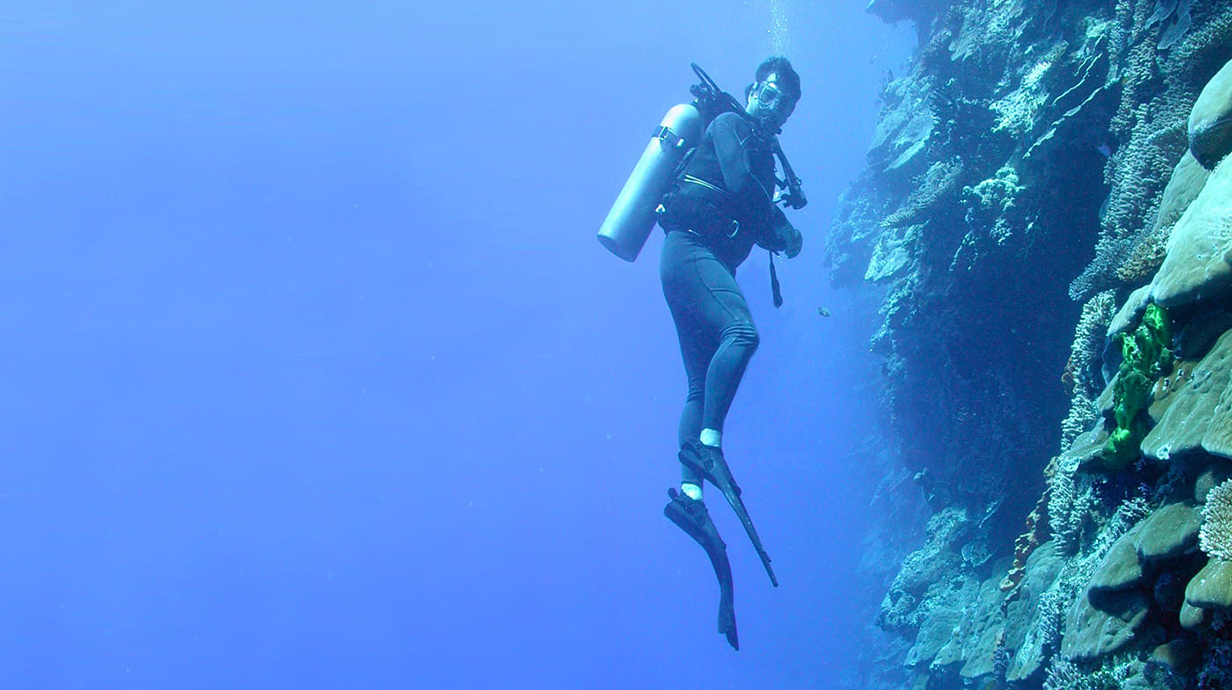
To conduct his research, Slattery dives around the world to study sponges and coral colonies. Scuba-certified in 1976 because of his interests in the marine environment, he was later certified as a scientific diver and scuba instructor in 1985. He has been diving ever since.
In fact, he has made more than 6,000 dives in habitats ranging from the polar ice caps to tropical coral reefs. While most coral reef scientists are limited to dives of 100 feet or less, Slattery frequents depths of up to 300 feet,.
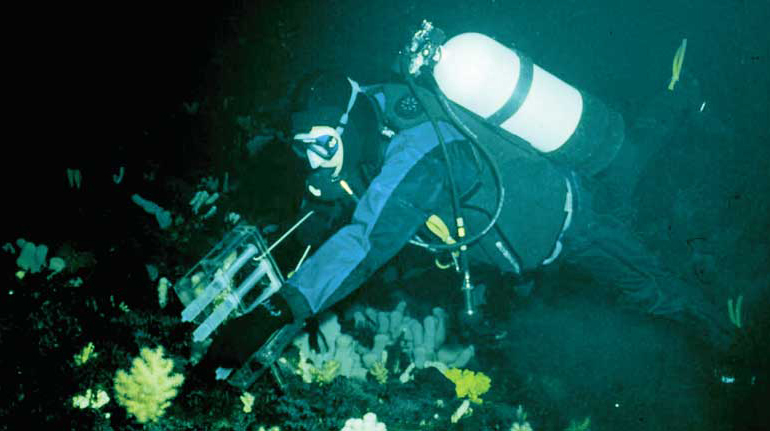
Marc Slattery collects samples of corals and sponges for testing in his lab at the School of Pharmacy. Submitted photo
He makes these dives to answer simple questions.
"How does chemistry help marine organisms, and can we help patients using similar techniques?"
These questions drive his role as the director of the National Institute for Undersea Science and Technology at the UM School of Pharmacy, where he developed a program in coral reef chemical ecology and drug discovery.
Because sponges and soft corals have primitive immune systems, they often rely on natural products to help them fight disease. Those natural products can be tested for use against human diseases such as cancer, bacterial infections and malaria.
"In addition to examining the biotech potential of marine natural products, NIUST conducted long-term surveys at our sampling sites that have become instrumental in understanding environmental degradation and climate change impacts to critical marine habitats," he said.
Research in extreme environments has provided critical understanding of the ecological and physical adaptations of sponges and corals, leading to management and conservation of these species.
"My research has advanced our understanding of evolutionary processes and ecological factors – such as competition and disease – that impact marine sponges and corals," Slattery said.
Slattery's work promises to yield benefits worldwide, said Donna Strum, dean of the Ole Miss pharmacy school.

"His career has had a profound impact, and we are grateful that he is part of our school community," she said. "The institute's impact lies in its ability to bridge academic research with real-world challenges, advancing solutions that protect ecosystems and improve human health."
None of his work occurs in isolation.
"Like Sigma Xi, I am a proponent for research opportunities for young scientists – undergraduate, graduate and post-doctoral – and through the years, I have been lucky enough to work with several very talented individuals at Ole Miss," Slattery said.
Cole Easson, a UM alumnus and one of Slattery's former students, is one of those individuals.
Slattery created an environment where students could take ownership of projects and build skills through troubleshooting and exploration, said Easson, assistant professor of biology at Middle Tennessee State University.
"His support allowed students to learn from mistakes, grow more confident and develop as scientists by actively doing science," he said.
Easson had the opportunity to become a scientific diver because of Slattery.
"Under his guidance, I completed hundreds of dives and gained extensive experience conducting research underwater," he said.
Because of Slattery, everyone benefited.
"This award can only be viewed in the context of their (students and other researchers) efforts relative to the larger scientific endeavors within my lab," Slattery said.
Top: Marc Slattery dives in Pohnpei, Micronesia, searching for marine organisms for his research program at the School of Pharmacy. Slattery has been diving for decades, and his research efforts and work with students has been recognized by Sigma Xi scientific research honor society. Photo by Debora Gochfeld
By
Marisa C. Atkinson
Campus
Office, Department or Center
Published
December 22, 2025