
Scholars Join Effort to Address Influence of AI on Elections
Dean, associate dean share insights to leverage technology's possibilities, improve election processes

OXFORD, Miss. – As artificial intelligence reshapes the speed of sharing election information across communities and social networks, two University of Mississippi journalism leaders are helping chart a path forward for protecting democracy and strengthening civic participation.
Andrea Hickerson, dean of the School of Journalism and New Media, and Marquita Smith, associate dean of academic affairs and associate professor of media and communication, contributed original research and perspectives to "PROMISE – PROMoting AI's Safe usage for Elections" (Springer 2025). The volume brings together international scholars, technologists, law and security professions, and journalists to examine how AI can be used responsibly in electoral processes.
"This project is the outcome of long-term collaboration with my co-editors, who are experts in computing, business and information studies," said Hickerson, who is also director of the Center for Information Advantage and Effectiveness.

"We believe in the power of interdisciplinary problem-solving, and this book showcases the contributions different fields can bring to election security."
The book arrives at a moment when deepfakes, algorithmic amplification and information overload are reshaping how voters encounter political narratives, she said.
For the first time, the World Economic Forum's 2024 Global Risks Report ranked AI-powered misinformation and disinformation as the most severe global risk over the next two years. AI issues ranked ahead of climate, conflict and economic instability.
Research shows that Americans of all political backgrounds are concerned.
But instead of treating AI as merely a technological tool or threat, the new book invites readers to consider the social, ethical, cultural and civic dimensions of how election information circulates.
Hickerson's chapter, "AI and Elections: The Narrative Approach," examines how political storytelling influences public perception in an age of rapid digital message spread. Her research draws on journalism, communication, international relations and computing to provide a framework for analyzing how election narratives form and circulate.
It also examines what makes certain stories resonate with audiences.
Smith's chapter, "The Power of AI to Strengthen Civic Engagement," highlights how information systems driven by AI have the potential to make accurate election information more accessible, especially for individuals who may face barriers to participation. Those barriers may include registration requirements, polling locations, illiteracy or being unfamiliar with ballot topics.
Drawing on existing research and case studies, the chapter discusses how AI can summarize dense policy language, support multilingual access and provide reliable, real-time answers to voter questions. It also cautions that responsible design and oversight are essential to prevent bias or misuse.
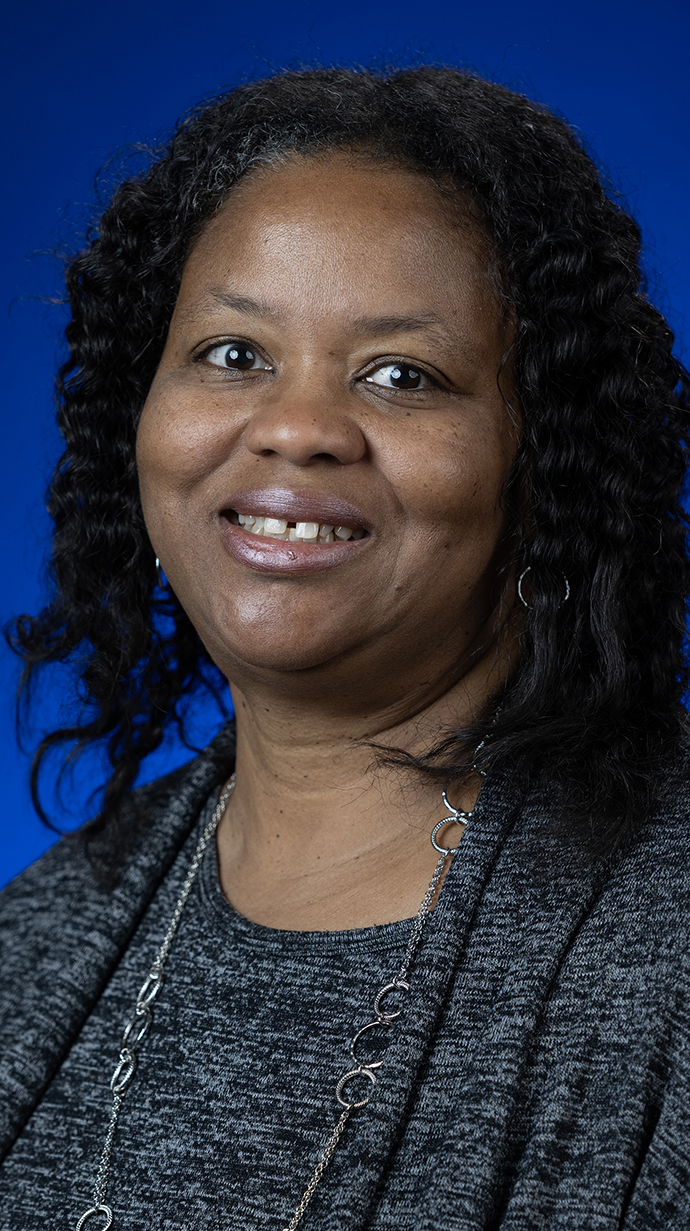
"Artificial intelligence offers a powerful opportunity to bridge long-standing civic gaps," Smith said. "But the real power lies not just in the technology itself, but in how we choose to design it – with equity, clarity and access at the forefront.
"If we get that right, AI can serve as a tool for civic empowerment rather than exclusion."
Together, Hickerson and Smith contributed to a broader chapter discussing election contexts in the United Kingdom and across parts of Africa. While political histories and media ecosystems differ, shared themes of transparency, access and trust point to a global need for attention on how election communication is taught, practiced and understood, Smith said.
The Ole Miss scholars emphasize that AI's influence is not inherently positive or negative. Its impact depends on how it's used and understood.
The new book offers guidance on election topics and AI techniques and is intended as a tool for policymakers, instructors and teachers.
Preparing students to evaluate AI-influenced messages is a priority for journalism and communications programs, Hickerson said.
"Media content fuels understanding for many people," she said. "Our field, in particular, has an urgent responsibility to help our campus and communities understand risks and possibilities of AI in society."
Top: Ole Miss journalism experts are helping shape international research on the risks and opportunities of artificial intelligence in elections, offering guidance for policymakers, educators and communities. Graphic by Stefanie Goodwiller/University Marketing and Communications
By
Marvis Herring
Campus
Office, Department or Center
Published
December 01, 2025