
Artificial Intelligence Agents Are Reshaping Sales at a Growing Pace
Ole Miss marketing professor explores AI's impact on sales, training and workforce
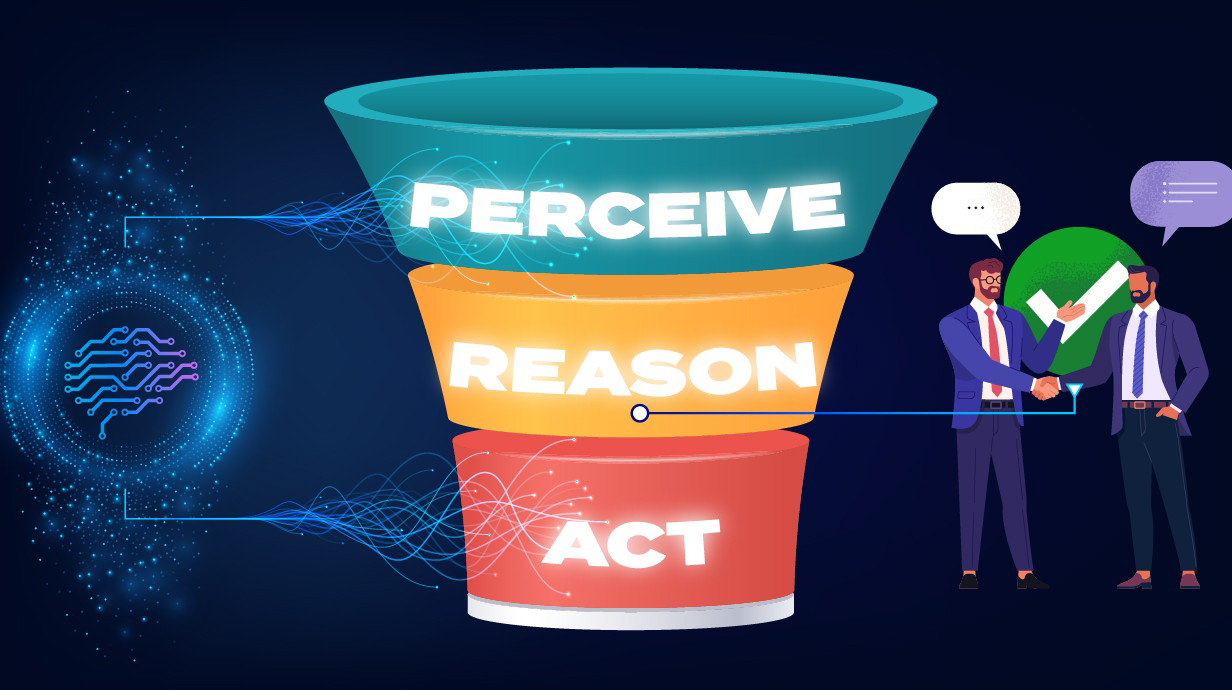
OXFORD, Miss. – The future of sales may no longer hinge on how quickly humans can organize their pitch decks, analyze customer data or respond to shifting buyer preferences.
University of Mississippi marketing professor Gary Hunter's new research suggests it may depend on how effectively organizations learn to work alongside something faster than any human team: autonomous artificial intelligence agents.
"Agentic AI systems are reaching an imperative level; to maintain competitive stance, most sales organizations have to embrace some form of agentic AI," said Hunter, the FNC Founders Chair in marketing and data analytics and associate professor of marketing.
"Like it or not, it's one of those things that's here to stay"
AI agents are complex and able to identify and qualify potential customers, start conversations, schedule meetings, tailor sales messages, track deals, and even manage follow-ups and renewals. They can do all this while learning and adapting without constant human direction.

Hunter worked with Gabriel Gonzalez, associate professor of marketing at San Diego State University, and Johannes Habel, associate professor of marketing at University of Houston, to explore the rapid tech transformation underway inside sales organizations. Their results are set to publish this month in the Journal of Business Research.
Billions of dollars in potential sales are at stake. Industry estimates suggest the market for autonomous AI agents is on track to grow from $7.6 billion in 2025 to more than $139 billion by 2033.
Traditional, prompt-based AI tools such as ChatGPT and Google Gemini wait for a prompt or automate one-off tasks. Autonomous AI agents perceive their environments, reason through information and act autonomously, even repeating this cycle without human instruction.
The research team found these AI agents are the future of sales. The rapidly developing technology could be one of the most consequential turning points in sales since the widespread adoption of customer relationship management software in the early 2000s, Hunter said.
Customer relationship management systems, such as Sales Force and HubSpot software, help sales teams centrally track who they're talking with, what's been said and next steps. Its emergence reshaped how companies interacted with customers and managed information.
"Agentic AI can now perceive, reason and act across entire workflows, not just discrete tasks," said Kash Afshar, Ole Miss assistant professor of marketing. "This fundamentally reshapes who initiates the sales process.
"In practical terms, this means sales leaders must redesign workflows, sales force structure, control systems and success metrics. The firms that act fastest will gain the advantage. The ones that wait will find their competitors' AI agents working 24/7 while their human teams are still trying to update CRM fields."
Afshar teaches a new course in the School of Business Administration that helps Ole Miss students understand trends, embrace emerging sales technology and develop judgement needed for a field increasingly shaped by automation, data and communication.

According to the study, agentic AI is advancing with unprecedented speed. The whiplash pace creates a widening gap between what the technology can do and what experienced sales leaders feel prepared to manage, the researchers said.
Commercial providers offer AI agents capable of initiating customer outreach, qualifying leads, responding to inquiries and placing phone calls.
"Autonomy is powerful, but it demands human responsibility," Hunter said. "We need guardrails like transparency, disclosure, human oversight and limits on what AI should be allowed to decide on its own.
"Sales managers are having to make decisions with limited time and insight. They don't want to get left behind, but they also don't fully know which tools to adopt or how to integrate them."
These AI systems' ability to process new information, update their understanding of a situation and take next steps – sometimes multiple at a time – on their own adds independence that is reshaping the sales funnel, he said.
But the team's findings show that the roadmap from customer awareness to completed purchases has room for AI assistance.
The earliest and latest stages of sales – finding potential customers and managing deals after they close – are especially ripe for AI, which can scan information, spot patterns and respond faster than people.
The middle of the process, where trust is built, deals are negotiated and relationships take shape, still depends heavily on human judgment. For now, that human connection remains hard to automate – though the research suggests even that balance could shift over time.
AI agents are not replacing salespersons; they are transforming and creating new job duties, Afshar said.
"The professionals who thrive will be those who do not fear this shift but embrace it as a chance to elevate their contribution," he said. "In essence, future sellers will manage AI agents the way a senior rep mentors a junior one."
Top: Autonomous AI agents, systems that can perceive, reason and act on their own, are beginning to reshape the sales process, redefining where technology ends and human judgment still matters. A study led by a UM marketing professor examines the accelerating pace of this change and the urgency for businesses to adapt. Graphic by John McCustion/Ole Miss Marketing and Communications
By
Marvis Herring
Campus
Office, Department or Center
Published
January 05, 2026