
Q&A With Filmmaker Antonio Tarrell on 'Cole: Bridge to Justice'
New documentary details impact of longtime UM leader Donald Cole
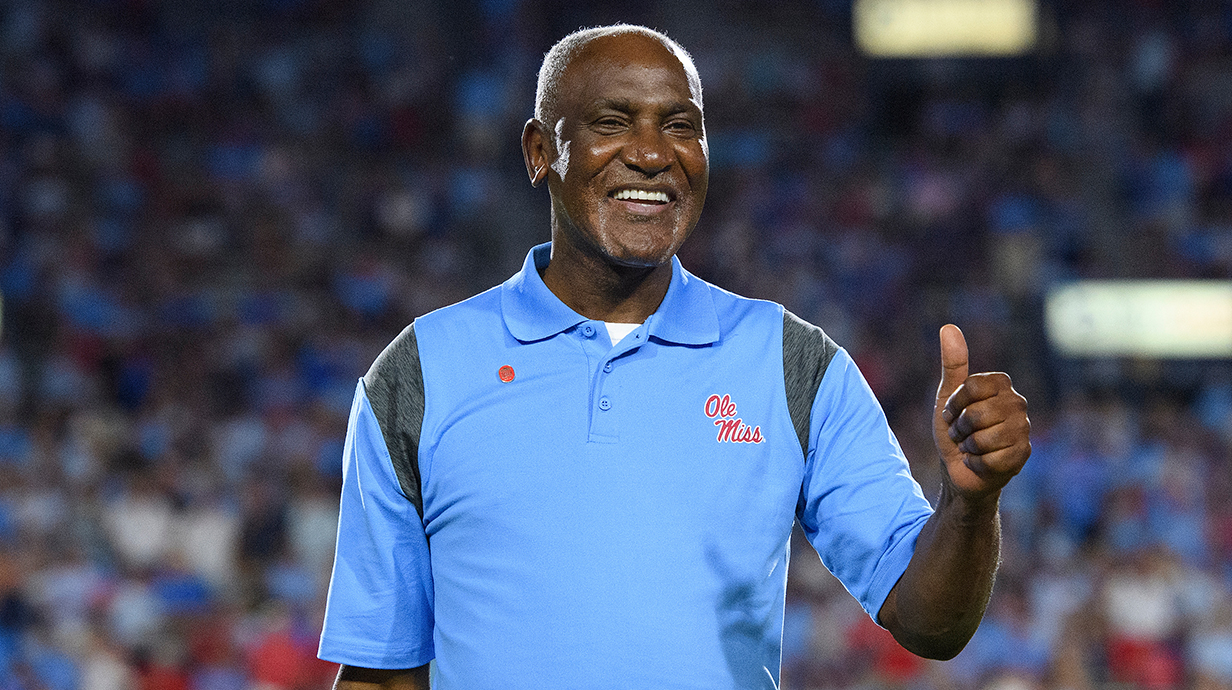
OXFORD, Miss. – Antonio Tarrell is a Mississippi filmmaker who recently co-directed "Cole: Bridge to Justice," a documentary on the life and legacy of University of Mississippi icon Donald Ray Cole.
In this Q&A, Tarrell discusses what drew him to profile Cole, who was arrested in 1970 during a peaceful protest at Ole Miss and later returned to the university as a leader, mentor and advocate for underrepresented students.
"Cole: Bridge to Justice" will debut at the Oxford Film Festival at 6 p.m. Thursday (Feb. 26) in the Malco Oxford Commons. Tickets are available through the festival's website.
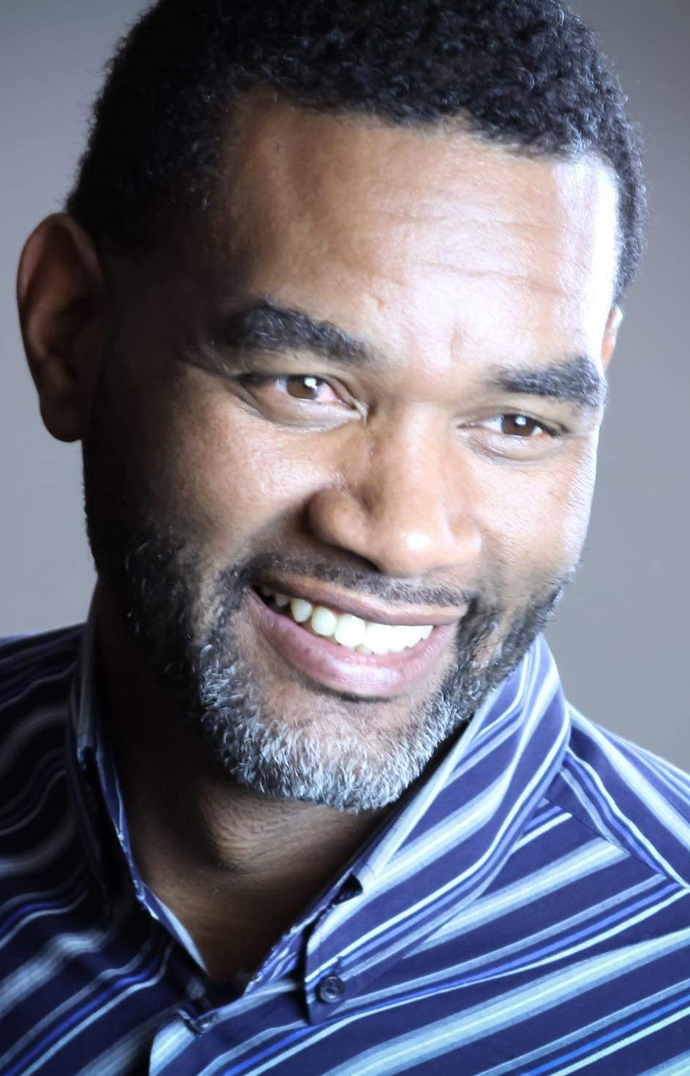
The Center for the Study of Southern Culture's SouthTalks series will host a second screening followed by a panel discussion featuring Cole, Tarrell and Castel Sweet, director of the Center for Community Engagement and the film's co-director. The screening, at 5:30 p.m. March 3 in Fulton Chapel, is open to the public.
What drew you initially to this story? How did you first learn about Donald Cole's history and the Ole Miss 8?
I was first approached by Steven T. Case about directing a documentary on Dr. Don Cole's journey. Having lived in Oxford for more than 20 years, I was surprised that I had never heard the story of the Ole Miss 8. So, that history immediately struck me.
As I began to learn more, I was blown away by the depth of what had happened and how little it was publicly discussed. As a documentary filmmaker committed to Mississippi-based storytelling and institutional memory, I knew right away that this was not only a powerful story; it was a necessary one.
Once Steve and I agreed to move forward, I shifted into research and development. I began reviewing archival materials, mapping the historical timeline and building the creative team. I invited Castel V. Sweet to join as producer and co-director, given our long-standing creative partnership and shared commitment to culturally grounded storytelling.
I also brought on Jordan Wadley as sound operator to help ensure the film's tonal integrity. Castel and I have collaborated on multiple projects, and that established trust was essential in shaping the vision for this film from the outset.
What does it mean for this film to be screened here in Oxford, where many of these events unfolded?
I think this is amazing for the city of Oxford and the state of Mississippi. We filmed in Atlanta, Tallahassee (Florida), Virgina, North Carolina and throughout Mississippi. To be granted the opening film says a lot about Don's impact on the community and the university. He is loved by many.
As a native filmmaker from Bruce who graduated film school in 2017, I would have never imagined I'll have an opening film at a festival. I've had several films screened at the Oxford Film Festival and across the world, but this takes the cake.
It shows progress as a documentarian, and I hope my hard work will inspire other filmmakers to keep it moving forward.
For current students at the University of Mississippi, what do you hope this story teaches them about campus history and resilience?
My hope is that "Cole: Bridge to Justice" teaches current University of Mississippi students that resilience is not abstract; it is lived. No matter the obstacles placed in front of you, you keep moving forward. You pursue your dreams. You stand firm in your convictions.
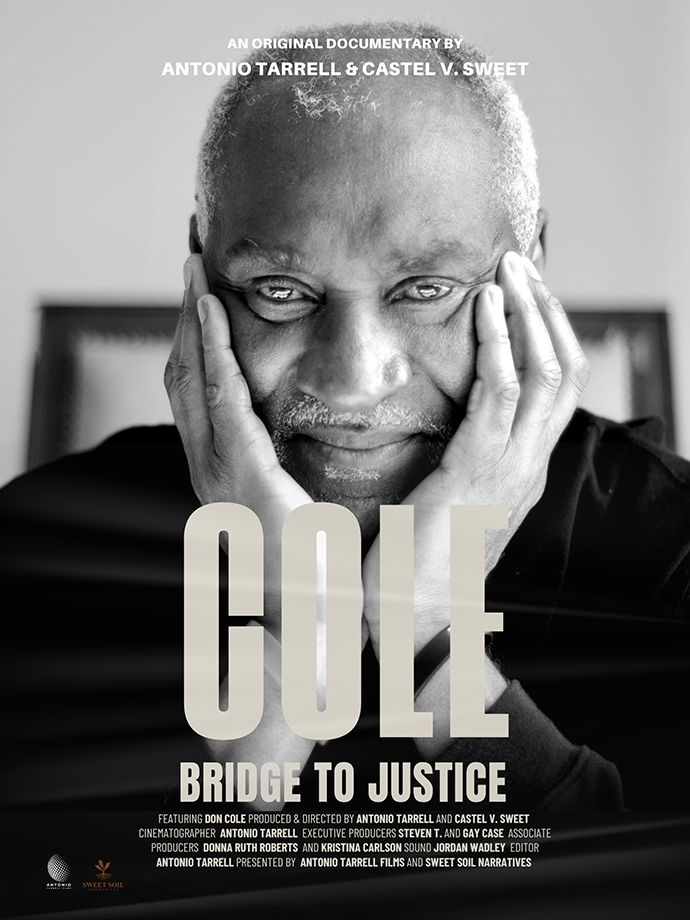
'Cole: Bridge to Justice' debuts at the Oxford Film Festival at 6 p.m. Thursday (Feb. 26) in the Malco Oxford Commons. It also will be screened at 5:30 p.m. March 3 in Fulton Chapel as part of the SouthTalks lecture series presented by the UM Center for the Study of Southern Culture.
And if that conviction requires protest, then you protest, with a clear understanding that there may be consequences. But history shows that the long-term rewards of principled action often outweigh the immediate cost.
Dr. Donald Cole embodies that lesson. If you follow his journey throughout the documentary, you see a man who endured institutional rejection, public scrutiny and professional uncertainty, yet never abandoned his pursuit of excellence.
Many people would have given up. He did not. Instead, he transformed adversity into momentum, ultimately returning to the very institution that once expelled him.
I also hope the film challenges the university to more intentionally educate students about this history. During production, students frequently approached us on campus asking what we were filming.
When we explained that it was about Dr. Cole and the Black Student Union protest at Fulton Chapel – where 89 students were arrested – many had never heard the story. Some did not even know who Dr. Cole was.
That absence is significant. These events are not peripheral moments in campus history; they are foundational. Dr. Cole's sacrifices and the courage of those students helped shape the university students attend today. Understanding that history is not about dwelling on the past; it is about recognizing the cost of progress and honoring the resilience that made it possible.
Let's talk about the title, "Bridge to Justice." What does "bridging" mean to you in the context of Dr. Cole's story?
Having this film screened in Oxford, where so many of these events unfolded, feels deeply significant. This is not just another stop on the festival circuit. This is the ground where the history happened.
To bring the story back to the community that lived it, witnessed it and in many ways continues to wrestle with it, carries real weight.
We filmed in Atlanta, Tallahassee, Virginia, North Carolina and across Mississippi. The story stretches far beyond Oxford. But to have the film return here – and to be selected as the opening film – speaks volumes about Dr. Cole's impact on this community and the university. He is deeply respected and loved.
The fact that the festival chose to center this story says something about where Oxford is today and its willingness to engage its own history.
On a personal level, it is incredibly meaningful. I'm a native of Bruce, Mississippi, and I graduated from film school in 2017. I could not have imagined then that I would one day have a film open a festival in Oxford. I've had several projects screen at OxFilm and internationally, but this moment feels different. It represents growth, not only for this project, but for me as a filmmaker.
More than anything, I hope it signals possibility. If my journey can inspire other Mississippi filmmakers to keep pushing, keep refining their craft and keep telling Mississippi stories, then this screening means even more.
When attendees of the festival are leaving after attending the screening, what do you hope they feel?
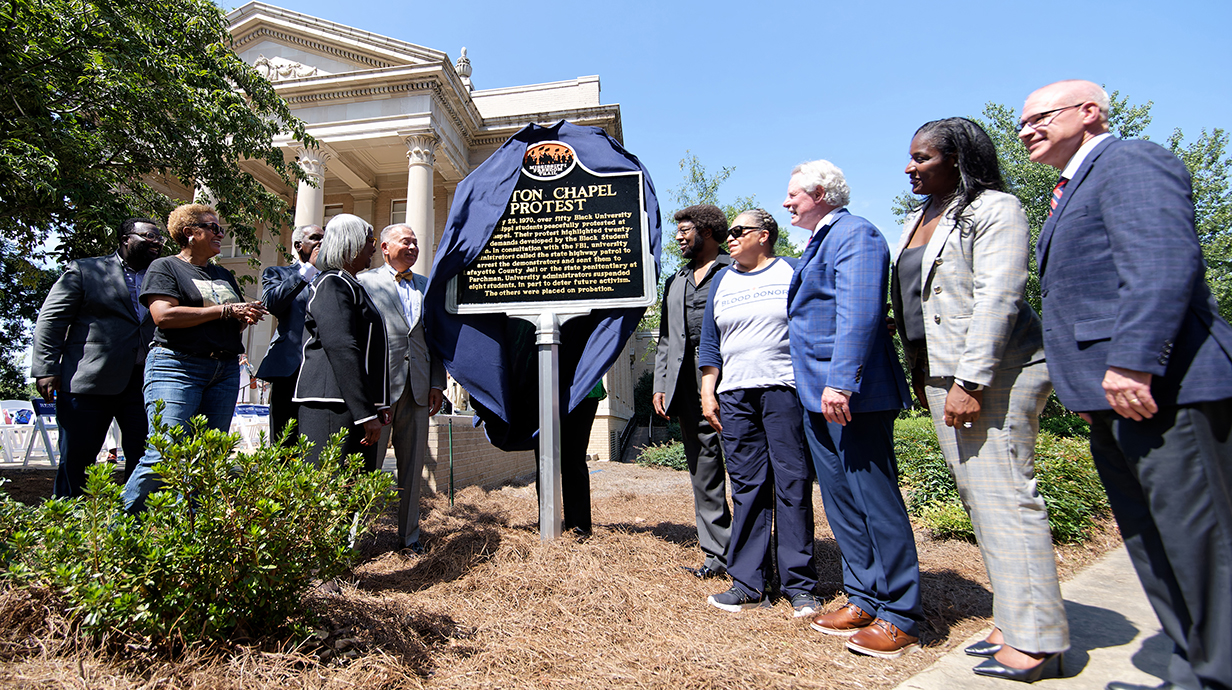
University officials, alumni and guests, including several members of the Ole Miss 8 celebrate the dedication of a campus marker commemorating a 1970 demonstration at Fulton Chapel. Some 89 students were arrested and eight were expelled for their participation in the protest. Photo by Hunt Mercier/Ole Miss Digital Imaging Services
When attendees leave the screening, I hope they leave not just moved, but activated. I hope they feel a sense of responsibility to go deeper. This film is an entry point. The real work begins after the credits roll.
I hope they take the time to read the Mississippi Sovereignty Commission reports and examine the official records for themselves. I hope they walk across campus and visit Fulton Chapel, standing in the space where 89 students were arrested. I hope they seek out the recently installed historical marker honoring those students and reflect on what that moment required of them.
Beyond reflection, I hope the film encourages tangible institutional action. I would like to see the University of Mississippi install images and educational materials inside the Martindale-Cole building honoring both Larry Martindale and Dr. Donald Cole. That kind of visible, educational acknowledgment matters. It transforms a name on a building into a living lesson.
To me, that would symbolize something powerful: that Black and white students, faculty and administrators can confront difficult history together and move forward collaboratively. The lesson of this film is not only resilience in the face of injustice, but the possibility of shared progress when truth is acknowledged.
Top: Don Cole was arrested as an Ole Miss student in 1970 during a peaceful protest on campus and later returned to the university as a faculty member in the Department of Mathematics. He became a leader, mentor and beloved advocate for underrepresented students. His story is featured in 'Cole: Bridge to Justice,' a new documentary from filmmaker Antonio Tarrell. Photo by Thomas Graning/Ole Miss Digital Imaging Services
By
Clara Turnage
Campus
Office, Department or Center
Published
February 23, 2026