
Ole Miss Bridge Program Equips First Responders With Sensory Kits
School of Education initiative gifts calming resources to law enforcement, fire departments
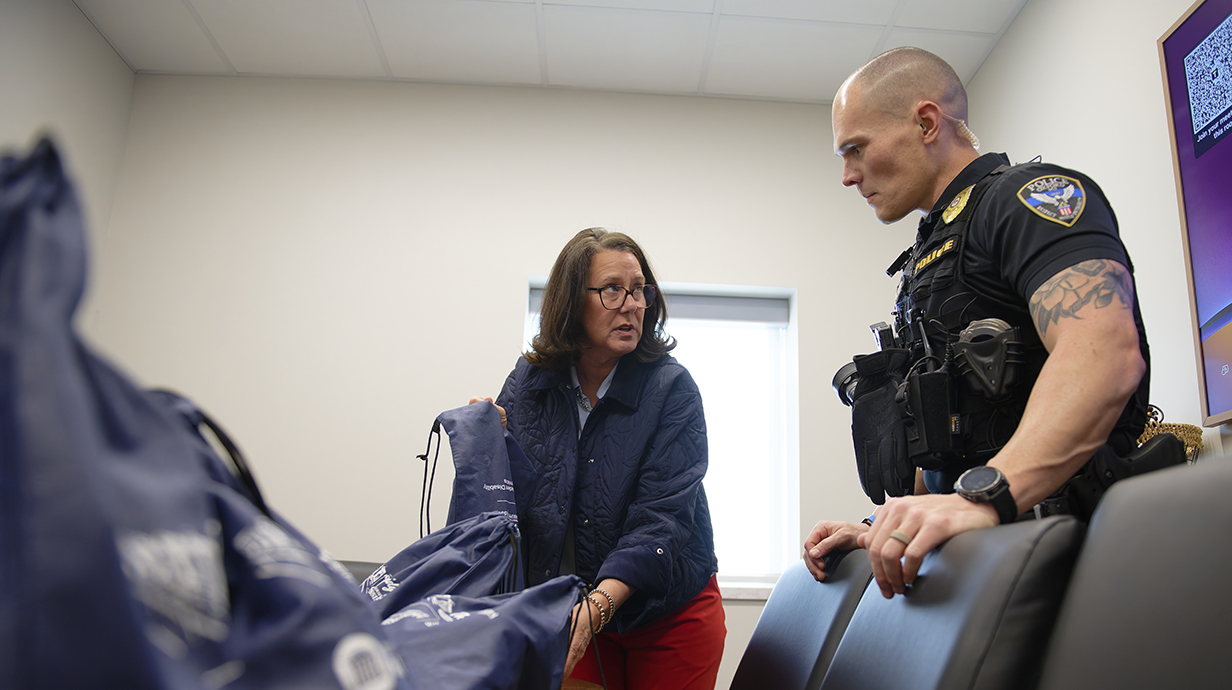
OXFORD, Miss. – Flashing lights and blaring sirens during an emergency can overwhelm anyone, especially individuals with autism or sensory sensitivities. But a new initiative from the University of Mississippi's Bridge Program aims to help families find comfort when first responders arrive.
Housed in the School of Education, the program supports Ole Miss students with autism through peer mentorships and other opportunities. Students and mentors helped distribute 45 sensory kits to three Lafayette County agencies as part of the initiative.
"We attempted to cover as many senses as possible with the tools we chose for the kits because we never know exactly what sensory needs need to be met," said Whitney Drewrey, program coordinator and clinical instructor of special education.
"Sometimes, it's just one simple tool that helps someone move from feeling overwhelmed to feeling calm and regulated. Seeing that moment happen is pretty powerful."
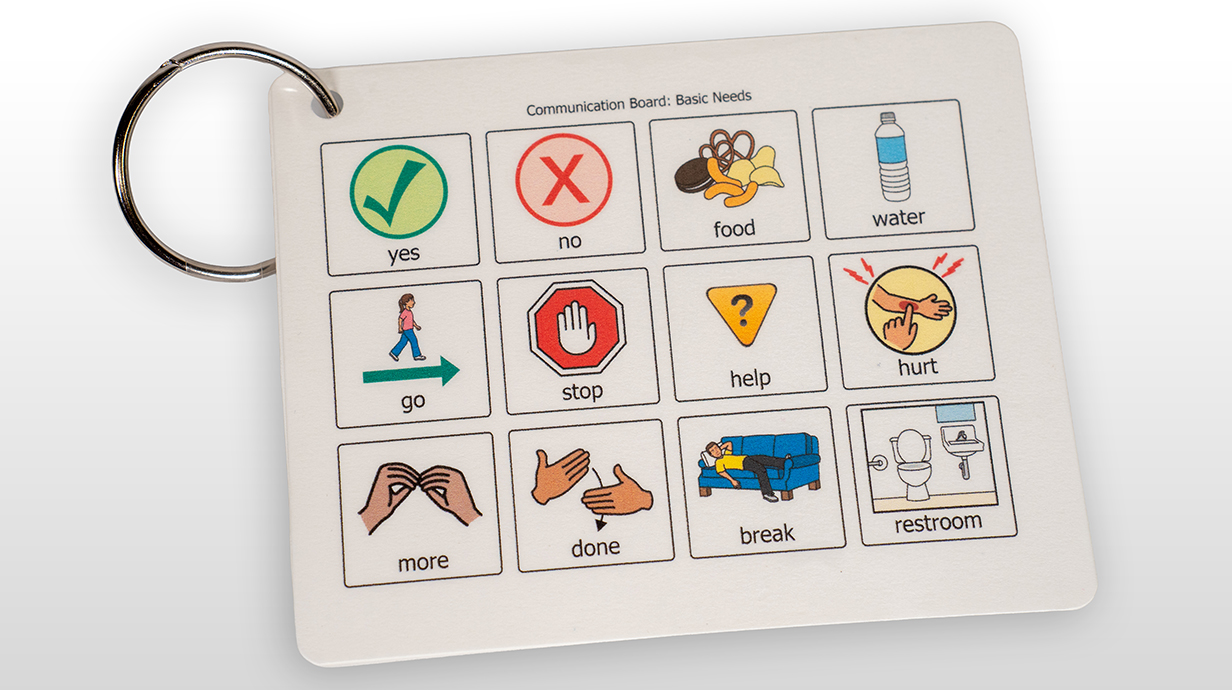
Each of the sensory kits includes a communications board to help individuals with autism or other sensory disorders communicate with first responders. Submitted photo
The program provided the Oxford Police Department and Lafayette County Sheriff's Office with 15 kits apiece, and another 15 kits were divided between the Lafayette County and Oxford fire departments. Each bag includes noise-canceling headphones, sunglasses, communication boards, fidgets and weighted stuffed animals.
A QR code inside each bag links to a short training video on using the tools in a crisis. OPD Captain Kevin Parker said these wraparound resources add new ways to serve, connect and protect this community.
"We have incorporated the training video for the officers who are on shift, not only for the officer carrying the kit, but also for others who may have an opportunity to use it as well," Parker said.
"We are fortunate to have a department that encourages consistent training like OPD, so we are constantly working on tangible skills."
The effort was as much a community-building moment as it was a donation. Bridge Program students and their peer mentors gathered to fill and package every kit.
The service project carried meaning on both sides of the handoff, Drewrey said.
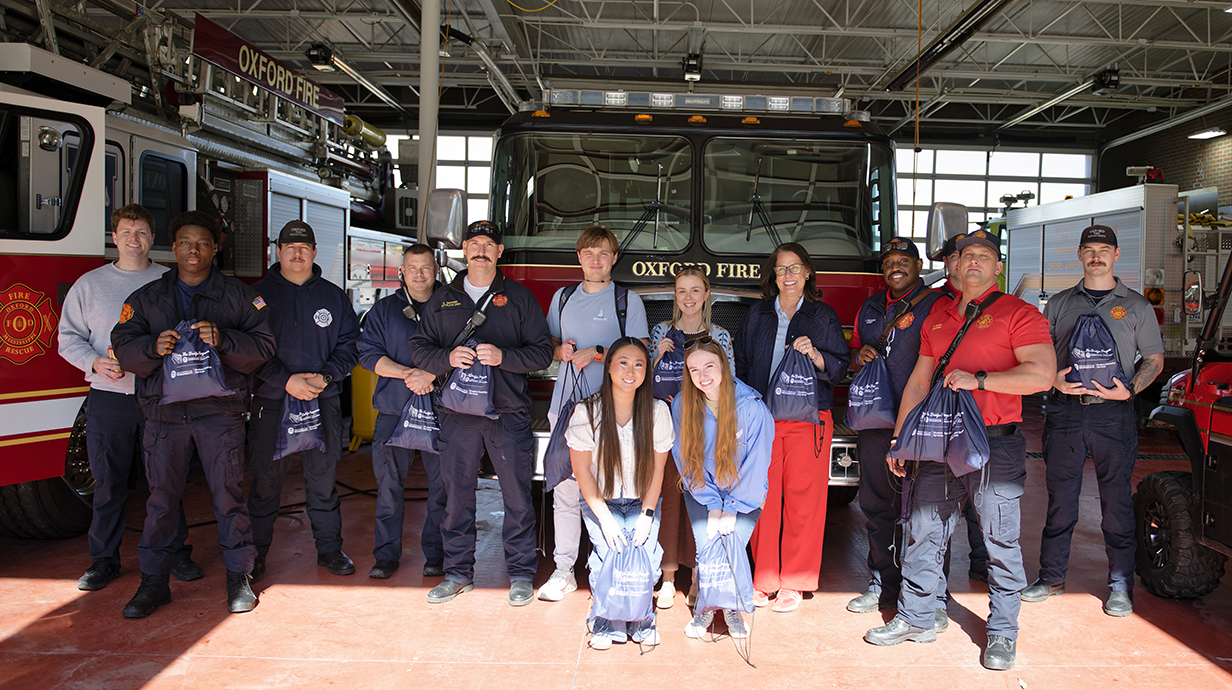
Members of the UM Bridge Program deliver sensory kits to firefighters at Oxford Fire Station No. 1 earlier this semester. Firefighters did not have access to such resources before the donation. Photo by Hunt Mercier/Ole Miss Digital Imaging Services
"I want Ole Miss students with autism to see that they can help in the community," she said. "I want them to understand that there is a larger of people with shared experiences, and that they can use the expertise they have gained over the years to help someone else."
First responders embraced the initiative with enthusiasm and gratitude, Drewrey said. Neither fire department previously had sensory resources available.
Now, every station has kits ready, thanks to the donation. At OPD, officers went from hearing about how transformational such items could be to having the tools to help.
For some individuals, stress during an emergency can affect communication, which is why visual communication boards and sensory supports can help first responders better understand what someone needs, Parker said.
"We are always appreciative of the programs that help us serve our community with wisdom and compassion," he said. "These collaborations help us reach and get closer to our mission of creating a safe and connected community."
For Drewrey, the project represents more than a professional interest in providing resources for people with development disabilities. She is the grandmother of an 8-year-old with autism, wife of a Central District Lafayette County constable, and mother of both an OPD officer and federal investigator.
"My grandson uses noise-canceling headphones, similar to the ones in the kits," she said. "There are so many connections to this and reasons why I wanted to make it happen.
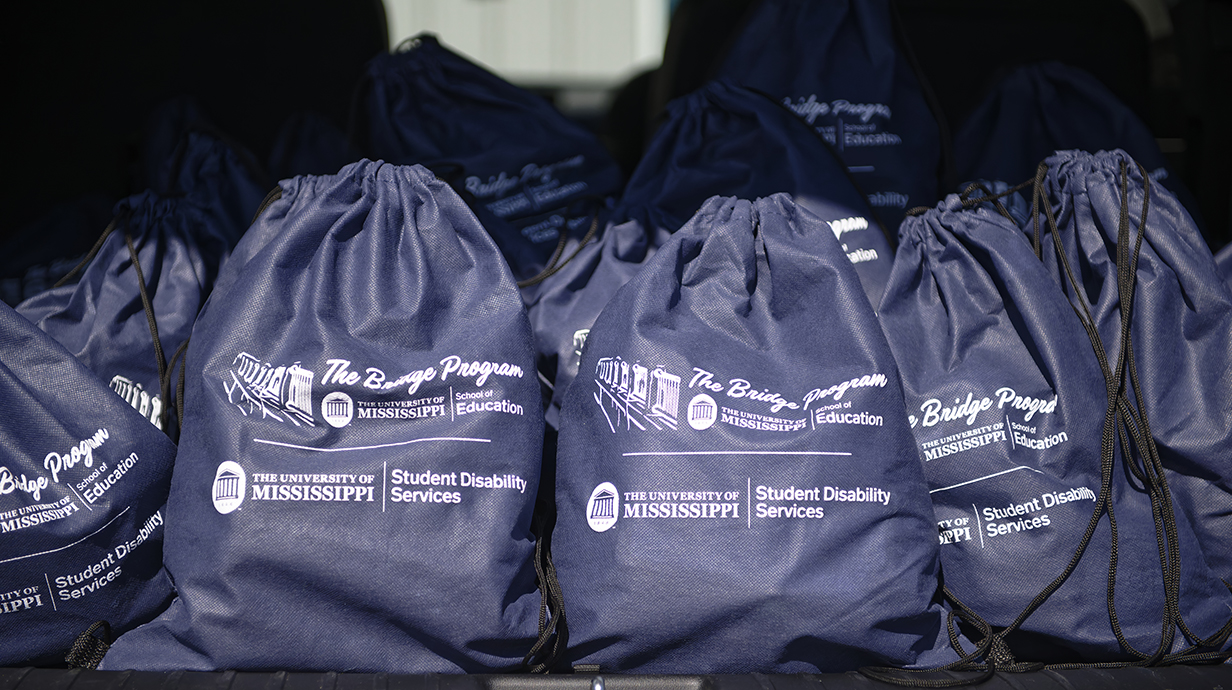
The university's Bridge Program donated 45 sensory kits to Oxford and Lafayette County law enforcement and fire departments. The Division of Student Affairs provided funding for the project. Photo by Hunt Mercier/Ole Miss Digital Imaging Services
"Sometimes people look at fidgets and think they're useless, or it's the new great fad, but for some people, it really is a game changer."
The kits distributed in this first round were designed to reach as many as needed, she said.
The university's Division of Student Affairs funded the project. Tory Laing, a compliance specialist with the Office of Student Disability Services, and Addison Phelps, a graduate student in special education, teamed with Drewrey to write the grant application.
Looking ahead, Drewrey hopes to provide sensory kits to additional agencies across the region. More support is needed, but restoring a sense of self-control during an emergency is worth the investment, she said.
"Sometimes those tools can make all the difference in the world," Drewrey said. "From a situation that feels like it might escalate, to someone finding a moment of calm and being able to move through what they're experiencing. That's why we do this."
"That's why we do this."
Top: Whitney Drewrey (left), UM Bridge Program coordinator, delivers 15 sensory kits to Oxford Police Department Capt. Kevin Parker. The kits will be available for first responders to support individuals with autism during emergency calls. Photo by Hunt Mercier/Ole Miss Digital Imaging Services
By
Marvis Herring
Campus
Office, Department or Center
Published
March 12, 2026