
Exhibits, Lectures Highlight Faulkner's Greenfield Farm
Photo documentary highlights past, beauty of future UM writers residency
OXFORD, Miss. – This summer, two exhibits and a lecture series at the University of Mississippi will tell the story of Greenfield Farm, which was once William Faulkner's mule farm and will soon become the state's first writers residency.
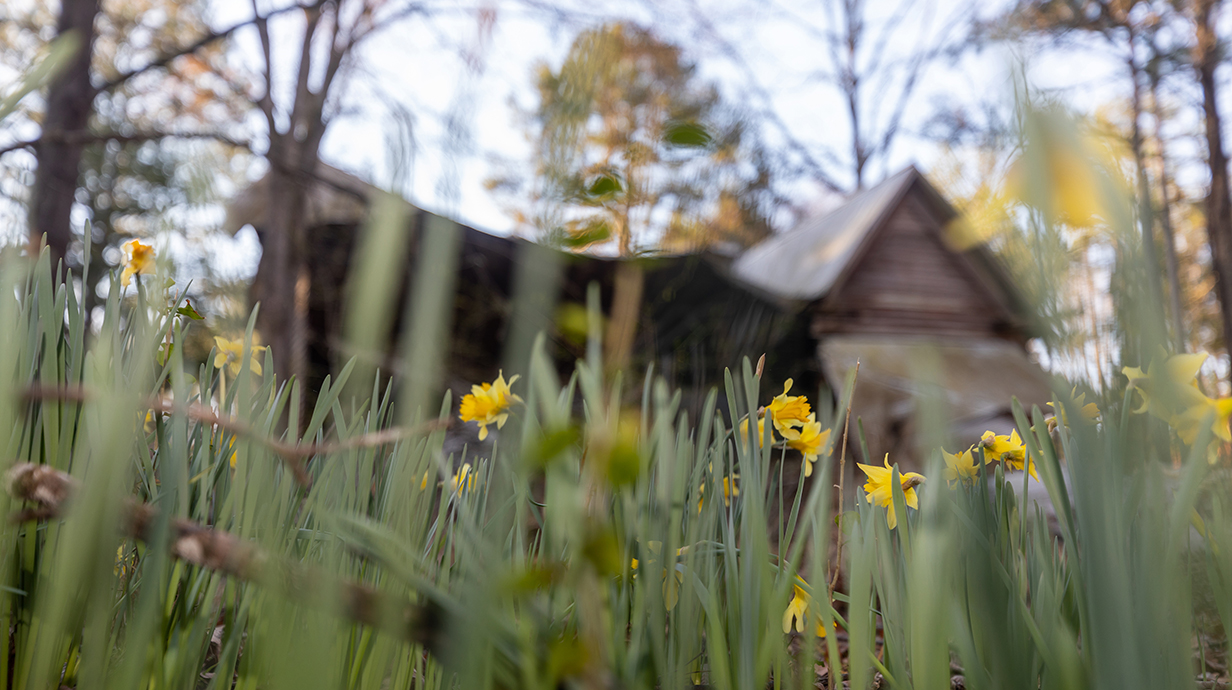
Over the past year, photographer and documentarian Thad Lee has chronicled Greenfield Farm, a plot of land 15 miles northeast of Oxford that was once home to the Nobel Prize-winning author's livestock. Before welcoming its first group of new writers next year, the Mississippi Lab aims to highlight the farm's past with two exhibits and a lecture series that focus on Lee's work.

"Mississippi's story is the American story," said Mary Wise Conaway, project manager for the Mississippi Lab. "We hope these works become a part of how current and future generations of Mississippians understand our past: where we've been, what we've inherited and how this heritage shapes our collective identity."
The first exhibit, "Unvanquished Soil: A Year at Greenfield Farm" is on display at University of Mississippi Museum through Aug. 1.
"Thad's work bridges the gap from contemporary photography by Martin Dain in the 1960s to the writers residency which will revive the property," said Melanie Antonelli, the museum's curator and collections manager.
"The interiors of the farmhouse also reveal interesting aesthetic choices such as paint colors or wallpaper. Whether Faulkner ever wrote on the property or not, no doubt this refuge provided inspiration and rejuvenation that fueled his work."
The Center for the Study of Southern Culture will open a second exhibit featuring Lee's work as well as historic images from photographer Martin J. Dain. The exhibit opens May 26 in Gammill Gallery at Barnard Observatory and will be available through Aug. 11.
"I encountered mystery, history, beauty and decay when walking Greenfield Farm," Lee said. "I hope that comes across in these 24 photographs. The property is a strange marriage of ruins and Mississippi woods.
"The structures, machines and artifacts that have survived the 64 years since Faulkner's death stand still, quiet and somewhat timeless. They are witnesses to the colorful and stark seasonal change that the farm's plant world undergoes."

Rowan Oak will feature a companion exhibit of paintings by the Mississippi Delta artist Church Going Mule.
A summer brown bag lecture series will also highlight the ecology, history and importance of Faulkner's mule farm. Each of the events will be held at noon at the UM Museum.
Speakers include:
- Bob Brzuszek and Robert Poore, Greenfield Farm ecological consultants, May 19
- Tom Rankin, photographer and author of "Faulkner's World: The Photographs of Martin J. Dain," June 23
- Thad Lee, photographer, July 7
- John T. Edge, director of the Mississippi Lab, and Brooke Alexander, instructional assistant professor of art, July 28.
"I hope viewers experience the same awe and reverence for the beauty of this land so masterfully captured through Thad's lens that I have felt," Antonelli said. "It is apparent that this has been a passion project for John T., Mary, and Thad Lee.
"I am happy to have been able to learn from them about the farm's history and to see such care and consideration given in repurposing the land."
This material is based on work supported by the Mississippi Humanities Council grant no. 10002848, the National Endowment for the Arts grant no. 1944728-54-26 and the Mississippi Hills National Heritage Area.
Top: Daffodils grow in the ruins of Greenfield Farm, which was once William Faulkner’s mule farm. The flowers are evidence that there was once an abundant life on the dilapidated property, which the university plans to renovate into a writers' retreat. Photo by Thad Lee
By
Clara Turnage
Campus
Office, Department or Center
Published
May 03, 2026