Philosophy Professor Studies Polarization as Carnegie Fellow
Deborah Mower aims to foster civil, constructive conversations through project
OXFORD, Miss. – University of Mississippi philosophy professor Deborah Mower plans to use her new Carnegie Fellowship to study how moral convictions drive political polarization and how structured dialogue could bridge those divides.
The Andrew Carnegie Fellowship Program, one of the most competitive awards in social sciences and humanities, announced its 2026 fellows today (May 5). Since 2023, the program has focused on research that seeks to understand and address political polarization.
"Dr. Deborah Mower being named an Andrew Carnegie fellow is a proud moment for our university," Chancellor Glenn Boyce said. "This is an extraordinarily competitive process, and she earned her place among that group.
"Dr. Mower has built something special at Ole Miss through The Center for Practical Ethics, and her scholarship on moral education and civil discourse is incredibly important work. This is a well-deserved recognition."
Mower, the center's director, will examine the moral roots of polarization and how guided conversations might help reduce emotional hostility and ideological division.
Multiple national surveys indicate that 80% or more of Americans are concerned by or exhausted with political polarization. A recent Gallup poll found that Americans are more anxious about the political system than other countries, with nearly one-third of American participants rating politics and government as the top issue facing the nation.
Many explanations for polarization focus on media, politics or social trends. But these reasonings can overlook a key factor: political beliefs are often deeply tied to moral convictions, Mower said.
"What's been left out so far in that research is an analysis of moral psychology," she said. "People have opinions about lots of things, but moral convictions are the very firm, almost intransigent beliefs we have that carry evaluation and judgment with them. They are very emotionally laden and highly charged because they are core to our sense of self and our identity.
"They guide and shape many of our actions, our choices and – even without our conscious attention – our responses to others."
When an opinion based on moral conviction is challenged, it calls into question not only the opinion, but the individual's core beliefs that support that view, she said.
This makes addressing the political divide more difficult, said Ethan Davis, the center's assistant director.
"Polarization in general and affective polarization in particular are linked with all kinds of outcomes we want to avoid," Davis said. "It makes us more likely to write off others as not merely mistaken, but moral failures.
"It makes us more likely to believe good things about our own group and bad things about others. It makes us more likely to support silencing speech and banning participation in public spaces for those with whom we disagree.
"Even if you don't pay attention to politics or big social issues, you live in a world of people who do, and those are the people who are motivated to run for office, vote, donate money and more. Your world is shaped by polarization whether you personally feel it or not."
Mower started Just Conversations in 2016 to help student participants understand their moral convictions and the role they play in political discourse. Just Conversations is a group event in which participants talk about challenging topics with trained discussion leaders to improve their civil discourse.
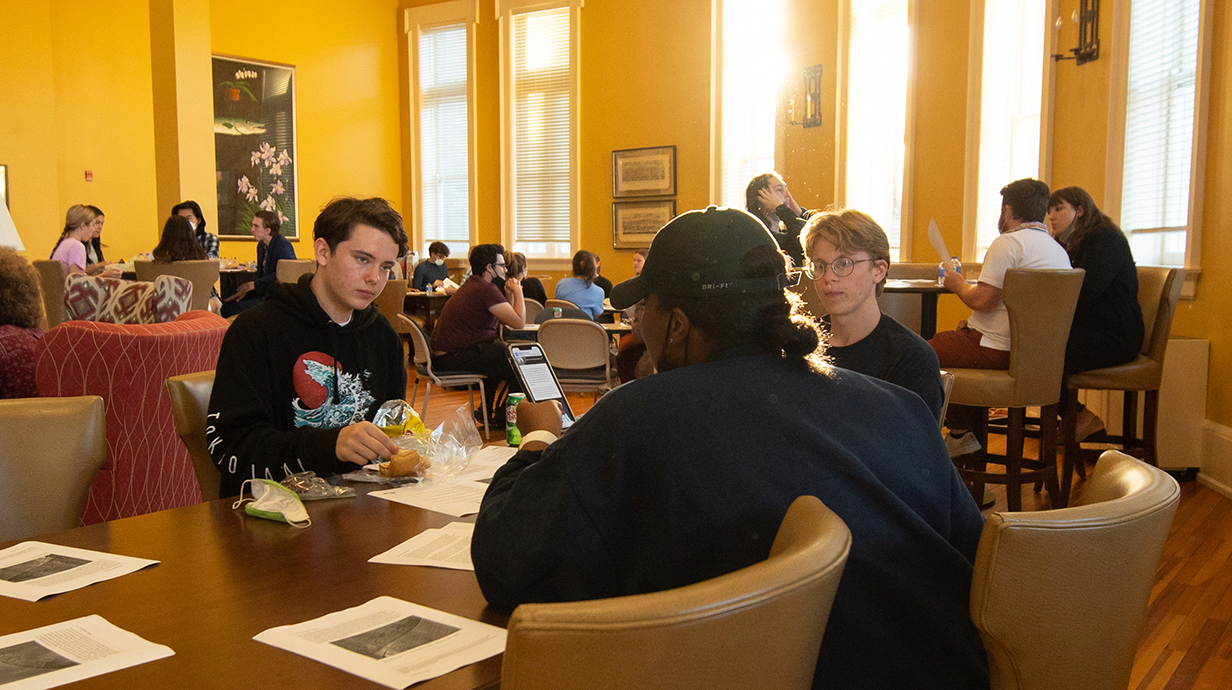
Ole Miss students participate in Just Conversations, an event meant to help bridge the political divide by encouraging discussion on difficult topics with student discussion leaders. Photo by Kevin Bain/Ole Miss Digital Imaging Services
"This event encourages people to think about convictions, not just their own, but the moral convictions that anyone might have if they were a character or a stakeholder in a dilemma," Mower said.
The desire to defend one's convictions can sometimes mean a person is hesitant to change, regardless of the situation or the facts, said Jennifer Rothschild, executive director of the Educating Character Initiative at Wake Forest University.
"We stubbornly close off to new learning and new engagement, and anyone who doesn't agree with us is easy to cast as an enemy," she said. "This framing is extremely important for character education, because if we are going to prepare students who can grow in wisdom as they gain experience in the world, we've got to help them learn how to hold convictions with care, and thought and depth, and to do all this without using those convictions as excuses for stubbornness.
"We as educators have to help students become people who are willing to hold onto what's right while remaining open to conversation and continued learning."
The goal of any Just Conversations event is not to change opinions, but to help people understand why they hold certain beliefs and how that moral conviction may influence how they perceive and react to differing opinions, Davis said.
"What participating in dozens of these conversations over several years has shown me is that people truly enjoy talking about what they believe and are interested in what others think as well," he said. "It's hard not to feel surprised when others start explaining their thoughts, and that triggers curiosity in listeners.
"People almost always warm up to the conversation and get excited about asking questions rather than arguing with the other people there."
Through the Carnegie Fellowship, Mower and her team will study the effectiveness of Just Conversations in a larger setting. They also will update training for session leaders and create guides and implementation kits to help other educational institutions create similar programs.
The fellowship will also allow Mower to take what the team learns and draft a book proposal.
"We're doing this here, now, at the university, but it's needed at all levels of education," she said. "We want to offer people multiple opportunities to have conversations and practice engaging with peers in this structured environment.
"We're not intending this program to solve all the ills of society – because no project can – but if we can make progress toward improving civil dialogue about deeply contentious ethical and political topics, even incrementally, that is a huge step forward."
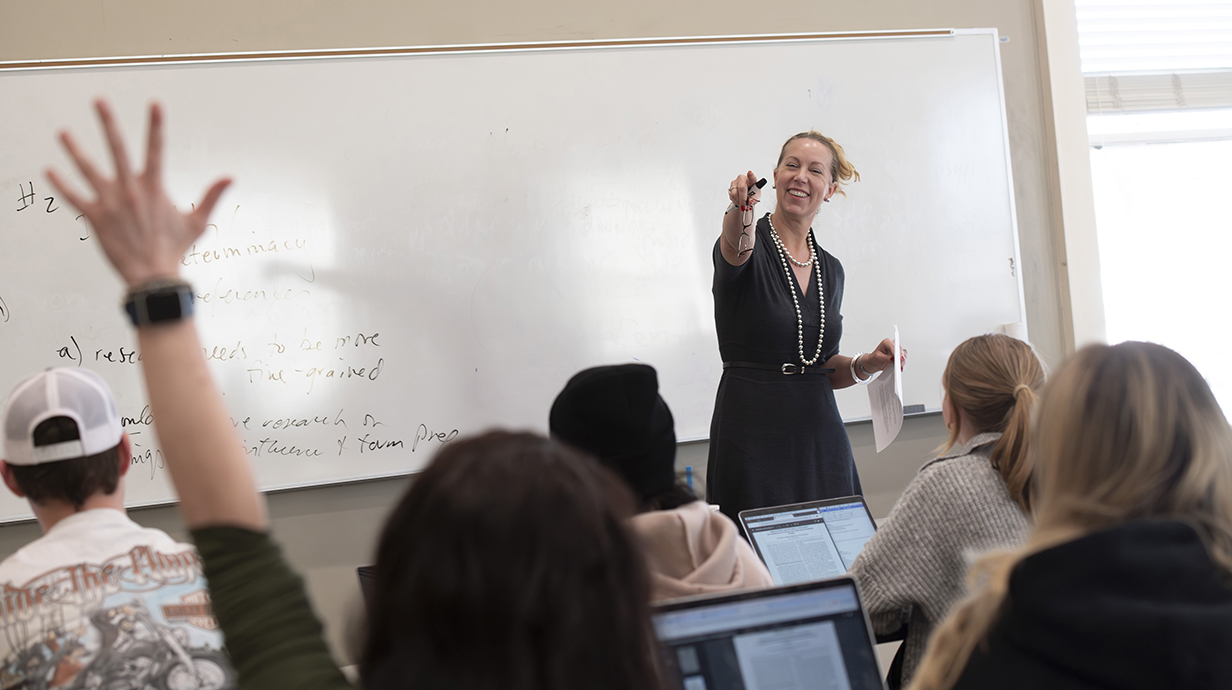
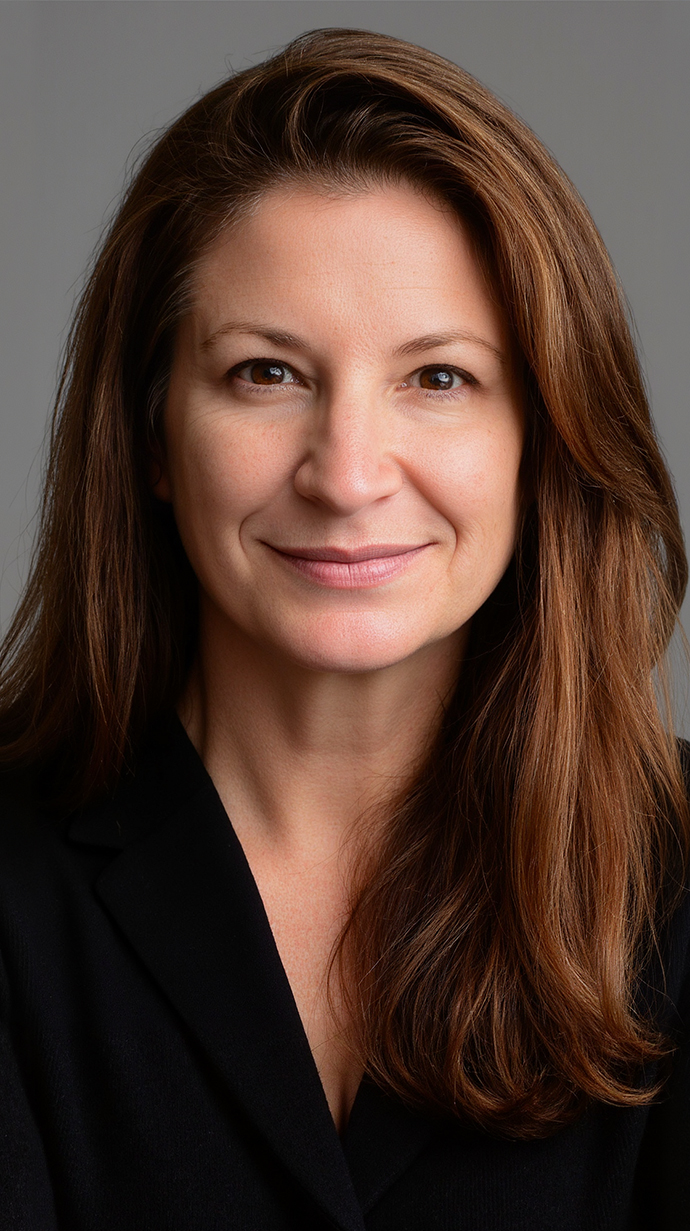
Top: Deborah Mower, professor of philosophy and director of The Center for Practical Ethics, calls on a student while teaching a moral psychology class. As a 2026 Carnegie fellow, Mower will explore the role that moral convictions play in political polarization in the United States. Photo by Srijita Chattopadhyay/Ole Miss Digital Imaging Services
By
Clara Turnage
Campus
Office, Department or Center
Published
May 05, 2026