
Century-old French Letters Reveal a Post-War Helping Hand
Ole Miss students translate correspondence between a widow in France and an Oxford book club
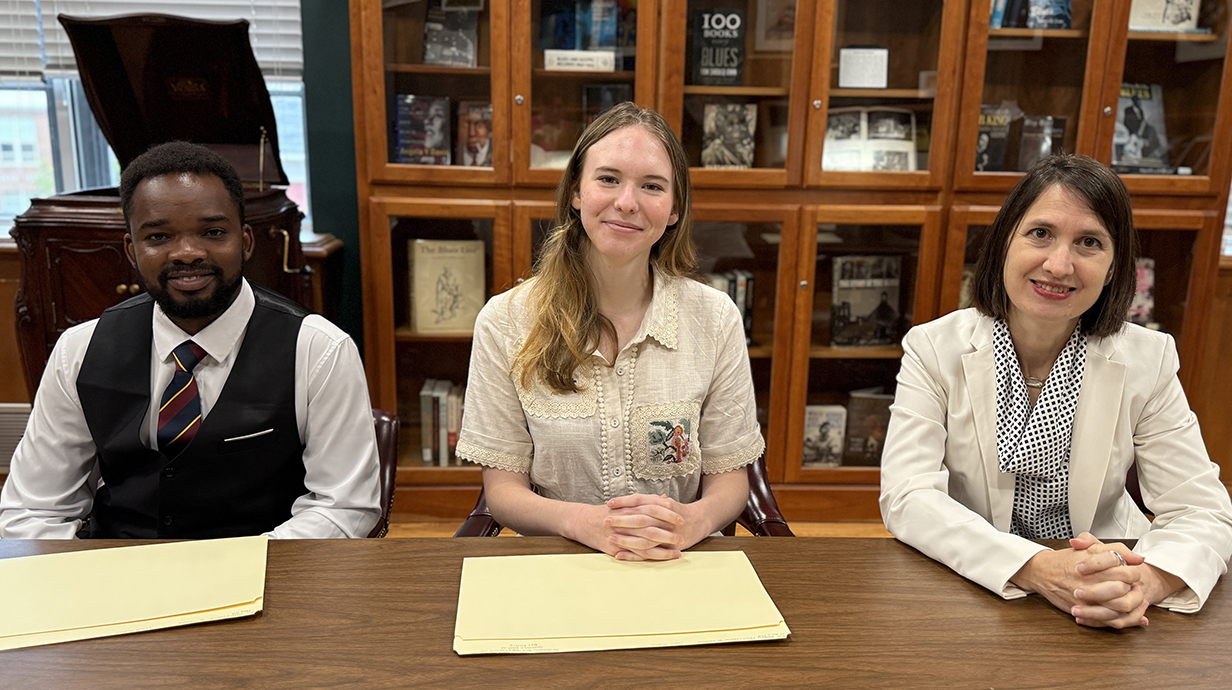
OXFORD, Miss. – More than a century after a French widow wrote letters to members of an Oxford book club, University of Mississippi students are helping her words be heard again.
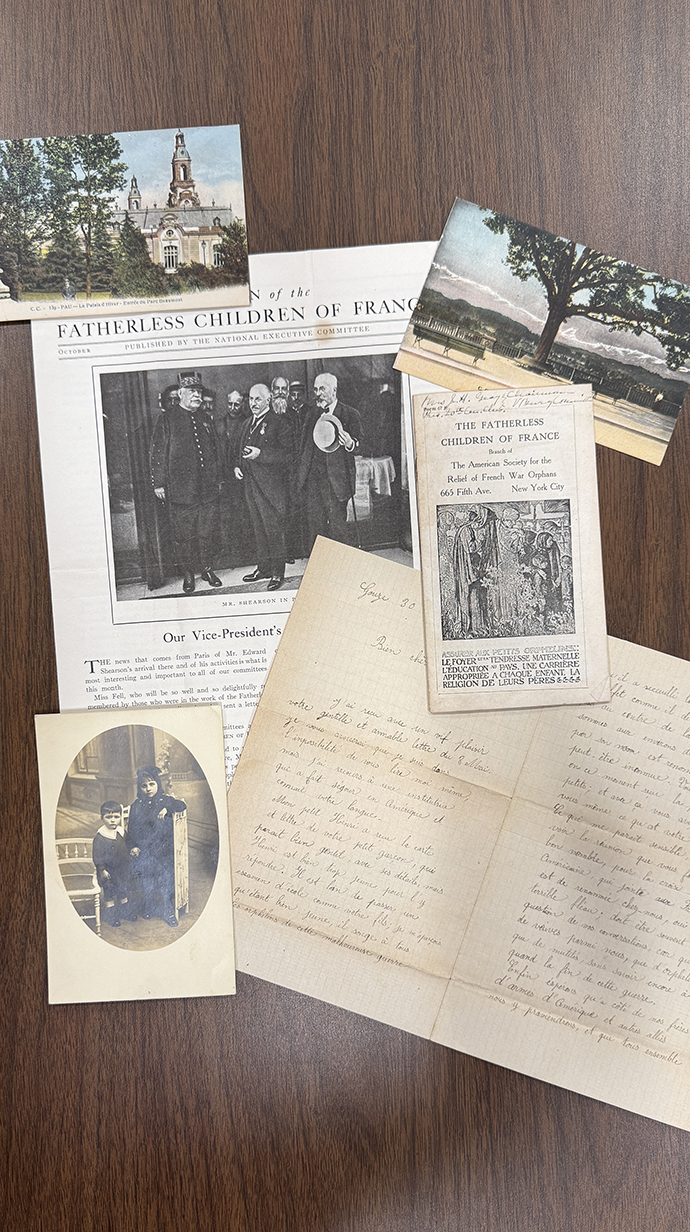
The Woman's Book Club of Oxford, Mississippi Collection contains several handwritten letters from a French widow, as well as photographs, articles and other records that document how women in Oxford helped support the French woman and her children during World War I. Photo by Emily Hollowell/Department of Physics and Astronomy
The letters are part of the Woman's Book Club of Oxford, Mississippi Collection in the University of Mississippi Libraries' Department of Archives and Special Collections. The collection includes meeting minutes, correspondence and unpublished manuscripts.
The correspondence became the focus of a collaborative translation and archival project last spring that aims to make the letters more accessible to researchers, students and the public. Three students enrolled in French 573: Translation Theory and Practice translated the letters for their capstone project.
"Translating these letters was a delightful and enriching experience for all of us," said Sylvester Ogbokwese, who completed his master's degree in modern languages in May. "It allowed us to journey beyond the classroom and connect our learning with real-life experience.
"We were fascinated by the writing styles and spellings of the period, which provided us with a unique glimpse into the past."
The project also allowed the students to learn more about the Oxford community and its history, said Ogbokwese, a native of Nigeria.
"We were particularly proud to discover the deep commitment to humanity demonstrated by the Women's Book Club, who have genuinely made and continue to make a meaningful difference in the lives of others," he said.
Founded in 1895, the Woman's Book Club has long combined literary study with civic work. During World War I, club members contributed to a relief program known as the Fatherless Children of France, coordinated through the Army Orphanage, a French nonprofit organization.
The club contributed $36.50 a year – the equivalent of 10 cents a day – to support Henri, a 3-year-old boy from the village of Gouze in southwest France whose father died while serving in the army. Most of the letters were written by Henri's mother.
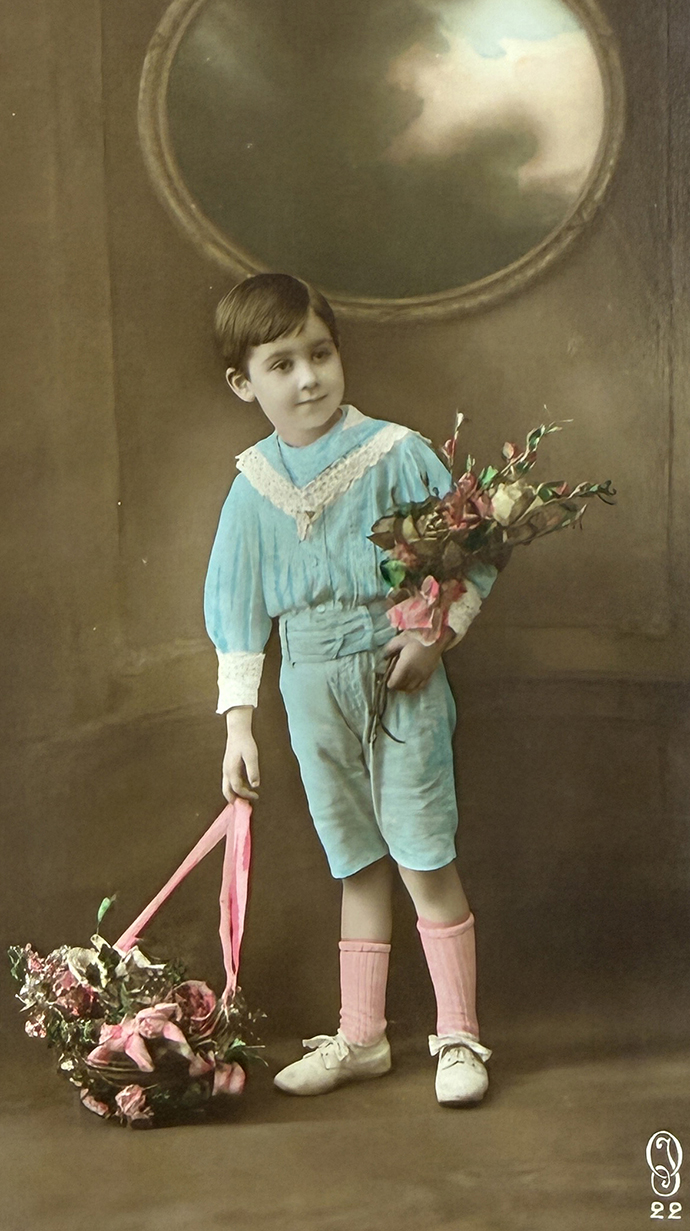
Women from Oxford contributed money to help support Henri, a 3-year-old French boy whose father died in World War I, more than a century ago.
"The letters illustrate how women in Oxford were involved in international relief efforts during World War I," said Leigh McWhite, political papers archivist and professor at the University Libraries. "They also remind us that the history of war is not only about battles, but also about families."
The course is designed to strengthen students' cultural and linguistic knowledge while introducing them to the complexities of translation.
"Translation is more than understanding vocabulary," said Ole Miss French professor Anne Quinney, who directed the project. "The students also had to work with the historical context of the letters, local idioms and social customs."
That meant students had to consider not only what Henri's mother wrote, but how she expressed gratitude, grief and hope within the formal conventions of early 20th century French correspondence.
In one letter, she confided that her brother had also been killed in the war and that her mother had recently died.
"I am happy to still have my two little ones as they have kept me alive and helped me forget a little, but they are still too young to lighten my heart in the moments of sadness that often come," she wrote.
The club's archival collection includes 13 letters written to the Oxford women, thanking them for their support and providing insights into life in France during and after the war. The letters included photographs of Henri and his sister.
As they translated the correspondence, the students also investigated people mentioned in the letters. In one, Henri's mother expressed hope that Capt. R.C. Beckett, brother of club secretary Mabel Fant, would return safely from his military service in France.
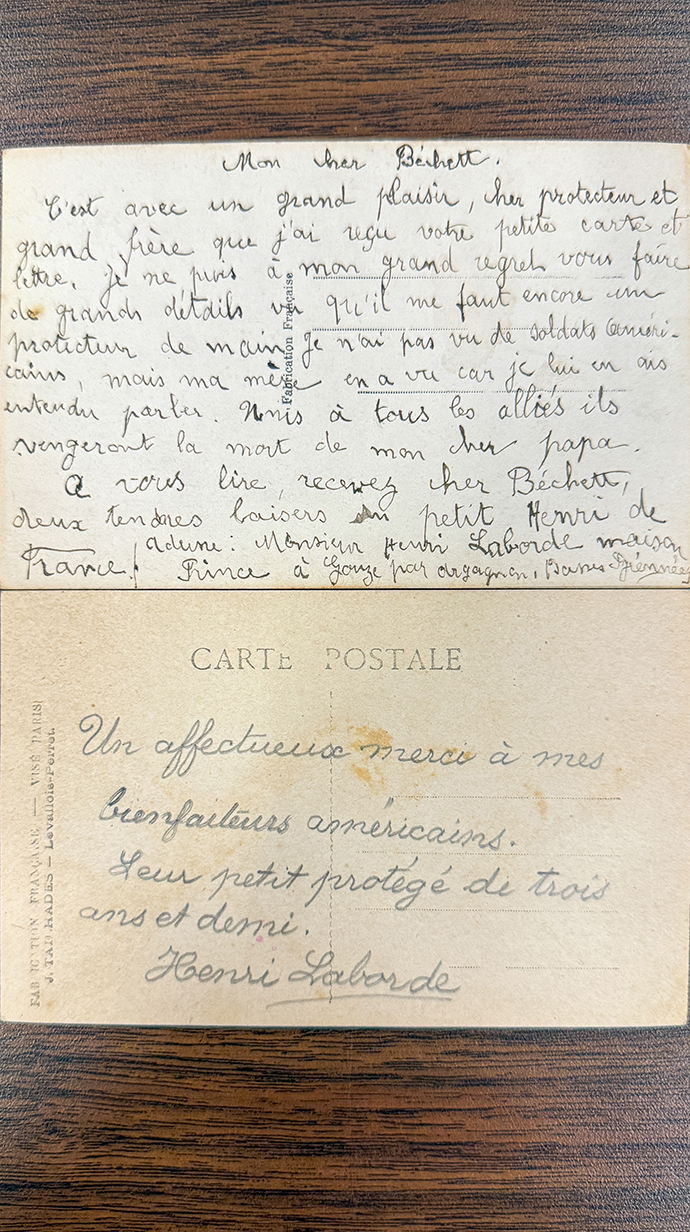
Letters from a French widow to a women's book club in Oxford provide a glimpse of life in France during World War I and document the impact of the club's financial support. Photo by Emily Hollowell/ Department of Physics and Astronomy
Quinney and her students discovered that Beckett was a great-uncle of Richard Howorth, co-owner of Square Books and former Oxford mayor.
What began as a classroom project has become part of the university archive. The completed translations were added to the Woman's Book Club collection, giving future researchers another way to understand the correspondence, the French mother who wrote it and the Oxford women who preserved it.
"Special Collections routinely provides archival research instruction to undergraduate and graduate classes that introduce students to the thrill of handling original primary source material," McWhite said. "In a rare turnabout, the students in French 573 not only became intimately acquainted with this small set of World War I letters; they enhanced future access to the correspondence by contributing thoughtful translations that considered the cultural context of the author."
Top: Sylvester Ogbokwese (left), who earned a master's degree in modern languages, Chloe Vizier, a Jackson resident who earned a bachelor's degree in May, and Anne Quinney, an Ole Miss professor of French, work with letters and other documents from the Woman's Book Club of Oxford, Mississippi Collection at the Department of Archives and Special Collections. The correspondence reveals how the Oxford women's group helped support a French widow and her 3-year-old son during World War I. Photo by Emily Hollowell/Department of Physics and Astronomy
By
Staff Report
Campus
Office, Department or Center
Published
September 16, 2026