Researchers Explore How Developing Hearts Recover from Early Errors
Undergraduate researchers gain experience, community through NSF-funded project
OXFORD, Miss. – A University of Mississippi biologist is studying how developing hearts bounce back from early setbacks, work that could improve scientists' understanding of congenital heart defects.
The heart is the first functioning organ to develop in the body, and congenital heart defects are the most common type of birth defects. But not all genetic mutations or environmental exposures in early heart cells lead to a birth defect; often, the heart recovers.
Joshua Bloomekatz's research focuses on how some early-stage embryos compensate for these developmental mistakes to better understand why others do not.
"This is a fundamental biology question, but in the long term, it could give us an idea of how (heart defects) happen," said Bloomekatz, associate professor of biology. "If we can figure out the recovery processes, we may be able to figure out a way to stimulate them so that we can overcome birth defects later on. But that has to start with understanding what those processes are."
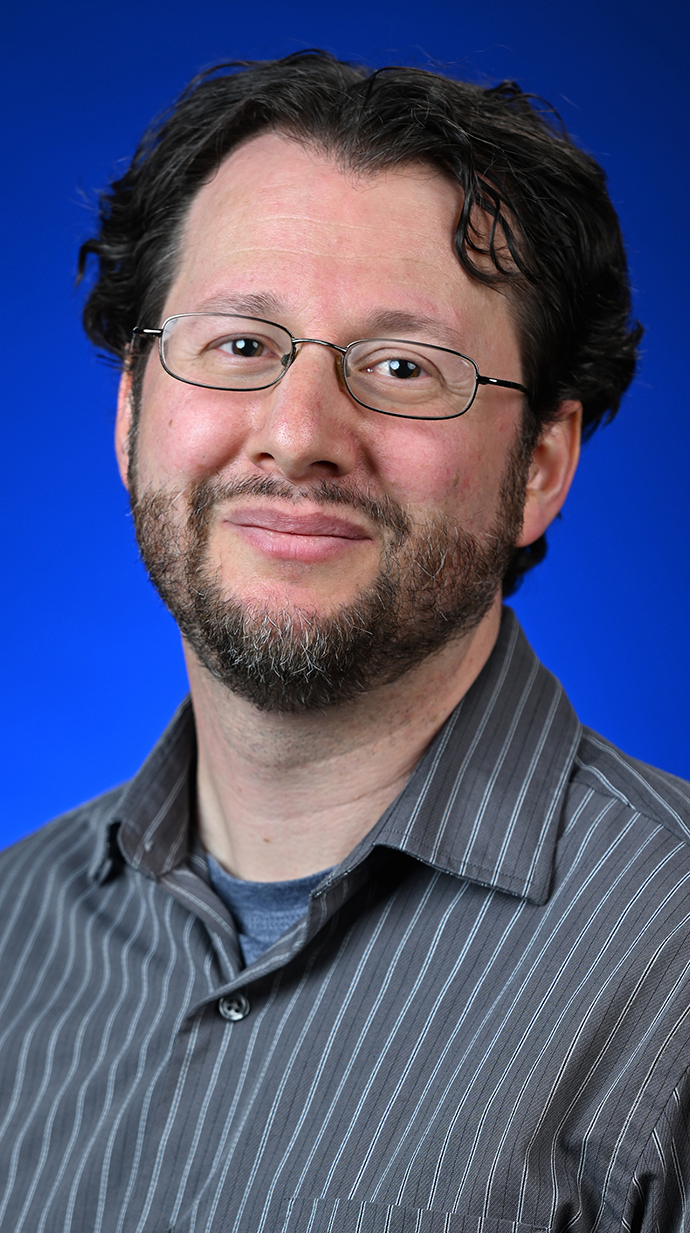
Funded by a Faculty Early Career Development Program award from the National Science Foundation, Bloomekatz is using zebrafish to study the earliest stages of heart development. Zebrafish are a translucent species of minnow that share 70% of human genes and have a cardiovascular system that closely resembles humans'.
Omeyimi Dimowo, a sophomore biology major at Ole Miss from Lagos, Nigeria, and Allison Holmes, a senior biology major from Potts Camp, are helping to make those earliest stages of heart development visible.
"The end goal is that translational medicine and seeing how this research right now in zebrafish could at some point help us prevent congenital heart defects in humans," Dimowo said.
The heart starts as two groups of cells on opposite sides of an embryo. Those cells migrate toward one another, merge at the center of the embryo and then twist to form chambers of the heart.
Even at these first, earliest stages of development, the heart can heal defects, Holmes said.
"It's like a fail-safe that the body has," she said. "If something goes wrong, there is a process there to rescue it."
Understanding that fail-safe could support future research on congenital heart defects in humans, said Ethan Barker, a senior general business major from Madison on the research team.
"In order to understand why heart defects happen, you also have to know why they don't happen," he said. "If you can understand why one heart may be healthy and another unhealthy, you can give yourself a path back to normalcy from a defect.
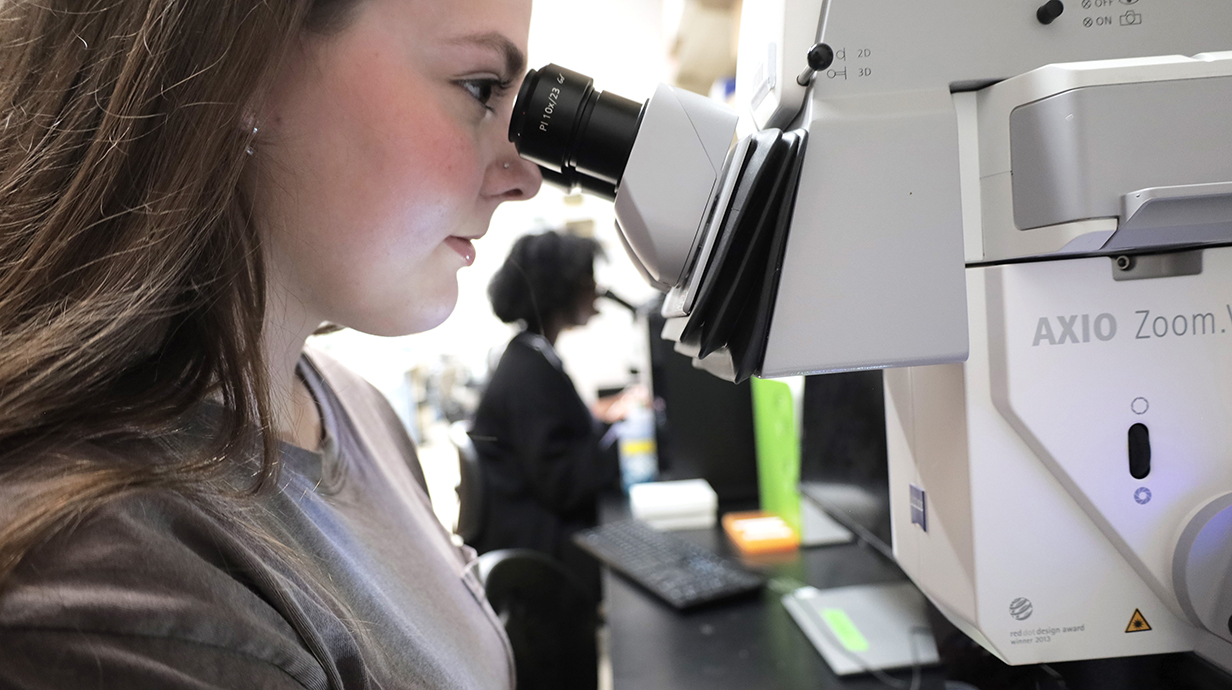
Senior biology major Allison Holmes examines zebrafish embryos in Joshua Bloomekatz's lab. Holmes has been a member of the research lab for two years. Her work focuses on using lumiphores to make early stages of heart development visible. Photo by Clara Turnage/University Marketing and Communications
"Knowing how the heart is supposed to work is step No. 1 to preventing those defects."
As part of the grant, Bloomekatz also created a research-focused undergraduate course on cardiovascular resilience. Barker and Holmes took the course.
"If I didn't take that class, I doubt I would be participating in this research," Barker said. "The class was so different from anything I'd taken before because it was a transition from all of the textbooks and the lectures to real, self-directed research."
Exposing students to research early allows them to see themselves as scientists, Bloomekatz said.
"It was a lot of work, but I think it's really worthwhile because they get to see that everything is connected," he said. "Genetics is not separate from biochemistry, is not separate from cell biology.
"Things become integrated, and they have the chance to take the things they've learned across multiple classes and put them into action. That's what happens in a lab."
It also exposes students to other avenues for their interest in science, Dimowo said.
"Oftentimes, when someone is interested in biology or chemistry, they feel like the only end goal is med school," she said. "But when you get opportunities like this, you see the other fields and careers that are available.
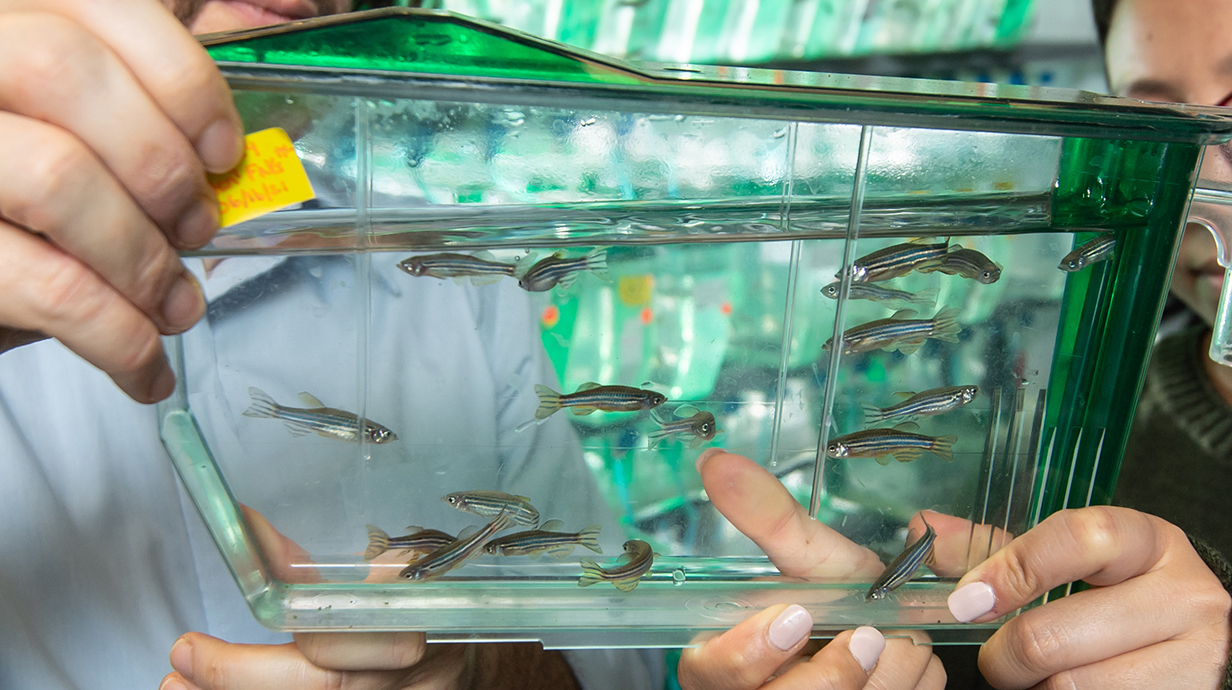
Researchers use zebrafish to study early stages of organ development because the translucent minnows share 70% of human genes and have a similar cardiovascular system. Photo by Kevin Bain/Ole Miss Digital Imaging Services
"It really helps you make a complete, informed decision when you have those experiences."
When the five-year grant has ended, the students will have graduated. Holmes and Barker hope to be entering their first year of residency following medical school, and Dimowo hopes to be a graduate student working toward a doctorate in genetics.
But the experiences they gained through the Ole Miss program will stay with them, Holmes said.
"This lab has given us a lot of great tools to go forward, not just for med school, but for anything we want to do in the future," she said. "We all have our jobs, and we have to work together to keep everything running.
"I think we've really built a community. We help each other. We ask questions. That connection is a great thing; it's a team that we get to take with us even after we leave the lab."
This material is based on work supported by the National Science Foundation grant no. 2443480.
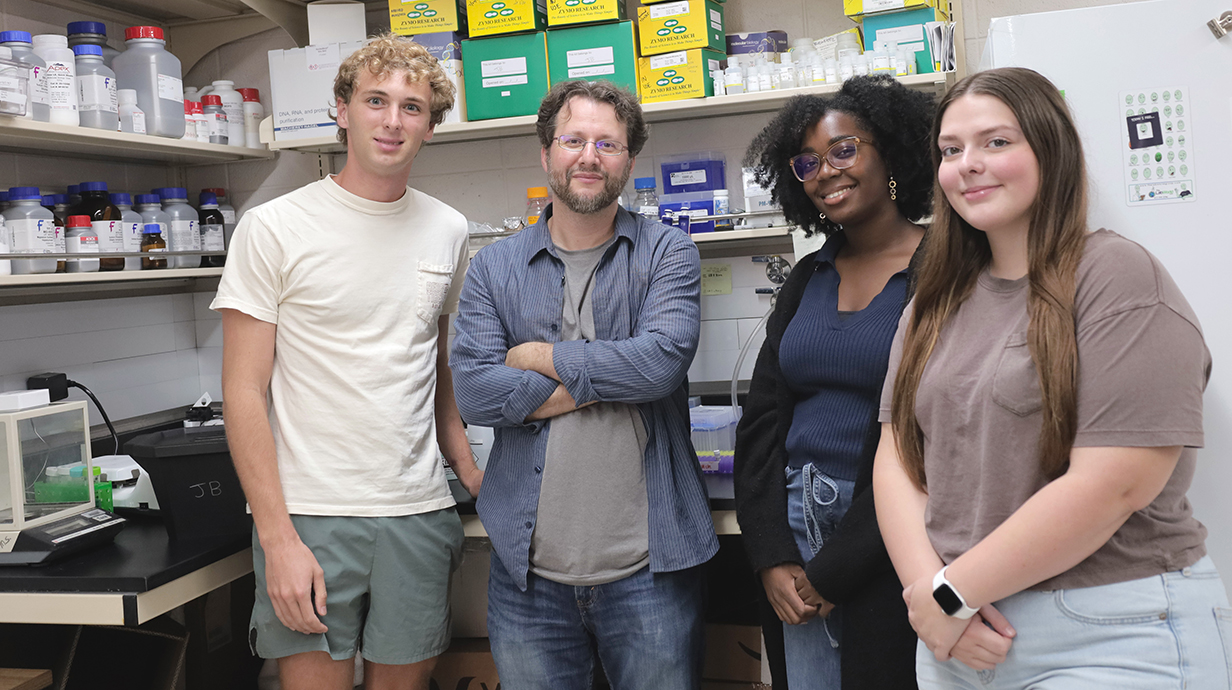
Top: Ole Miss biology professor Joshua Bloomekatz (second from left) gathers in his lab with his research team, which includes (from left) Ethan Barker, a senior general business major from Madison; Omeyimi Dimowo, sophomore biology major from Lagos, Nigeria; and Allison Holmes, a senior biology major from Potts Camp. Bloomekatz has received a National Science Foundation grant to study heart formation that includes a component aimed at promoting undergraduate participation in research. Photo by Clara Turnage/University Marketing and Communications
By
Clara Turnage
Campus
Office, Department or Center
Published
September 02, 2026