
Program Uses Space Medicine to Launch Students Into STEM
NASA-funded program will introduce Mississippi students to artificial intelligence, robotics, healthcare
OXFORD, Miss. – A new University of Mississippi STEM program will introduce students to artificial intelligence and healthcare by exploring one of the biggest challenges in spaceflight: keeping astronauts healthy in space.
In a program funded by the Mississippi Space Grant Consortium, Mo Maniruzzaman, Ole Miss chair and professor of pharmaceutics and drug delivery, is planning a new research and workshop series for undergraduate and K-12 students in Lafayette County that uses space medicine as a gateway to science, technology, engineering and mathematics.
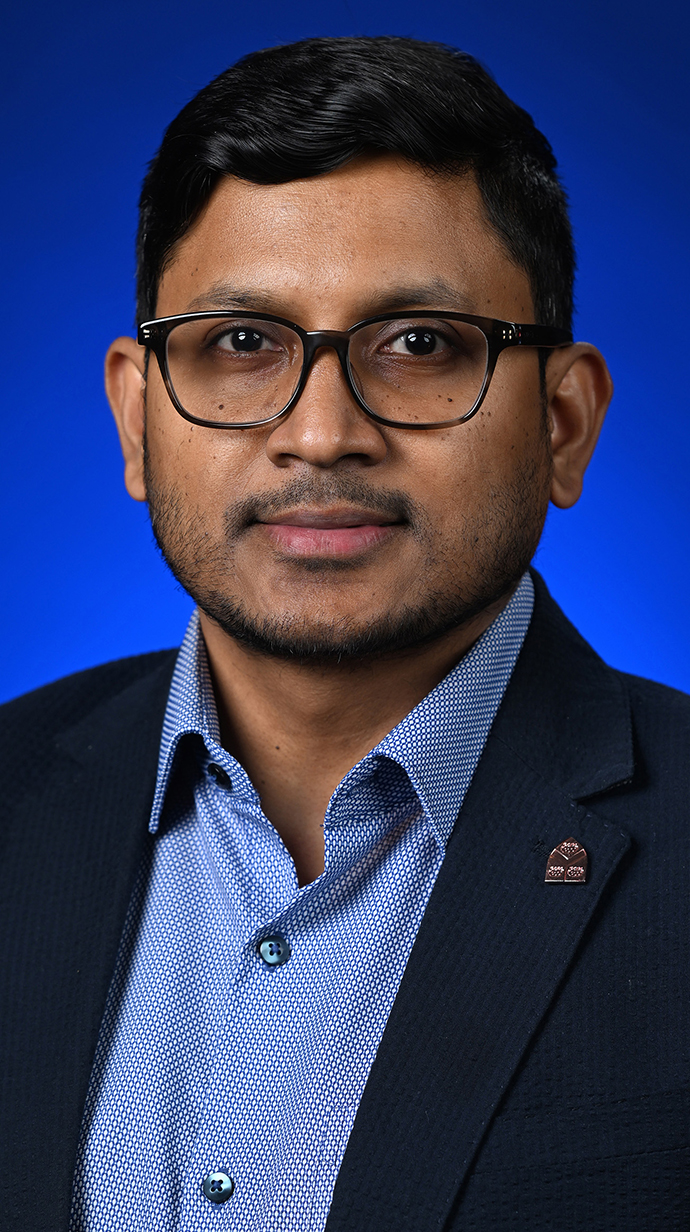
"How do we administer the right medication for astronauts in the future?" Maniruzzaman said. "Leveraging the tools we have like advanced algorithms, AI and robotics is going to be key to answering that question, and that means we need students who are trained on those technologies.
"What we want to do is educate college and school students in Oxford and Lafayette County so that we can develop the workforce that the future needs."
The pilot program will offer up to 20 students a chance to learn about Maniruzzaman's lab, where researchers are already working to solve space-age problems, such as the health impacts of long-term stays in space. Elom Doe, a third-year doctoral student; Andrew Hightower, a first-year doctoral student in pharmacy; and Aubrey O'Donnell, a sophomore pharmacy student from Sacramento, California, are helping to design the space medicine project.
Living without gravity for long periods of time can cause bone and muscle deterioration, and astronauts are often exposed to space radiation.
"One of the biggest issues is cancer because of all the radiation in space," Hightower said. "We have to study how medication behaves in space so that we can offer astronauts the ability to print those drugs on site in the exact dose for person who needs it."
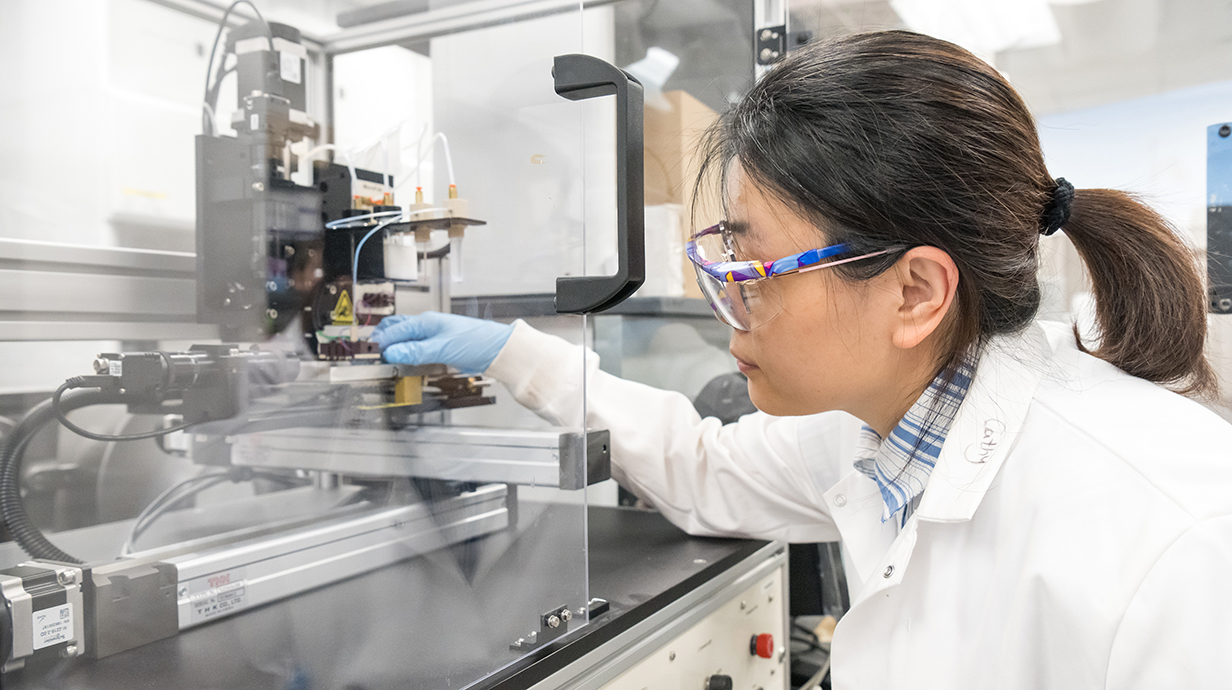
Research scientist Yu Zhang works with the MicroFab JetLab, one of the world's smallest 3D printers, in the Pharmaceutical Engineering and 3D Printing Lab. Photo by Srijita Chattopadhyay/ Ole Miss Digital Imaging Services
In Maniruzzaman's lab, researchers such as Farhana Afrose, a doctoral pharmacy student, are using ultrasound to study the problem.
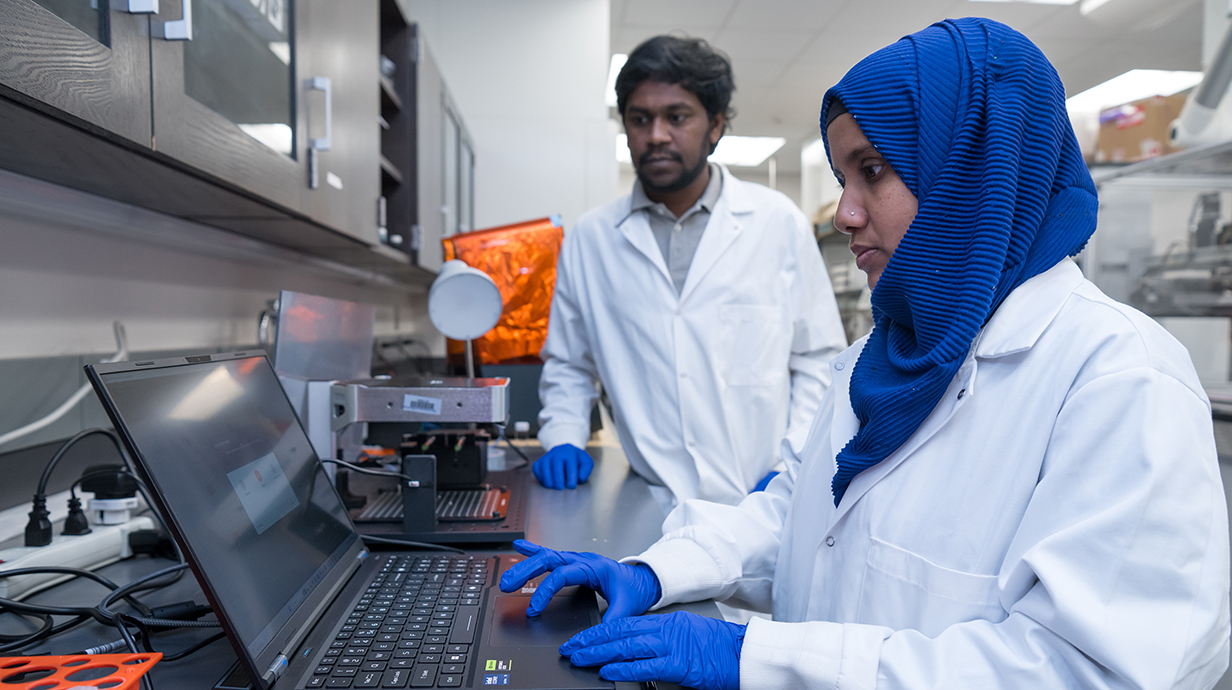
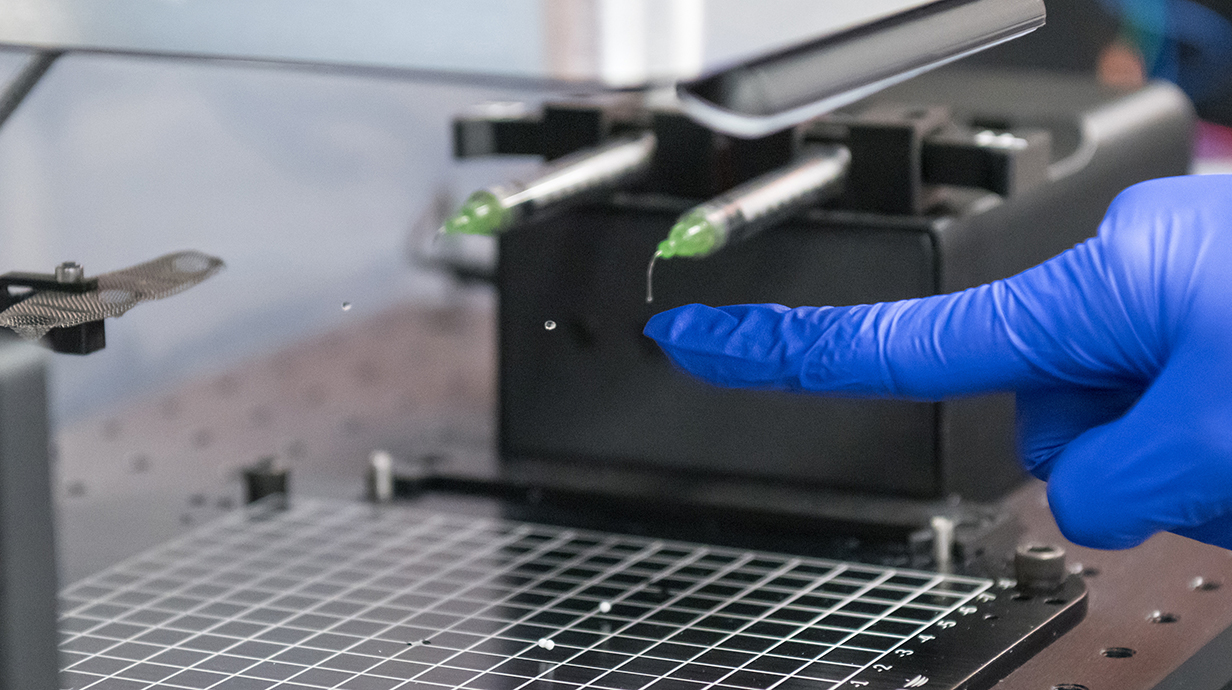
During a recent visit to the lab, Afrose pointed to four spheres of liquid hanging in the air, seeming to defy gravity. The machine creating the display, an ultrasound levitator, uses sound waves to counteract gravity, suspending small amounts of material in midair.
"If we can mimic the conditions of space, we can learn so much," Afrose said. "The zero gravity and radiation effects in space are a huge concern for NASA and for all astronauts, but it is very difficult to study."
The customized levitator gives researchers a controlled way to study how liquids, cells, drugs or other biological materials behave when gravity's influence is reduced without having to send an experiment into space.
"With this technology, we can learn in weeks what it would take years to learn in space," Afrose said.
Technologies such as the ultrasound levitator could interest students not just in foundational science like gravity, but in the ways scientists are trying to solve challenges of space exploration.
"It's not often that you get to be a part of such an important project when you're still in undergrad," O'Donnell said. "Being a part of this lab has really shaped my understanding of the possibilities of the future."
Students do not have to pursue space medicine to benefit from what they will learn in the program, Maniruzzaman said.
"These technologies – AI, robotics, machine learning – are reshaping the way we currently do research and development, especially in the domains of pharmaceutical manufacturing and precision medicine, but in many fields," he said. "That means we need to train a workforce that is not educated for today, but educated for tomorrow."
This material is based on work supported by NASA's Mississippi Space Grant Consortium under grant no. 80NSSC25M7119.
Top: Doctoral students Farhana Afrose (left) and Thirupathi Reddy work with an ultrasound levitator in the Pharmaceutical Engineering and 3D Printing Lab. The device uses sound waves to counteract gravity, helping researchers study how liquids, cells, drugs or other biological materials behave in space. Photo by Srijita Chattopadhyay/Ole Miss Digital Imaging Services
By
Clara Turnage
Campus
Office, Department or Center
Published
October 21, 2026