
Researcher Tackles Impact of Life Events on Businesses' Bottom Line
Ole Miss professor examines how marketing executives' private lives affect job performance
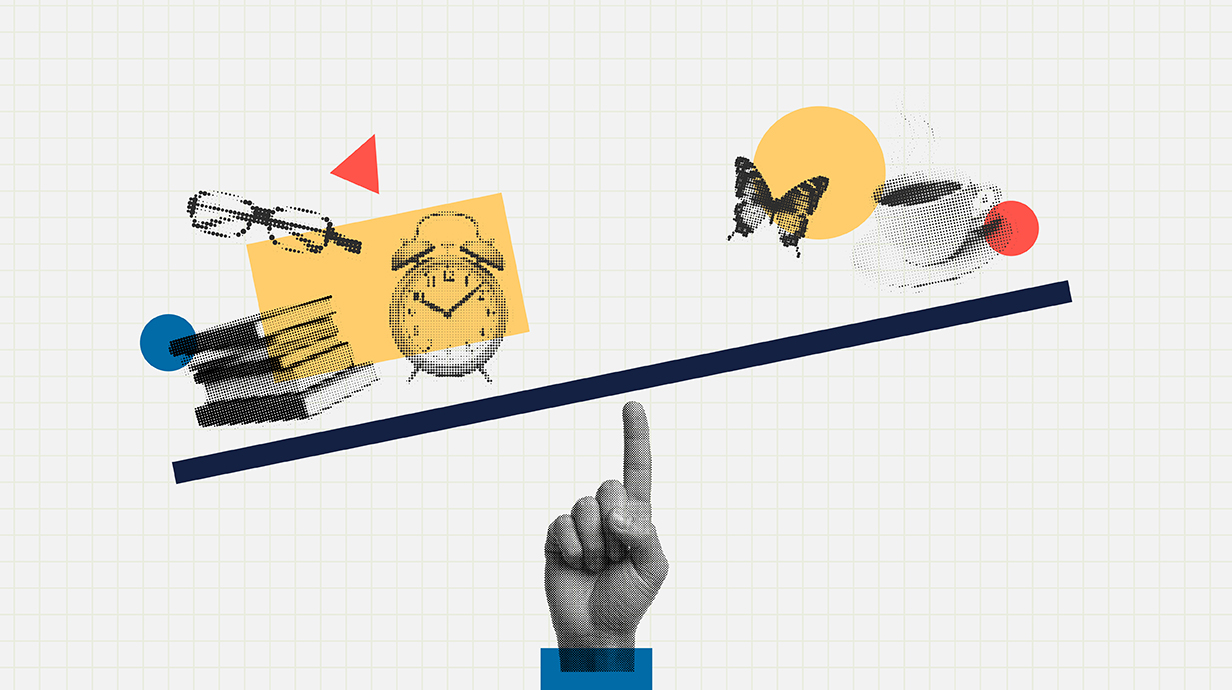
OXFORD, Miss. – When a major company's CEO goes through a messy divorce or is arrested for drunk driving, investors often get nervous, worried that the executive's personal struggles will dent their returns. But most people hardly notice when a chief marketing officer has similar personal problems.
However, the impact on the company could also be significant. University of Mississippi marketing professor Cong Feng researched the issue to explore how a chief marketing officer's personal life can seep into their performance.
"I think the CMO plays a very unique and important role in organizations because people consider them as the customer representative in the top management team," Feng said. "So they have the responsibility to have a constant exchange and communication with all external stakeholders."
The Ole Miss researcher recently published an analysis of this issue in the October volume of the Journal of Business Research. The article includes a role-specific framework to help explain how an executive's personal life may affect job performance, both positive and negative.
This research is important because executives do not leave their humanity at the door, said Barry Babin, chair of the Department of Marketing, Analytics and Professional Sales.

"Dr. Feng's work gives researchers and organizations a thoughtful way to understand those potential spillovers without treating them as personal failings," he said. "The study does not argue that a CMO's private life automatically harms or improves performance.
"Instead, it offers a rigorous framework for asking how different kinds of life transitions may shape marketing decisions and for identifying the organizational support that can help preserve both employee well-being and marketing effectiveness."
Feng developed four categories to link life events and tie them to specific marketing capability outcomes, using the acronym SIGN:
- Stress and Crisis
- Identity and Adaptation
- Growth and Legacy
- Norms and Stability.
"Other scholars could use available executive records and conduct interviews to really study all of those life events, issues and problems in greater detail," he said.
Feng considered 34 private life events, including marriage, childbirth, divorce and deaths of close family members, dividing them into the four categories. These private life events are likely to influence a person's work, Feng said. For example, divorce may cause grief, which drains energy and causes tension.
"If they don't have sufficient energy, they may miss or overlook some of the market trends," he said. "And that will affect how effective the campaign could potentially be."
When a CMO experiences legal trouble, such as a DUI charge, it could stain how customers think about the company. Even minor legal issues that never reach the public eye could still have an impact.
Having to deal with a legal case might drain one's ability to go through a contract negotiation, leading the executive to just renew the contract rather than taking time to conduct due diligence and assess whether the terms still work for the company, Feng said.

Not all life events harm job performance, though. For example, the birth of a child may bring joy and excitement while also causing fatigue and requiring personal adjustments. But new parents may feel a renewed focus at work.
Feng said he has experienced this effect in his own life.
"I started to work even harder and just trying to, you know, get a paper published and get tenure," he said. "And when I started to see people citing my research, I started to feel very excited about this whole process because one day, my daughters might see something I wrote still circulating.
"So, I feel like it's a purpose-driven thing; we want to create a legacy that, you know, your kids will be able to see."
Experiencing major life events is normal, and companies should not view this as meaning diminished commitment or capability, Babin said. The goal should be to create a respectful workplace that provides support, not become an intrusive monitor of someone's personal life.
"Practical support of the person is important: flexibility when appropriate, temporary rebalancing of workloads, trusted deputies or shared leadership arrangements and clear continuity plans for major marketing initiatives," he said. "Organizations can also protect both the individual and the business by building strong teams and decision processes before a crisis occurs."
Feng's work is important, both for the department and for businesses, Babin said.
"His project is a particularly strong example of his ability to identify an overlooked question, build a clear conceptual framework and create a practical agenda for future research and business leaders," he said.
"I also appreciate that the work treats a delicate subject with care without sensationalizing executives' personal lives. Rather, the article asks how organizations can better understand, support and sustain leaders during significant life transitions."
Top: Having the energy to attend to work demands and home life can be challenging and difficult to balance. Ole Miss marketing professor Cong Feng examined how this balance for chief marketing officers can affect their company’s performance. Graphic by Sarah Tewolde/University Marketing and Communications
By
Cain Madden
Campus
Office, Department or Center
Published
October 22, 2026