
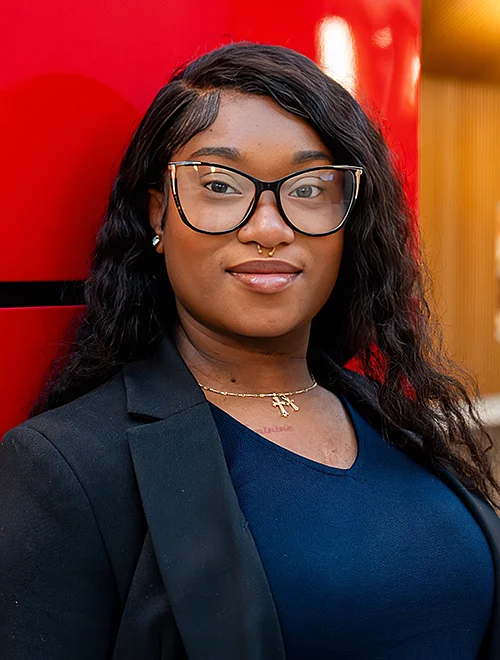
Q&A with Angelina Hayes
Why did you choose to attend the University of Mississippi?
If I’m being real with you, the University of Mississippi wasn’t always my first choice. Coming from Jackson, I had my doubts; I wasn’t sure if I would fit in or if it would feel like a place where I could truly be myself. But when I actually got here and spent time on campus, something shifted for me. What stood out the most was the people. I started to feel a sense of community that I didn’t expect. It wasn’t just about classes or organizations; it was the small things, like conversations with classmates, professors who genuinely care, and finding spaces where I felt seen and supported. It started to feel less like a big university and more like a family.
If I’m being real with you, the University of Mississippi wasn’t always my first choice. Coming from Jackson, I had my doubts; I wasn’t sure if I would fit in or if it would feel like a place where I could truly be myself. But when I actually got here and spent time on campus, something shifted for me. What stood out the most was the people. I started to feel a sense of community that I didn’t expect. It wasn’t just about classes or organizations; it was the small things, like conversations with classmates, professors who genuinely care, and finding spaces where I felt seen and supported. It started to feel less like a big university and more like a family.
What would you tell a high school student about your major? What is most important for them to know if they are interested in pursuing that field of study?
One of the biggest things I’d want you to know is that this field requires flexibility. I came in thinking I had everything mapped out as an engineering major, but once I got exposure to different classes and conversations, I realized I was more passionate about helping people directly and understanding health and legal systems. So don’t feel like you have to have everything figured out right now; be open to growth and change.
I’d also say you need to be ready to think critically. Whether you’re studying health disparities, public policy, or law-related topics, you’re going to be asked to look deeper; ask why systems are the way they are, who they impact, and how they can be improved. It’s not always easy, but it’s meaningful work.
One of the biggest things I’d want you to know is that this field requires flexibility. I came in thinking I had everything mapped out as an engineering major, but once I got exposure to different classes and conversations, I realized I was more passionate about helping people directly and understanding health and legal systems. So don’t feel like you have to have everything figured out right now; be open to growth and change.
I’d also say you need to be ready to think critically. Whether you’re studying health disparities, public policy, or law-related topics, you’re going to be asked to look deeper; ask why systems are the way they are, who they impact, and how they can be improved. It’s not always easy, but it’s meaningful work.
Why is your department a special place?
Honestly, what makes my department in the College of Liberal Arts at University of Mississippi special is the people and the environment they create. It doesn’t feel like you’re just another student in a huge lecture hall; you actually feel seen. Professors know your name, they check in on you, and they genuinely want to see you succeed, not just academically but as a person.
Honestly, what makes my department in the College of Liberal Arts at University of Mississippi special is the people and the environment they create. It doesn’t feel like you’re just another student in a huge lecture hall; you actually feel seen. Professors know your name, they check in on you, and they genuinely want to see you succeed, not just academically but as a person.
What professor or class has had the most impact on you?
One class that really impacted me here at University of Mississippi was my Black Psychology course. What stood out the most was how the class centered Black experiences in a way I hadn’t always seen in traditional psychology courses. We talked about things like identity, mental health in the Black community, generational trauma, and systemic barriers—but not just in a textbook way. It connected directly to real life, to our families, and to our own experiences. There were moments where I felt like, “Wow, this is something I’ve lived but never had the language to explain."
One class that really impacted me here at University of Mississippi was my Black Psychology course. What stood out the most was how the class centered Black experiences in a way I hadn’t always seen in traditional psychology courses. We talked about things like identity, mental health in the Black community, generational trauma, and systemic barriers—but not just in a textbook way. It connected directly to real life, to our families, and to our own experiences. There were moments where I felt like, “Wow, this is something I’ve lived but never had the language to explain."
What do you hope to do after graduation? What are your career goals/plans?
After I graduate from University of Mississippi, I plan to continue my education by pursuing my master’s degree and then going on to law school. My ultimate goal is to become a civil rights attorney, focusing on issues that impact marginalized communities; especially those that reflect where I come from in Jackson, Mississippi.
After I graduate from University of Mississippi, I plan to continue my education by pursuing my master’s degree and then going on to law school. My ultimate goal is to become a civil rights attorney, focusing on issues that impact marginalized communities; especially those that reflect where I come from in Jackson, Mississippi.
What is one thing you wish you knew as an incoming freshman that you’d tell your past self (about the general college experience)?
One thing I wish I knew as an incoming freshman at University of Mississippi is that it’s okay to not have everything figured out; and honestly, most people don’t. When I first got here, I felt like I needed to have a perfect plan: my major, my career, my whole life mapped out. I started in engineering thinking that was “the” path for me, but over time I realized it wasn’t where my passion was. I wish I could tell my freshman self that changing your mind isn’t failing; it’s growing. College is really about discovering who you are, not proving that you already know.
One thing I wish I knew as an incoming freshman at University of Mississippi is that it’s okay to not have everything figured out; and honestly, most people don’t. When I first got here, I felt like I needed to have a perfect plan: my major, my career, my whole life mapped out. I started in engineering thinking that was “the” path for me, but over time I realized it wasn’t where my passion was. I wish I could tell my freshman self that changing your mind isn’t failing; it’s growing. College is really about discovering who you are, not proving that you already know.
Need to Know More?
Ask a question by using the form below.