Why did you choose to attend UM?
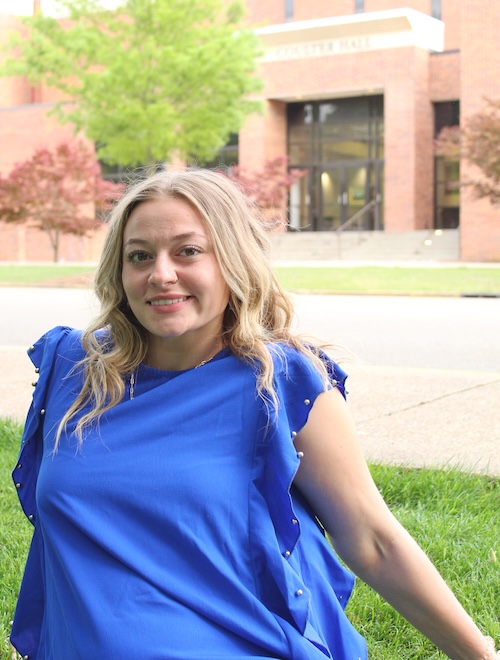
Having lived in St. Louis for most of my life, I initially didn’t know much about the University of Mississippi beyond my goal of attending an SEC school. I knew I wanted to major in something related to forensics, so my mother and I began researching the best schools with forensic programs. That’s when I discovered UM ranked highly on the list! After learning more and realizing it was just a five-and-a-half-hour drive, we scheduled my first campus visit. The moment I stepped onto campus, I fell in love. I know it sounds cliché, but it truly was love at first sight. I loved the appealing small-town feel of Oxford, combined with the diverse mix of people. The campus itself was beautiful, and I loved the Starship robots delivering food around campus! I had the incredible opportunity to meet with the Forensics Program coordinator and tour the chemistry building, and from that moment, I knew this was where I would spend the next four years of my life. After two more visits, I found myself moving into Crosby Hall, excited to begin my journey at UM.
Having lived in St. Louis for most of my life, I initially didn’t know much about the University of Mississippi beyond my goal of attending an SEC school. I knew I wanted to major in something related to forensics, so my mother and I began researching the best schools with forensic programs. That’s when I discovered UM ranked highly on the list! After learning more and realizing it was just a five-and-a-half-hour drive, we scheduled my first campus visit. The moment I stepped onto campus, I fell in love. I know it sounds cliché, but it truly was love at first sight. I loved the appealing small-town feel of Oxford, combined with the diverse mix of people. The campus itself was beautiful, and I loved the Starship robots delivering food around campus! I had the incredible opportunity to meet with the Forensics Program coordinator and tour the chemistry building, and from that moment, I knew this was where I would spend the next four years of my life. After two more visits, I found myself moving into Crosby Hall, excited to begin my journey at UM.
What would you tell a high school student about your major? What is most important for them to know if they are interested in pursuing that field of study?
Forensic Chemistry at the University of Mississippi is one of the most exciting and unique science programs available, with several things that make it stand out. It’s an accredited Bachelor of Science degree and is ranked as one of the top forensic chemistry programs in the country. In the four-year degree plan, you’ll take the usual science courses like General Chemistry and Organic Chemistry but also dive into specialized classes like Toxicology and Forensic DNA Analysis. These courses focus on the real-world application of science in connection to crime and law, giving you a clear picture of how chemistry is used in solving crimes. One of the best parts of the program is the required internship, where you’ll get hands-on experience in a crime lab and see how what you’re learning is used in the real world. On top of that, because Forensic Chemistry is a smaller major at UM, you’ll get to know everyone in your classes, forming tight-knit bonds with classmates who help and motivate each other. There’s even a Forensic Science Honor Society and a dedicated room in the science building just for students in the program, making the community even closer. The mix of real-world applications, smaller class sizes, and a supportive community makes Forensic Chemistry at UM a truly special and rewarding major!
Forensic Chemistry at the University of Mississippi is one of the most exciting and unique science programs available, with several things that make it stand out. It’s an accredited Bachelor of Science degree and is ranked as one of the top forensic chemistry programs in the country. In the four-year degree plan, you’ll take the usual science courses like General Chemistry and Organic Chemistry but also dive into specialized classes like Toxicology and Forensic DNA Analysis. These courses focus on the real-world application of science in connection to crime and law, giving you a clear picture of how chemistry is used in solving crimes. One of the best parts of the program is the required internship, where you’ll get hands-on experience in a crime lab and see how what you’re learning is used in the real world. On top of that, because Forensic Chemistry is a smaller major at UM, you’ll get to know everyone in your classes, forming tight-knit bonds with classmates who help and motivate each other. There’s even a Forensic Science Honor Society and a dedicated room in the science building just for students in the program, making the community even closer. The mix of real-world applications, smaller class sizes, and a supportive community makes Forensic Chemistry at UM a truly special and rewarding major!
Why is your department a special place?
The accredited Forensic Chemistry department at UM is a special place because it offers a combination of hands-on experience, personalized attention, and a close-knit community. One of the standout features is our program advisor, who not only guides us academically and acts as the internship coordinator but also teaches one of our classes. She ensures that every student gets involved in a research lab on campus, giving us valuable lab experience that we can apply in the real world. The department itself is smaller, so you get to know your classmates really well and form a supportive group that helps each other succeed. In addition to chemistry courses, the program also includes criminal justice classes, allowing you to gain a deeper understanding of how forensic science fits into the legal system. Plus, there’s a required internship that gives you real-world experience working in a crime lab, putting your skills to the test. With specialized courses like Toxicology and Forensic DNA Analysis, plus opportunities for internships and involvement in the Forensic Science Honor Society, the Forensic Chemistry department provides an amazing foundation for anyone looking to pursue a career in forensic science
The accredited Forensic Chemistry department at UM is a special place because it offers a combination of hands-on experience, personalized attention, and a close-knit community. One of the standout features is our program advisor, who not only guides us academically and acts as the internship coordinator but also teaches one of our classes. She ensures that every student gets involved in a research lab on campus, giving us valuable lab experience that we can apply in the real world. The department itself is smaller, so you get to know your classmates really well and form a supportive group that helps each other succeed. In addition to chemistry courses, the program also includes criminal justice classes, allowing you to gain a deeper understanding of how forensic science fits into the legal system. Plus, there’s a required internship that gives you real-world experience working in a crime lab, putting your skills to the test. With specialized courses like Toxicology and Forensic DNA Analysis, plus opportunities for internships and involvement in the Forensic Science Honor Society, the Forensic Chemistry department provides an amazing foundation for anyone looking to pursue a career in forensic science
What class or professor has had the most impact on you?
The class that had the most impact on me was Chem 221, Elementary Organic Chemistry, which is the study of different chemical structures and how they react, for multiple reasons. Most significantly, it was the first chemistry class that made me feel smart enough to be in my major. I took the course in my first semester of sophomore year and decided before classes began that I would apply myself in lectures and perform better than I did my freshman year. With both physics and organic chemistry on my schedule, I quickly realized that this was going to be easier said than done. What helped me succeed in organic chemistry was my commitment to applying myself in every way possible. I routinely attended Supplemental Instruction (SI) sessions, took notes before class, and joined my first real study group, which met before every exam. My efforts made a huge difference, and for the first time, I felt confident in my abilities within the chemistry department. Organic chemistry helped me prove to myself that with hard work, I could perform well and exceed my own expectations.
The class that had the most impact on me was Chem 221, Elementary Organic Chemistry, which is the study of different chemical structures and how they react, for multiple reasons. Most significantly, it was the first chemistry class that made me feel smart enough to be in my major. I took the course in my first semester of sophomore year and decided before classes began that I would apply myself in lectures and perform better than I did my freshman year. With both physics and organic chemistry on my schedule, I quickly realized that this was going to be easier said than done. What helped me succeed in organic chemistry was my commitment to applying myself in every way possible. I routinely attended Supplemental Instruction (SI) sessions, took notes before class, and joined my first real study group, which met before every exam. My efforts made a huge difference, and for the first time, I felt confident in my abilities within the chemistry department. Organic chemistry helped me prove to myself that with hard work, I could perform well and exceed my own expectations.
What do you hope to do after graduation? What are your career goals/plans?
At this point in my life, I have a few career paths in mind, but I want to explore them more before deciding. I’m relying on my upcoming internship at the Illinois State Police Department Crime Lab to give me firsthand experience in different forensic roles and help clarify which direction I want to take. It’s important to me to choose a career that I’ll not only excel in but also genuinely enjoy. Right now, I’m leaning toward working as a coroner or medical examiner, pursuing forensic psychology, or possibly exploring something in the field of law. Based on what I discover during my internship, I’m planning to either enter a graduate program for the field I find most rewarding or go into law school, depending on which path excites me the most.
At this point in my life, I have a few career paths in mind, but I want to explore them more before deciding. I’m relying on my upcoming internship at the Illinois State Police Department Crime Lab to give me firsthand experience in different forensic roles and help clarify which direction I want to take. It’s important to me to choose a career that I’ll not only excel in but also genuinely enjoy. Right now, I’m leaning toward working as a coroner or medical examiner, pursuing forensic psychology, or possibly exploring something in the field of law. Based on what I discover during my internship, I’m planning to either enter a graduate program for the field I find most rewarding or go into law school, depending on which path excites me the most.
What is one thing you wish you knew as an incoming freshman that you'd tell your past self (about the general college experience)?
One thing I wish I had known as an incoming freshman is that it’s okay to ask questions or ask for help when you need it. Before coming to college, I did well academically in high school and underestimated how challenging college courses would be. When I didn’t understand something, I felt ashamed and worried about being judged for not knowing what was going on. Looking back, I realize how unnecessary that was. I ended up getting my first tutor ever for physics, and it made a huge difference in my grade and understanding of the material. On top of that, getting closer to people in my major helped me see that I wasn’t alone—many of them had the same questions and worries I did. I would tell myself that it’s important to remember that college is about learning, and it’s completely normal to need help along the way!
One thing I wish I had known as an incoming freshman is that it’s okay to ask questions or ask for help when you need it. Before coming to college, I did well academically in high school and underestimated how challenging college courses would be. When I didn’t understand something, I felt ashamed and worried about being judged for not knowing what was going on. Looking back, I realize how unnecessary that was. I ended up getting my first tutor ever for physics, and it made a huge difference in my grade and understanding of the material. On top of that, getting closer to people in my major helped me see that I wasn’t alone—many of them had the same questions and worries I did. I would tell myself that it’s important to remember that college is about learning, and it’s completely normal to need help along the way!
Need to Know More?
Ask a question by using the form below.