
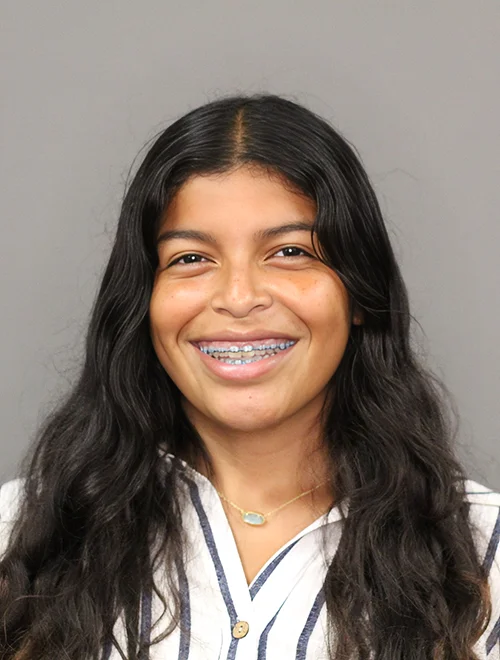
Q&A with Darlyn Bustillo
Why did you choose to attend the University of Mississippi?
For me, choosing Ole Miss came down to where I could see myself growing not just academically, but as a person. I wanted a school that would challenge me, support me, and give me opportunities to explore what I’m passionate about, and UM really stood out in that way. One of the biggest reasons I chose Ole Miss was the College of Liberal Arts. I’ve always been interested in public service, especially issues like immigration, and CLA allows me to study those topics from multiple perspectives such as political, social, and cultural. That kind of well-rounded education is really important to me, especially for the career path I want to pursue.
But beyond academics, it was the environment that really made the decision for me. There’s a strong sense of community here that you can tell people genuinely care about each other. I felt like this was a place where I wouldn’t get lost, and where I’d be encouraged to get involved, take on leadership roles, and grow more confident in myself. At the end of the day, I chose Ole Miss because it felt like a place where I could build my future while also feeling at home and that’s exactly what it’s been for me.
For me, choosing Ole Miss came down to where I could see myself growing not just academically, but as a person. I wanted a school that would challenge me, support me, and give me opportunities to explore what I’m passionate about, and UM really stood out in that way. One of the biggest reasons I chose Ole Miss was the College of Liberal Arts. I’ve always been interested in public service, especially issues like immigration, and CLA allows me to study those topics from multiple perspectives such as political, social, and cultural. That kind of well-rounded education is really important to me, especially for the career path I want to pursue.
But beyond academics, it was the environment that really made the decision for me. There’s a strong sense of community here that you can tell people genuinely care about each other. I felt like this was a place where I wouldn’t get lost, and where I’d be encouraged to get involved, take on leadership roles, and grow more confident in myself. At the end of the day, I chose Ole Miss because it felt like a place where I could build my future while also feeling at home and that’s exactly what it’s been for me.
What would you tell a high school student about your major? What is most important for them to know if they are interested in pursuing that field of study?
If you’re thinking about majoring in something like political science within the College of Liberal Arts, I’d say the most important thing to know is that it’s a lot more than just memorizing government facts or learning how elections work. It really pushes you to think critically about the world: why systems work the way they do, how policies impact people, and how different countries approach the same issues in completely different ways. One thing I really appreciate about my major is how discussion-based it is. You’re constantly engaging with real-world topics, hearing different perspectives, and learning how to form and defend your own ideas. That’s been really valuable for me, especially since I’m interested in going to law school and working in public service. This major gives you a lot of flexibility—you can go into law, government, nonprofit work, or even business. What matters most is being curious, open to new perspectives, and willing to engage with complex issues.
If you’re thinking about majoring in something like political science within the College of Liberal Arts, I’d say the most important thing to know is that it’s a lot more than just memorizing government facts or learning how elections work. It really pushes you to think critically about the world: why systems work the way they do, how policies impact people, and how different countries approach the same issues in completely different ways. One thing I really appreciate about my major is how discussion-based it is. You’re constantly engaging with real-world topics, hearing different perspectives, and learning how to form and defend your own ideas. That’s been really valuable for me, especially since I’m interested in going to law school and working in public service. This major gives you a lot of flexibility—you can go into law, government, nonprofit work, or even business. What matters most is being curious, open to new perspectives, and willing to engage with complex issues.
Why is your department a special place?
I think the College of Liberal Arts and my department in particular (political science department) is a really special place because it’s not just about academics; it’s about community and growth. The professors genuinely care about you as a person, not just as a student, and they’re always willing to help you explore your interests, whether that’s through research, internships, or leadership opportunities.
What really makes it stand out is how collaborative and discussion-driven the classes are. You get to hear different perspectives, challenge your own thinking, and learn from peers who are just as passionate as you are. That kind of environment makes learning exciting and meaningful.
Plus, the department encourages you to connect what you learn in class to real-world issues. For me, that’s been amazing because it ties directly to my goals in public service and immigration law. It’s a place that prepares you academically but also helps you grow as a person and a leader.
I think the College of Liberal Arts and my department in particular (political science department) is a really special place because it’s not just about academics; it’s about community and growth. The professors genuinely care about you as a person, not just as a student, and they’re always willing to help you explore your interests, whether that’s through research, internships, or leadership opportunities.
What really makes it stand out is how collaborative and discussion-driven the classes are. You get to hear different perspectives, challenge your own thinking, and learn from peers who are just as passionate as you are. That kind of environment makes learning exciting and meaningful.
Plus, the department encourages you to connect what you learn in class to real-world issues. For me, that’s been amazing because it ties directly to my goals in public service and immigration law. It’s a place that prepares you academically but also helps you grow as a person and a leader.
What professor or class has had the most impact on you?
One of the most impactful classes I’ve taken has been my comparative politics course, Pol 102. What really stood out to me wasn’t just the content, but the way the professor challenged us to think beyond the U.S. and really understand how different political systems shape people’s lives around the world.
In that class, we didn’t just memorize information; we had discussions about real-world issues like democracy, inequality, and migration, and how those look different depending on the country. That really opened my eyes and helped me connect what I’m learning to my own interests in public service and immigration law.
The professor also created an environment where everyone felt comfortable sharing their perspectives, which made the class more engaging and meaningful. It pushed me to think more critically, speak up more confidently, and really consider different viewpoints. Overall, that class had a big impact on me because it didn’t just teach me about politics, and it helped me understand the world in a deeper way and confirmed that I’m on the right path with what I want to do in the future.
One of the most impactful classes I’ve taken has been my comparative politics course, Pol 102. What really stood out to me wasn’t just the content, but the way the professor challenged us to think beyond the U.S. and really understand how different political systems shape people’s lives around the world.
In that class, we didn’t just memorize information; we had discussions about real-world issues like democracy, inequality, and migration, and how those look different depending on the country. That really opened my eyes and helped me connect what I’m learning to my own interests in public service and immigration law.
The professor also created an environment where everyone felt comfortable sharing their perspectives, which made the class more engaging and meaningful. It pushed me to think more critically, speak up more confidently, and really consider different viewpoints. Overall, that class had a big impact on me because it didn’t just teach me about politics, and it helped me understand the world in a deeper way and confirmed that I’m on the right path with what I want to do in the future.
What do you hope to do after graduation? What are your career goals/plans?
After graduation, I plan to continue my education by attending law school, where I hope to focus on immigration law. I’m passionate about public service and advocating for underrepresented communities, and I see a career in immigration law as a way to make a meaningful, tangible impact in people’s lives.
In the long term, I hope to not only work as an immigration attorney but also become involved in public policy or government. I’m interested in shaping policies that affect immigrant communities and making the legal system more accessible and equitable. Ultimately, I aspire to combine my legal career with a role in public service, potentially even pursuing a future in politics.
My goal is to use the education and experiences I’ve gained—especially through the College of Liberal Arts to advocate for others, contribute to my community, and be part of creating positive, lasting change.
After graduation, I plan to continue my education by attending law school, where I hope to focus on immigration law. I’m passionate about public service and advocating for underrepresented communities, and I see a career in immigration law as a way to make a meaningful, tangible impact in people’s lives.
In the long term, I hope to not only work as an immigration attorney but also become involved in public policy or government. I’m interested in shaping policies that affect immigrant communities and making the legal system more accessible and equitable. Ultimately, I aspire to combine my legal career with a role in public service, potentially even pursuing a future in politics.
My goal is to use the education and experiences I’ve gained—especially through the College of Liberal Arts to advocate for others, contribute to my community, and be part of creating positive, lasting change.
What is one thing you wish you knew as an incoming freshman that you’d tell your past self (about the general college experience)?
One thing I wish I knew as an incoming freshman is that you don’t have to have everything figured out right away and that it’s okay to take time to grow into who you’re becoming. Coming in, I felt a lot of pressure to have a clear plan, make all the right decisions, and immediately find my place. I’ve learned that college is really about exploring, trying new things, and allowing yourself to change. If I could tell my past self anything, it would be to get involved earlier and not be afraid to step out of my comfort zone. Some of the most meaningful experiences I’ve had came from taking chances, whether that was joining organizations, meeting new people, or taking on leadership roles. I’d also remind myself to be more confident and not compare my journey to others. Everyone’s college experience looks different, and growth doesn’t happen all at once. Trusting the process and being open to new opportunities makes all the difference.
One thing I wish I knew as an incoming freshman is that you don’t have to have everything figured out right away and that it’s okay to take time to grow into who you’re becoming. Coming in, I felt a lot of pressure to have a clear plan, make all the right decisions, and immediately find my place. I’ve learned that college is really about exploring, trying new things, and allowing yourself to change. If I could tell my past self anything, it would be to get involved earlier and not be afraid to step out of my comfort zone. Some of the most meaningful experiences I’ve had came from taking chances, whether that was joining organizations, meeting new people, or taking on leadership roles. I’d also remind myself to be more confident and not compare my journey to others. Everyone’s college experience looks different, and growth doesn’t happen all at once. Trusting the process and being open to new opportunities makes all the difference.
Need to Know More?
Ask a question by using the form below.