
News You Can Use: What Mississippi's Maternal, Infant Health 'F' Means
UM public health expert offers perspective, advice for expectant moms to improve health outcomes
OXFORD, Miss. – When Mississippi received another "F" on the March of Dimes 2025 Report Card for maternal and infant health, it reinforced what many families already know: pregnancy and childbirth can be far more complicated than they appear.
For Ashley White Jones, an instructional assistant professor of public health at the University of Mississippi, the data is not just academic.
After the birth of her child during the COVID pandemic, Jones experienced a misdiagnosis, dismissal of postpartum symptoms and a delayed prognosis. This happened despite her education, insurance and communication about the issues she experienced. The March of Dimes grade does not suggest Mississippi is full of neglectful parents or unhealthy families, she said.
"Many parents are doing everything right," said Jones, who also works with Six Dimensions in Ridgeland. "This grade reflects structural challenges and inequities, including hospital closures and limited access to maternal care, that make timely, consistent care harder to access."
Mississippi has received failing marks for several years due to factors including high preterm birth rates, preventable maternal complications and long travel distances for obstetric care, particularly in rural areas.
A 2025 report by the Mississippi Maternal Mortality Review Committee found that 83% of maternal deaths were preventable. Nearly 80% of new moms who died between 2017 and 2021 were Black women, the state report revealed.

Besides bias, accessibility is a major obstacle, and mothers often miss some appointments as their due date draws closer because of that, Jones said. To keep her care team, she drove three hours round-trip to Jackson for each prenatal and postpartum visit.
"In some counties, pregnant women are driving 20 minutes or more just to reach a birthing hospital," Jones said. "Pregnancy is often glamorized, but medically, it's a serious condition that requires consistent care before and after birth."
The Magnolia State is working diligently to strengthen maternal and infant health care. State lawmakers' recent policy changes include:
- Earlier Medicaid access during pregnancy through presumptive eligibility
- Extending postpartum Medicaid coverage to one year
- Heightened focus on the maternal review board.
This year, the state's Department of Health declared infant mortality a public health emergency, opening opportunities for more resources to address the issue, Jones said.
"These are meaningful changes," Jones said. "They won't transform outcomes overnight, but they address some of the most dangerous gaps."
Research shows that outcomes often improve when care teams expand beyond traditional hospital models. Jones points to evidence supporting the integration of midwives and doulas alongside physicians.
"When midwives and doulas are part of the care team, we see lower rates of preterm birth and cesarean sections, and higher rates of breastfeeding," she said. "They also provide continuous support – before, during and after birth – that helps patients advocate for themselves when they're most vulnerable."
Jones encourages families to:
- Seek prenatal care as early as possible
- Build an advocacy system for appointments and delivery
- Know postpartum warning signs and seek immediate care
- Release self-blame
- Accept help from loved ones.
Decreasing stress and delegating specific tasks can also change the dynamic of a growing family, Jones said.
Her personal experience mirrors what public health research consistently shows: being believed, supported and monitored postpartum can be lifesaving.
"People ask you what you need and it's really hard to come up with a response, but you can say 'I need you to prepare meals for me.' 'I need someone here to wash my clothes,'" Jones said. "Being very specific about what your needs are and allowing folks to come in and be that support for us is difficult for some of us.
"We been conditioned to be Superwoman, and we take that on during pregnancy as well. But having someone that can come in and lighten the load for you, especially during the pregnancy, can be, honestly, a life-or-death situation."
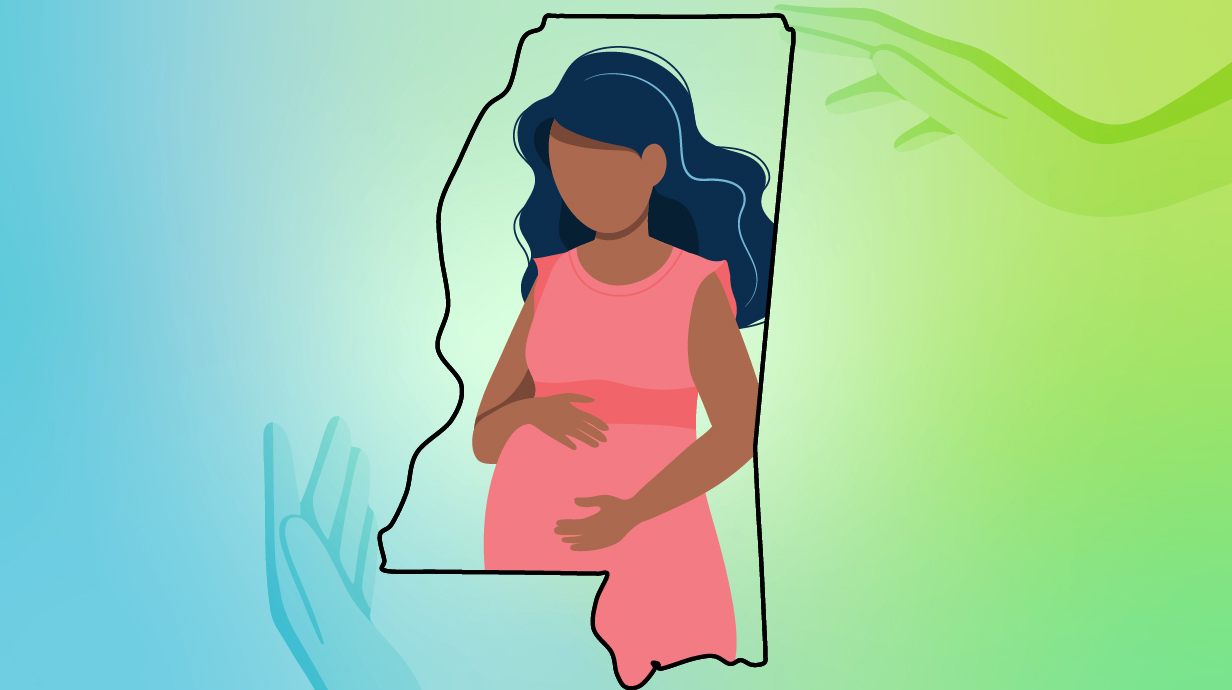
Top: A recent report highlights how access to care, systemic barriers and postpartum support shape maternal and infant health outcomes in Mississippi, underscoring that the state’s recent failing grade reflects health systems, not parenting. Expectant mothers can take several steps to help protect their health and that of their babies. Graphic by John McCustion/Ole Miss Marketing and Communications
By
Marvis Herring
Campus
Office, Department or Center
Published
December 19, 2025