
Engineering Professor Developing National Guide for Safer Roadways
Alternative intersections could aid in reducing traffic fatalities

OXFORD, Miss. – A University of Mississippi researcher is working to make intersections and interchanges safer and more efficient through a project funded by the National Cooperative Highway Research Program.
Amir Molan, assistant professor of civil engineering, is using a $550,000 grant to develop the next version of the Alternative Intersections and Interchanges design guide. This builds on the Federal Highway Administration's Alternative Intersections/Interchanges: Informational Report, a guide to creating safer and more efficient intersections and interchanges using innovative design concepts.
"The updated guide will serve as a key resource for transportation professionals implementing alternative intersections and interchanges," Molan said. "The first edition, published in 2010, played a major role in advancing these innovative designs and remains one of the primary references for practitioners and decision-makers today.
"We hope the new edition will have an even greater influence on the industry to advance implementation of AII designs."
Some 39,345 fatal traffic crashes were reported in 2024, according to the National Highway Traffic Safety Administration's most recent report.
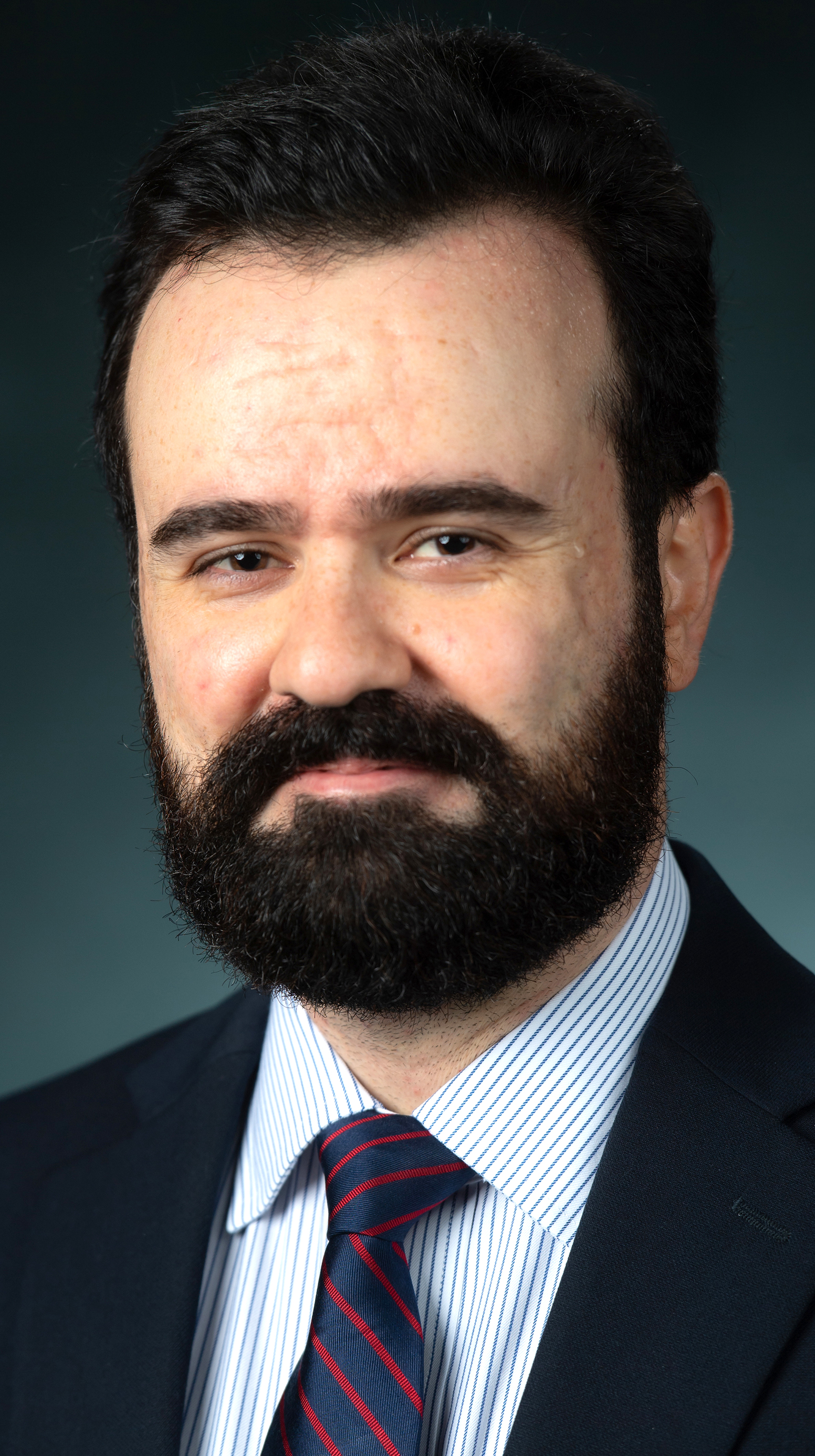
"Based on statistics, about a quarter of those fatal crashes occur at or near intersections," Molan said. "Therefore, improving intersections using innovative designs can significantly reduce traffic fatalities in the country."
The new guide will, in part, detail the implementation of various alternative designs, including reduced conflict intersections.
"There are 32 conflict points at a four-leg traditional intersection," he said. "To improve safety, innovative designs such as the RCI would redirect vehicles from minor streets to U-turns. As a result, there are only 14 conflict points, compared to 32 at conventional intersections.
"Moreover, the RCI design reduces the likelihood of severe crashes by eliminating direct left turns and minimizing high-speed angle collisions."
Molan is collaborating with experts from HDR, a global architecture, engineering and construction services firm, as well as North Carolina State University on the project.
Shailendra Khanal, an Ole Miss graduate student from Nepal on Molan's research team, has chosen alternative intersection designs as the topic of his doctoral dissertation. Khanal is focusing on the safety and operational aspects of alternative intersections.
Ole Miss graduate students Shaishav Acharya, of Nepal, and Stephen Osafo-Gyamfi, of Ghana, are also assisting the research team.
"This project benefits not only those directly working on it but also a broader group of students interested in transportation engineering and related interdisciplinary fields," said Srinivas S. Pulugurtha, UM chair and professor of civil engineering.
"These designs improve safety for all users of the transportation system, not just drivers, but also pedestrians, bicyclists and e-scooter riders."
This material is based on work supported by the National Academies of Sciences, Engineering and Medicine's National Cooperative Highway Research Program project 17-131.
Top: Eliminating left turns across traffic can help reduce crashes and make driving safer, UM engineering professor Amir Molan says. Molan is using a grant from the National Academies of Sciences, Engineering and Medicine to develop an updated version of the Federal Highway Administration's guidelines for intersections and interchanges. Adobe Stock photo
By
Jordan Karnbach
Campus
Office, Department or Center
Published
May 14, 2026