
Deep South HIV Prevention Care Has Gaps Where Patients Need It Most
Study identifies counties where HIV burden outpaces prevention resources
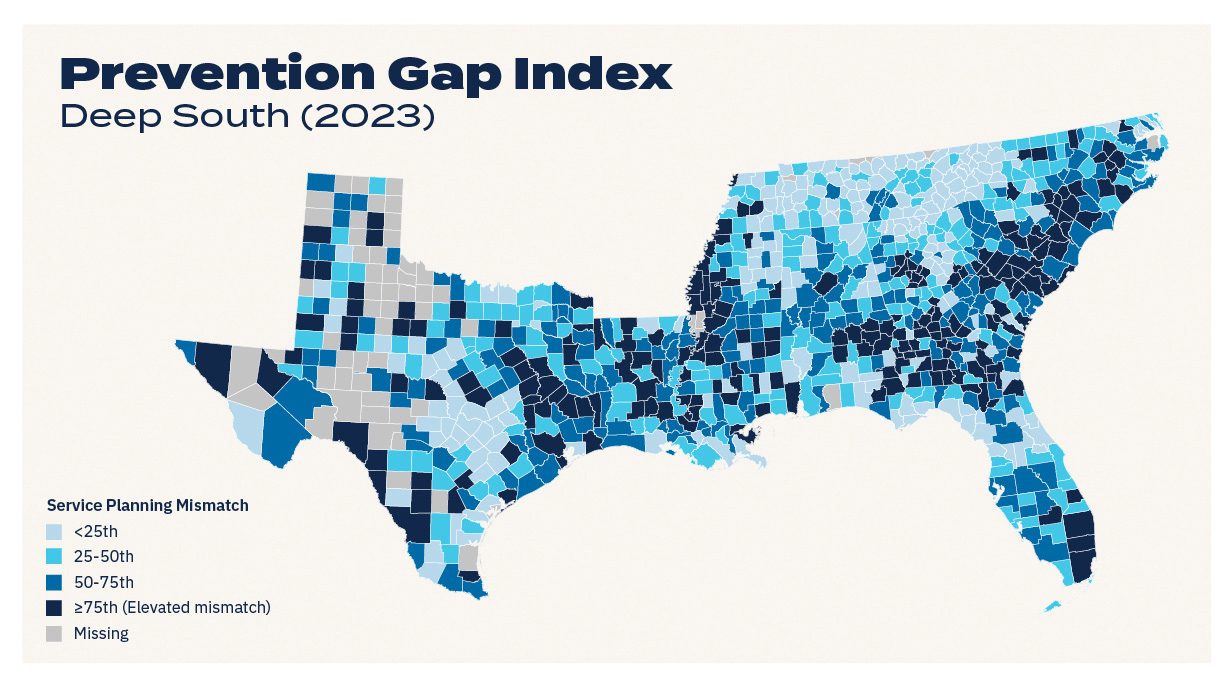
OXFORD, Miss. – A recent University of Mississippi study identified hundreds of counties in the South where HIV prevention and health care may not be keeping pace with the local needs, leaving communities without resources to address the persistent problem.
The study, published in Frontiers in Public Health, offers health care and government leaders a new tool for targeting HIV-related support where the need is highest.

"We wanted to better understand not just where HIV is most common, but where there is a mismatch between need and the availability of key prevention tools like HIV testing and antiretroviral pre-exposure prophylaxis," said Precious Patrick Edet, instructional assistant professor of public health.
"That gap is especially important in the Deep South because structural factors, such as poverty, limited access to health care, stigma and social inequalities, continue to shape who is most affected and how effectively we can respond to the epidemic."
The South has the highest rate of new HIV cases in the country, with nearly half of all new diagnoses nationwide. Of the 1.2 million people living with HIV in the United States, approximately 13% do not know they have contracted the virus, according to the American HIV Epidemic Analysis Dashboard.
Mississippi has the third-highest rate of new HIV infections in the nation, just behind Washington, D.C., and Georgia.
The Ole Miss researchers used public, county-level data across the South to create a prevention gap index, which functions like a scorecard for each county. The metrics are the number of people living with HIV and the availability of prevention and care resources.
The team found that many areas with high HIV rates are also areas where prevention and treatment are scarcer.

"In everyday terms, it asks: Does a county with a high HIV rate also have strong prevention and care services in place?" said Ruaa Al Juboori, assistant professor of public health and data analytics statistician. "When the answer appears to be no, that county has a higher prevention gap.
"A high (prevention gap index score) does not mean a county or community has failed. It means the data suggest that local need may be greater than the services currently measured there."
Public health leaders can use the index to identify places where a closer look may be useful and better allocate available resources, she said.
Of the 877 counties mapped in the study, 220 had high HIV rates but relatively weak prevention systems in place. Counties with higher gaps were also more likely to have higher percentages of Black residents and lower income and education levels, the researchers found.
"For people living in these counties, this finding means they may face significant barriers to accessing HIV prevention and care services," said Brandon Nabors, postdoctoral research associate in the Department of Public Health. "In practical terms, residents may have to travel farther for services, experience delays in diagnosis or encounter gaps in ongoing care."

In such cases, the disease can continue to spread and contribute to poor health outcomes, he said.
"Importantly, this reflects system-level challenges rather than individual behavior, highlighting the need for stronger local prevention and care infrastructure," Nabors said.
Public health officials can use this data as a planning tool to target education, prevention and treatment services to the communities that need them, the researchers said.
"For Mississippi, these findings highlight the importance of focusing resources in high-burden areas, particularly in regions like the Mississippi Delta, where HIV prevalence intersects with structural disadvantage," Nabors said. "The study identified multiple counties in Mississippi with elevated prevention gaps, indicating a need for more targeted intervention.
"To close these gaps, Mississippi officials should prioritize expanding community-based and mobile HIV services to improve access, especially in rural and underserved areas."
Top: Levels of HIV prevention and health care services vary by county across the Southeastern U.S. Ole Miss researchers have published a prevention gap index, a tool to show where HIV-related health care may not meet the needs of the county's residents. This tool can be used to guide policymakers' decisions when addressing the HIV epidemic. Graphic by Cole Russell/University Marketing and Communications
By
Clara Turnage
Campus
Office, Department or Center
Published
June 01, 2026