
Ole Miss Recognized for Sustainability, Conservation Efforts
Sustainability office launches dragonfly gardens, recycling initiatives, more
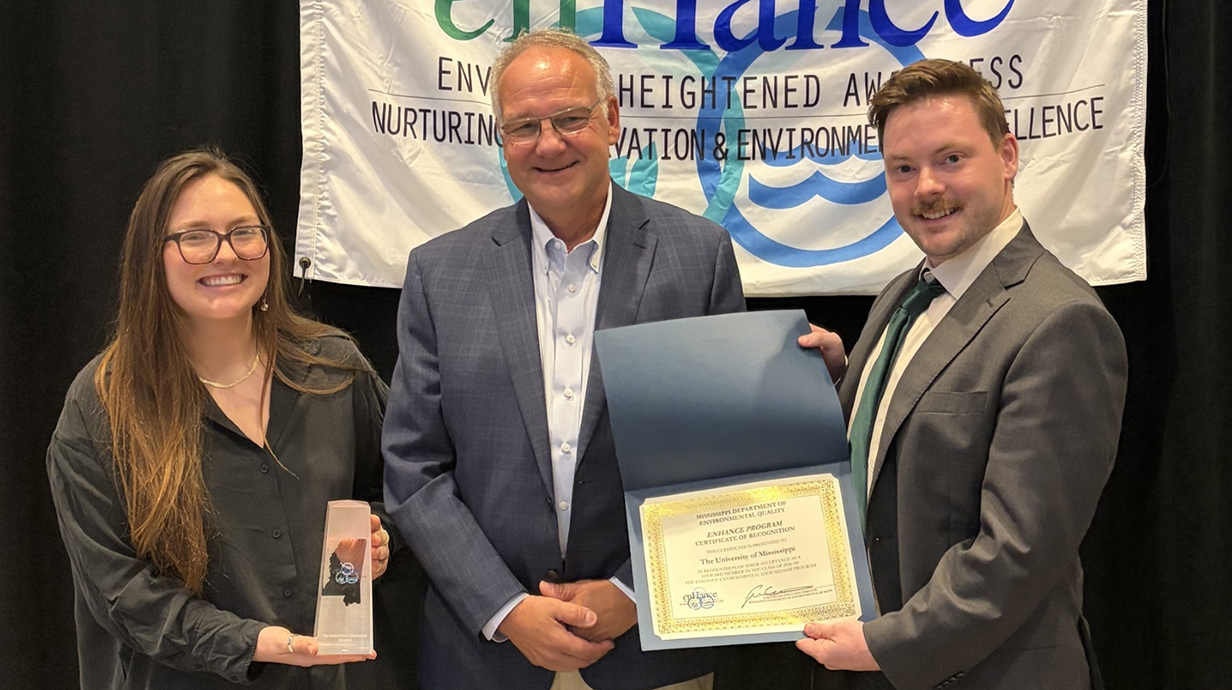
OXFORD, Miss. – The Mississippi Department of Environmental Quality has recognized the University of Mississippi for its commitment to sustainability and conservation.
John Brugge, director of the Office of Sustainability, accepted the recognition at the enHance Environmental Stewardship Workshop and Awards Luncheon last month in Jackson.
Ole Miss joined enHance, a state initiative designed to support environmental leaders across Mississippi, as part of the 2026 cohort. All participating organizations commit to making environmental improvements beyond standard regulatory requirements. Ole Miss joined the imitative at the steward level.
“For us, sustainability is not just about our campus,” Brugge said. “What we’re trying to do is become a leader in Oxford, the region and the state. We want to set and maintain the new Mississippi standard.”

Since joining the administration last year, Brugge has initiated multiple new projects to promote sustainability on campus, including new recycling standards and signage, revitalizing the campus community garden, and creating new dragonfly and damselfly habitats.
Involving the community in every step of the process is important, said Bebe Falkner, a senior Southern studies and interdisciplinary studies major from Christiana, Tennessee. Falkner works in the Office of Sustainability and joined Brugge in Jackson to accept the award.
“I think that's getting to the heart of what Southern sustainability is,” Falkner said. “Getting face-to-face conversations with individuals in our community about what they want to see and how they want to move forward is so important to understanding how we approach sustainability in a way that’s not intimidating.
“We want to look at our community and culture and cultivate something together.”
Working alongside groups such as the Department of Landscape Services and the Department of Biology, many of the office’s efforts are already becoming a part of everyday life for members of campus, from improved recycling bins to gardens that invite community involvement and support local bees, butterflies, moths, beetles and birds.
“You can see them across campus,” Brugge said, referring to the many pollinator gardens maintained by UM Landscape Services. “It’s helpful for pollinator insects, but it’s also just something you can do in your backyard.
“Most people love a pollinator garden, but what you don’t hear about as often is a predator garden.”
Through funding from the National Wildlife Federation and the 2026 Mutual of Omaha’s Wild Kingdom Grant Program, the sustainability office is working to bring an aquatic predator habitat to campus.
A water feature behind the Residential College South will soon be home to a host of dragonflies and damselflies.
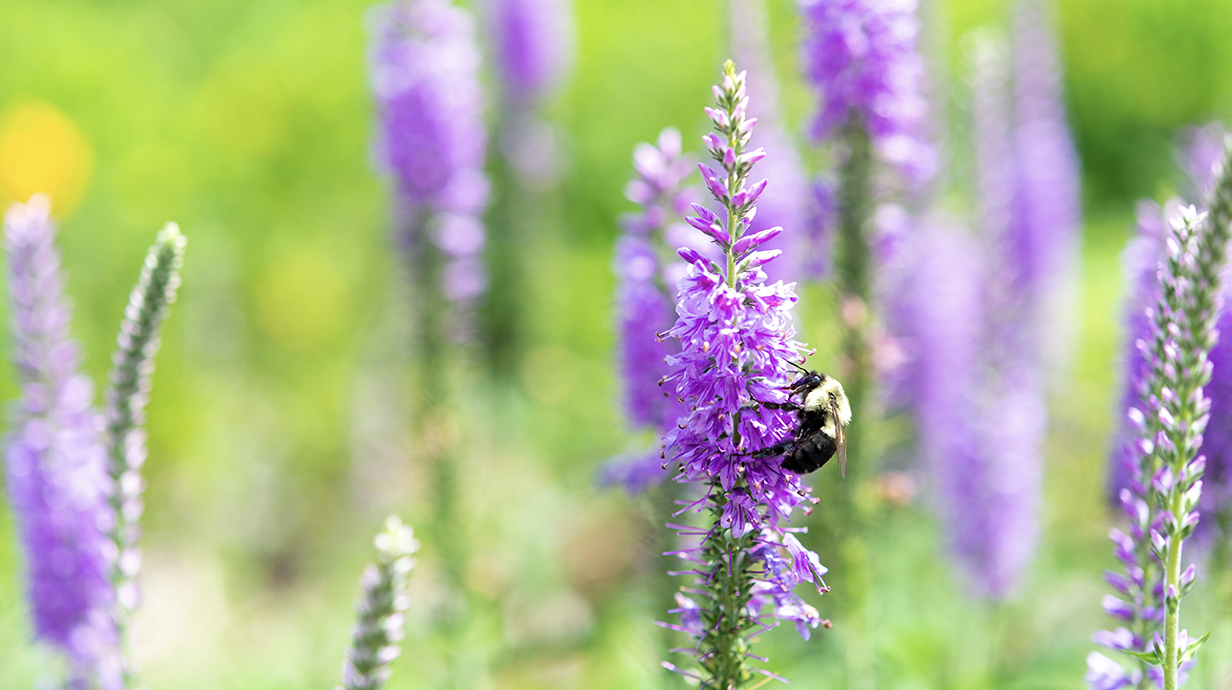
Community gardens and pollinator gardens on campus support local populations of bees, moths, butterflies, beetles and wasps. Photo by Srijita Chattopadhyay/Ole Miss Digital Imaging Services
“Dragonflies are some of the most effective predators of mosquitoes, wasps, horseflies and even other dragonflies,” he said. “But dragonflies are also losing their habitats, especially in places like cities.
“What we hope to demonstrate is that by reestablishing a predator habitat, we can lower the population of pest insects while serving an endangered species.”
The grant will offer Brugge and his students a chance to monitor both the aquatic habitat on campus and one being developed at the UM Field Station to understand how reintroducing predator species affects local wildlife and communities.
The office also recently partnered with Oasis Venture Holdings, an American aluminum manufacturing company, to offer reusable aluminum cups made with recycled materials. The cups, which bear the Ole Miss logo, are in the style of disposable plastic drinkware, but are meant for reuse.
The cups are available for purchase via donation, with all proceeds benefiting the university's Sustainable Ole Miss fund.
“If we want people to stop using single-use plastic waste, we have to give them a better option,” Brugge said. “That sounds like a small thing, but being sustainable often means making better small choices, and you have to start somewhere.
“That’s our goal: we want to make it easier for our campus to take that first step.”
Top: Bebe Falkner (left), an Ole Miss senior who works in the Office of Sustainability, and John Brugge (right), the sustainability office's associate director, accept an award from Mike Freiman, director of the Mississippi Department of Environmental Quality's Office of Pollution Control, during a luncheon in Jackson. Ole Miss was recognized as a member of the 2026 cohort of enHance, a voluntary program to support sustainability efforts in the state. Submitted photo
By
Clara Turnage
Campus
Office, Department or Center
Published
September 20, 2026