Ole Miss Program Gets Lifesaving Opioid Training to North Mississippi
School of Pharmacy connects communities with naloxone, education and skills to respond to overdoses
OXFORD, Miss. – The University of Mississippi School of Pharmacy concluded its SafeGuard Mississippi program providing education, access and training about opioid overdoses in communities throughout north Mississippi after reaching more than 18,100 individuals.
Community pharmacists and Ole Miss pharmacy students have educated college and high school students and first responders in 26 north Mississippi counties over the past two years. The 260 trainings focused on how to recognize an opioid overdose and administer naloxone, a nasal spray known by the brand name Narcan.
The program distributed more than 7,000 units of naloxone at no cost to participants.
Funded by the Substance Abuse and Mental Health Services Administration, the effort also included the William Magee Center for AOD and Wellness Education and Ole Miss student organizations.
"Our goal was to identify communities in Mississippi with the greatest need and use our grant funding not only to expand access to naloxone in schools and communities, but also to provide the education people need to use it," said Joe Dikun, instructional assistant professor of pharmacy administration.
One of the program's biggest connections was pairing education with real-world health skills.
"One does not go without the other," he said. "A program that gives people the skills and confidence to administer naloxone, much like CPR, provides a lifelong ability to respond in an emergency."
During the training, participants learned what an opioid is and the symptoms of an overdose. They use the acronym BLUE, which stands for breathing, lips, unresponsiveness and eyes.
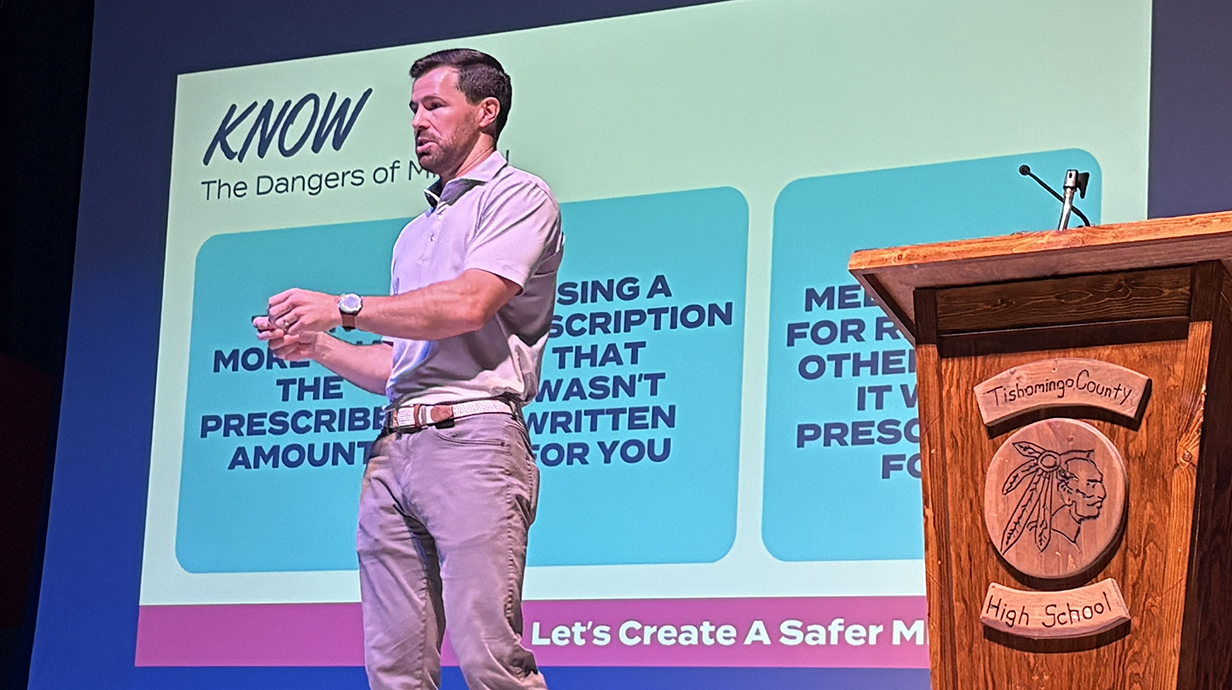
Lee Griffin, a pharmacist at Iuka Discount Drugs, talks about overdose prevention and how to use naloxone to save a person's life at Tishomingo County High School. Submitted photo
"If someone is experiencing an overdose, they're going to have very shallow breaths," said Lyda Stokes, program director. "That's what causes death: your respiratory system shuts down and you're no longer able to breathe.
"The lips are going to start turning blue from lack of oxygen; the person's going to be unresponsive; and then when you open their eyes, they're going to have pinpoint pupils."
Naloxone binds to the body's opioid receptors, preventing the ingested opioids from bonding with them and causing respiratory failure and, ultimately, death.
The nasal spray's effect is short-lived, so it is important to call for medical assistance at once.
"Even if a bystander is not positive someone is having an overdose, it will not harm that person if naloxone is administered," Stokes said.
The training works. Less than two weeks after training in the Walnut community, a police officer used it to save a life.
Tommy Garrett, Walnut chief of police, called Stokes with the news.
"He said, 'I just want to let you know, one, thank you for doing this training, and two, we used the naloxone that you provided and we were able to save a life,'" she said. "It was just an incredible story and a testament to just what education and access can do."
The program not only saves lives but also influences future pharmacists.
Kiersten Rickard, a fourth-year pharmacy student from Dickson, Tennessee, realized a substance use problem during an undergraduate thesis research project about over-the-counter medications that students often take to manage stress.
"Even though I crafted my survey to focus on over-the-counter medications, vitamins, minerals and supplements, I had an overwhelming proportion of people who utilized the open-ended response option to describe their relationship with various illicit and harmful substances," she said.
"After my thesis concluded and as I entered pharmacy school, I realized that I could not ignore these problems. Now that I had seen the extent of the impact, I wanted to find a way to address it."
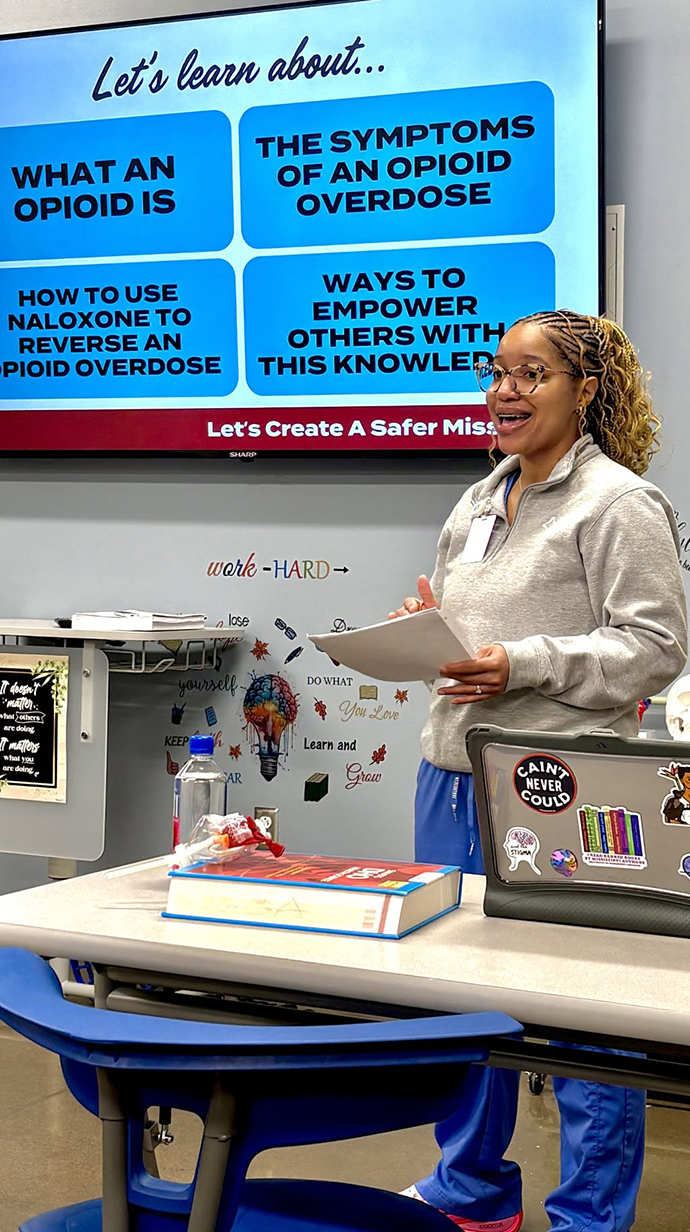
Dewansia Sutton, a 2022 Ole Miss graduate and a clinical pharmacist at Arcare in Oxford, conducts an overdose prevention session at Oxford High School. Submitted photo
Rickard volunteered with SafeGuard Mississippi from the start. She delivered education and naloxone training to college students.
"A pharmacist once told me that 'You can't be in recovery if you're dead,'" she said. "Naloxone seems like a small blip in the grand scheme of what needs to be addressed about substance use disorders, but it is a life-saving measure that could get someone the help they need.
"Everyone has a role to play in addressing substance use disorders, but we must encourage people to take on that role."
Her involvement with the program has affected her pharmacy practice.
"Where I once would have avoided conversations about substance use disorders or substance misuse, I now feel confident in having those conversations in a meaningful manner, be that in a practice environment or in my community," Rickard said.
SafeGuard Mississippi also allowed for community connections.
"We're creating connections that may not have existed before, between high school students and their families, who bring this information home, and pharmacists, some of the most accessible healthcare professionals in the country," Dikun said.
"We wanted to build skills, reduce stigma and help people understand that knowledge can sometimes feel intimidating because it comes with responsibility. But when that knowledge can save a life, it's worth it."
For a free naloxone kit, complete the form here.
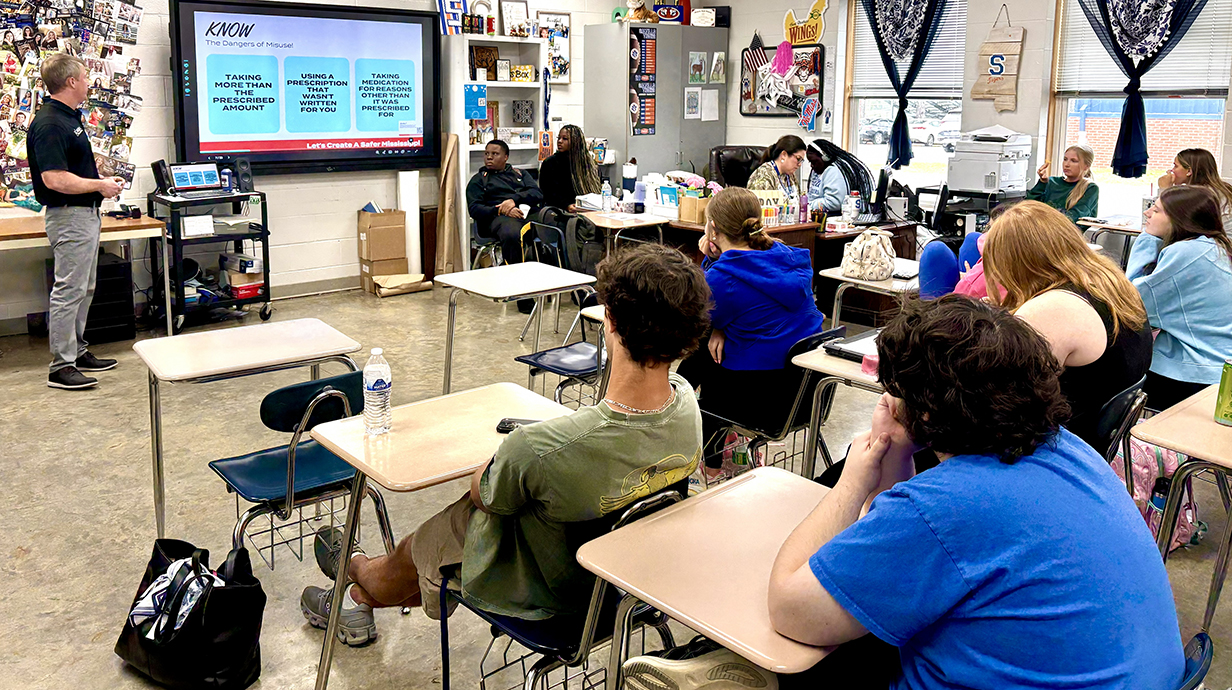
Top: Brad Coggins (left), a pharmacist at Saltillo Pharmacy and Solutions, leads an overdose prevention and naloxone training session at Saltillo High School. The session was part of the SafeGuard Mississippi program led by the Ole Miss School of Pharmacy. Submitted photo
By
Marisa C. Atkinson
Campus
Office, Department or Center
Published
October 13, 2026