
Ole Miss Law Student Helps Shape the Future of Space
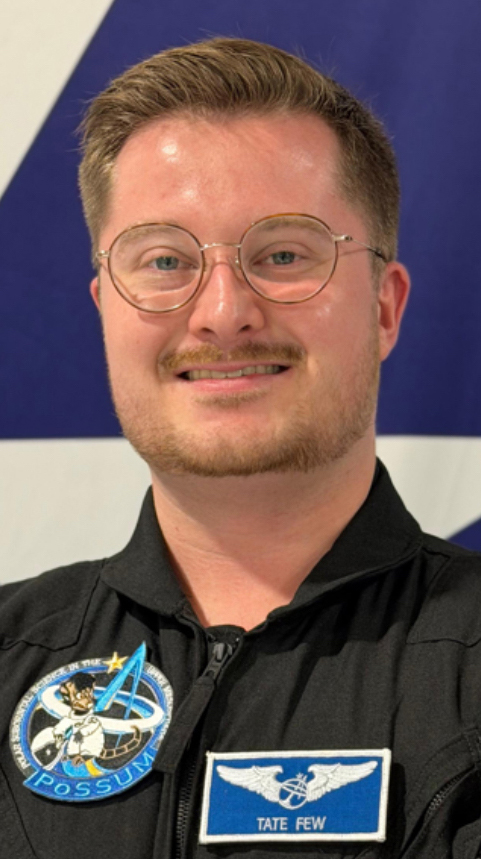
OXFORD, Miss. – The National Space Society has named University of Mississippi law student Tate Few to its inaugural 30 Under 30 Class of 2026.
The recognition celebrates individuals under age 30 contributing to the future of space exploration, development and settlement. Awardees will have opportunities for mentorship and collaboration with seasoned space professionals from around the world.
"The NSS 30 Under 30 program recognizes emerging leaders helping shape humanity's future in space, said Fredrick "Rick" Jenet, a board member of the society and chair of its board of scientific and technical advisers. "We are delighted to include Tate Few in the inaugural class and look forward to seeing how he and his fellow honorees contribute to the exploration, development and settlement of space."
Michelle Hanlon, executive director of the university's Center for Air and Space Law, concurred.
"Humanity's future in space will depend on people who can connect technological possibility with legal and practical solutions," she said. "Tate brings that breadth to his work, combining legal scholarship, advocacy and operational experience."
Few, a third-year law student from Charleston, South Carolina, transferred to Ole Miss halfway through his legal education specifically for the air and space law program. He is on track to complete his Juris Doctor in December and his Master of Laws in space law in May 2027.
"When I got accepted, I took a leap of faith and moved to Mississippi to start in the air and space law program," he said. "It was the best decision of my life."
Few has seized the opportunities afforded by the program.
"It has allowed me to grow exponentially, especially with the knowledge I have gained through the courses, which have supported my efforts to impact space governance via international forums and professionally through my work with the space technology contracts division at CACI Inc. Federal," he said.
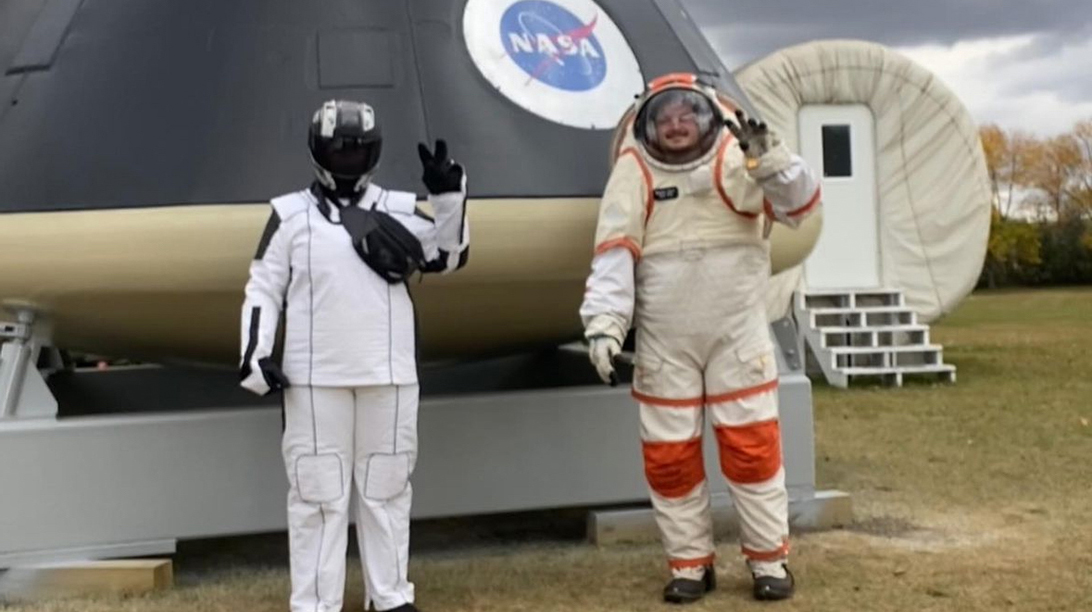
While in school, Few has been involved with analog missions, simulations that mimic extreme spaceflight conditions to help space agencies test habitats, technology and crew health before sending astronauts to the moon or Mars. He served as a mission specialist on the Inflatable Lunar Martian Analog Habitat and will serve as crew commander and health and safety officer on the upcoming Habitat Marte and Mars Desert Research Station missions, respectively.
He also founded the Space Debris Foundation, a nonprofit organization that focuses on advocacy and education. The group has worked with international forums including the United Nations Committee on the Peaceful Uses of Outer Space and the Consultative Committee on Space Data Systems to advocate for the safe and sustainable use of space.

"We have advised the U.S. State Department on both space situational awareness and then space resource activities as it relates to the ongoing efforts at UNCOPUOS to establish an agreeable framework amongst nation states," Few said.
The foundation also educates students and industry professionals about space debris and offers a certification program.
"Participants can gain knowledge from various perspectives about space debris, including orbital mechanics, mitigation methods such as designing spacecraft for minimizing debris or deorbiting, or more active debris removal methods, as well as the policy and legal frameworks," he said.
The recognition reflects Few's contributions and potential, Hanlon said.
"As a former president of the National Space Society, it is particularly meaningful to see one of our students recognized by an organization dedicated to building humanity's future in space," she said. "Through his legal studies and the Space Debris Foundation, Tate is already contributing to that future while addressing one of the greatest challenges to its realization."
Top: Ole Miss law student Tate Few (right) wears an experimental test suit use in the Inflatable Lunar Martian Analog Habitat and science officer Haley Boles tries out a SpaceX space suit. Few served as a mission specialist at the facility, where NASA is studying equipment and techniques for a manned mission to Mars. Few has been named to the National Space Society's inaugural 30 Under 30 class. Submitted photo
By
Marisa C. Atkinson
Campus
Office, Department or Center
Published
November 13, 2026