
Dr. Darren Grem is an Associate Professor of History and Southern Studies. He holds joint appointments in the Department of History and at the Center for the Study of Southern Culture at the University of Mississippi.
Research Interests
Dr. Grem's research interests are in 20th century U.S. history, with a focus on the American South, religion, capitalism, culture, and politics. He teaches undergraduate and graduate courses in 20th century U.S. history, southern history and southern studies, and modern politics and culture.
"Good Night New Deal: The Waltons and the South's Great Depression in American Memory"
He is the author of The Blessings of Business: How Corporations Shaped Conservative Christianity (Oxford University Press, 2016), a book that details how conservative evangelicals strategically used business leaders, organizations, methods, and money to advance their cultural and political aspirations in twentieth-century America.
Dr. Grem is currently working on his next book, tentatively titled Hard Times in Glory Land: Religion, Memory, and the South's Long Great Depression. It traces how religion and secular culture informed the modern South's remembrance and forgetting of the 1930s at select New Deal sites as well as in film and television, regional conservatism, southern fiction, African-American memory, and popular music.
Biography
Dr. Grem earned his BA from Furman University and MA and PhD from the University of Georgia. He held postdoctoral fellowships at Yale University and Emory University before joining the faculty at the University of Mississippi.
Publications
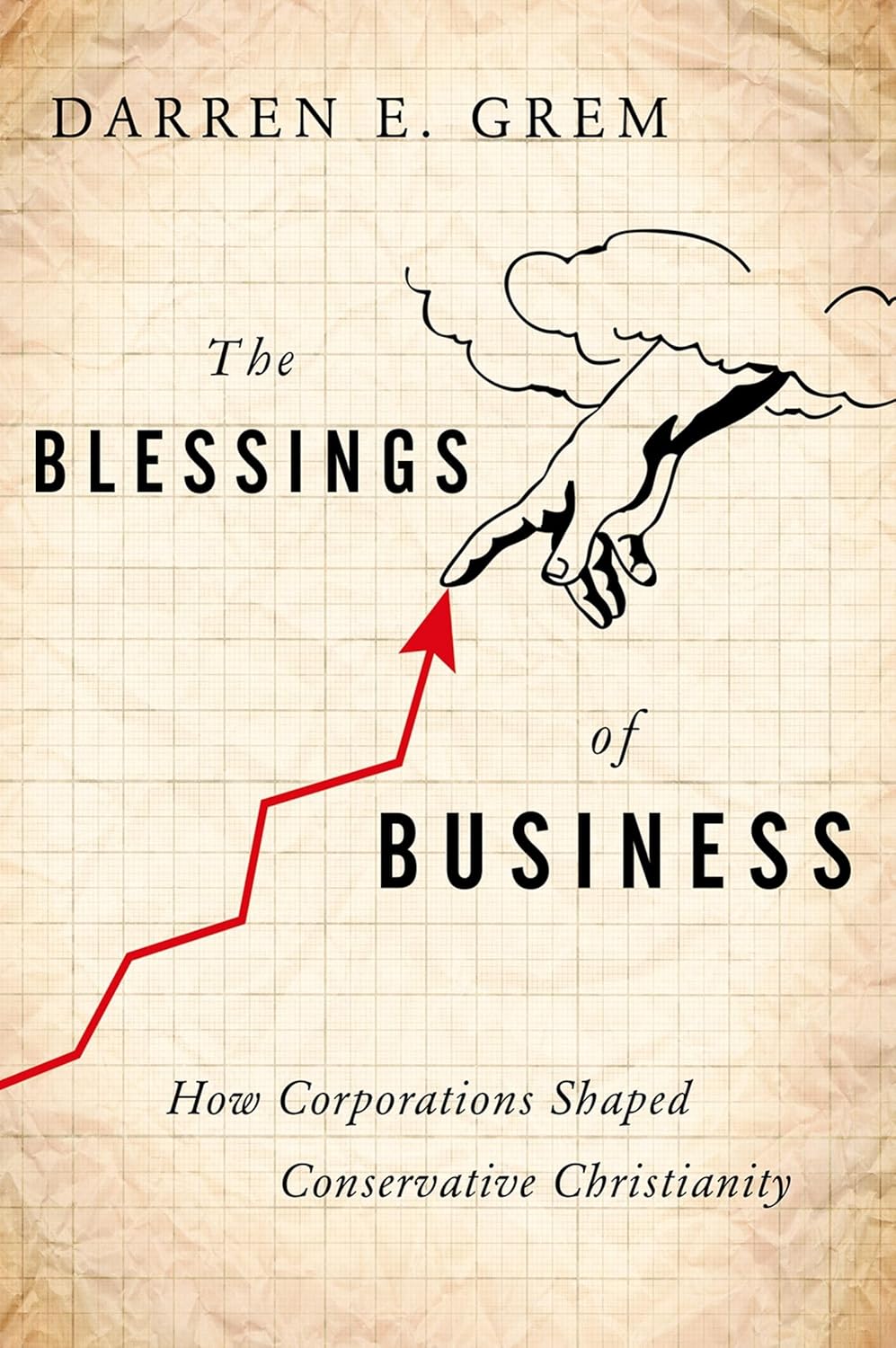
2016, Oxford University Press
How Corporations Shaped Conservative Christianity
From the publisher:
Grem argues for a new history of American evangelicalism, demonstrating how its adherents strategically used corporate America--its leaders, businesses, money, ideas, and values--to advance their religious, cultural, and political movement. Beginning before the First World War, conservative evangelicals were able to use businessmen and business methods to retain and expand their public influence in a secularizing, diversifying, and liberalizing age. In the process they became beholden to pro-business stances on matters of theology, race, gender, taxation, trade, and the state, transforming evangelicalism itself into as much of an economic movement as a religious one.
Selected Books:
Selected Articles:
"The New Deal's Southern Shrine: Religion and Memory at FDR's Little White House," Southern Cultures 32:3 (Fall 2026)
"From Revolt to Redevelopment: Memory, Neoliberalism, and the General Textile Strike of 1934," Study the South (June 2026).
“Y’all-in-the-Box Faiths: The South and the Religion Problem in Modern American History,” Modern American History 8:3 (December 2025).
“On Teaching Southern History at the 'Most Southern University on Earth,'” Journal of Southern History 91:4 (November 2025).
"The Bleachery's New Souths," Oxford American (Summer 2025).
Education
Ph.D. History, University of Georgia (2010)
M.A. History, University of Georgia (2004)
B.A. History, Furman University (2001)
Latest News

Events
OXFORD, Miss. – The SouthTalks series continues the "Creativity in the South" programming focus this spring at the University of Mississippi, with lectures, performances and film screenings examining the interdisciplinary nature of Southern studies.
-
Research News -
Alumni News / Philanthropy