
Dr. Joshua Howard is a Professor and the Associate Chair of the Department of History at the University of Mississippi.
Research Interests
Dr. Howard’s research has focused on different facets of China’s revolutionary experience. He is completing a book project entitled, "We Workers": Participatory Journalism, Class and Citizenship in Wartime China that is based on hundreds of worker letters’ to the editor that were published in the Chinese Communist newspaper, New China Daily between 1938 and 1947. The testimonials aired workers’ grievances and hopes and helped form a community of class in wartime Chongqing. Contrary to scholarship that posits a fragmented working class, an apolitical urban population, and a press that was muzzled by censorship, this research redirects our attention to the urban basis of support for the Chinese Communist revolution and the role of participatory journalism in shaping a language of class.
Biography
Joshua H. Howard received a BA in East Asian Studies from Oberlin College in 1988 and his PhD in History from the University of California at Berkeley in 1998. The following year, he joined the History Department and the Croft Institute for International Studies at the University of Mississippi, specializing in modern Chinese history. Since 2021, Dr. Howard has been teaching full time for the History Department. He offers survey courses of late imperial and modern China, and more specialized courses on contemporary China, the history of the Chinese revolutions, and US-China relations. During the 2019-20 academic year, he was selected a member of the Institute for Advance Study, School of Historical Studies. In addition to his scholarly endeavors, Dr. Howard has a passion for the violin and mountain hiking.
Publications
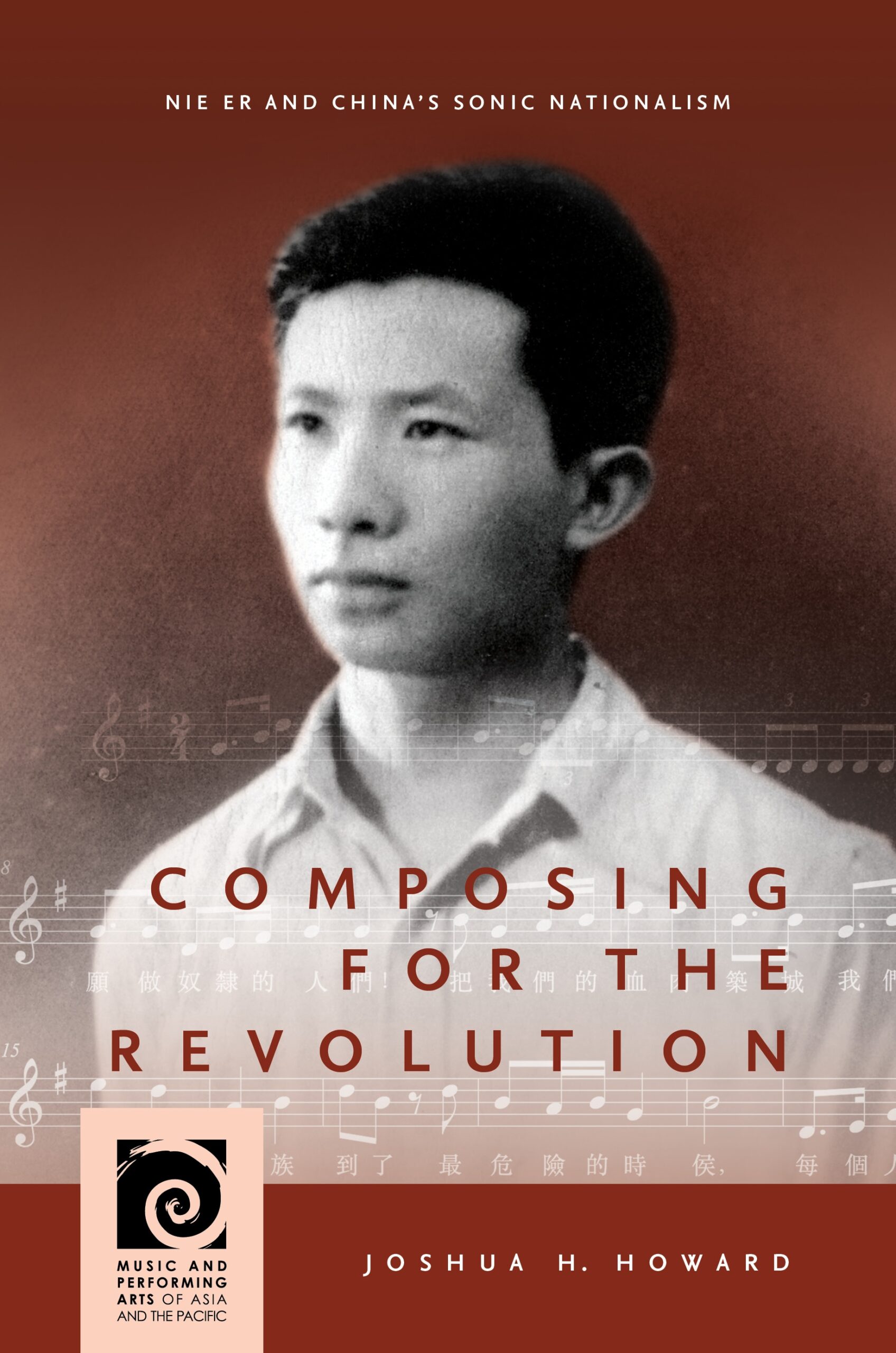
Nie Er and China's Sonic Nationalism
From the publisher:
Joshua Howard explores the role the songwriter Nie Er played in the 1930s proletarian arts movement and the process by which he became a nationalist icon. Composed only months before his untimely death in 1935, Nie Er's last song, the "March of the Volunteers," captured the rising anti-Japanese sentiment and was selected as China’s national anthem with the establishment of the People’s Republic. Nie was quickly canonized after his death and later recast into the "People's Musician" during the 1950s, effectively becoming a national monument.
Selected Book:
Workers at War: Labor in China's Arsenals, 1937-1953 (Stanford University Press, 2004)
Selected Article(s):
Music for a National Defense: Making Martial Music during the Anti-Japanese War. University of Hawai'i Press, 2015
The Politicization of Women Workers at War: Labour in Chongqing's cotton mills during the Anti-Japanese War. Modern Asian Studies. Cambridge University Press, 2013
Radicalism, Revolution, and Reform in Modern China: Essays in Honor of Maurice Meisner. Journal of Asian Studies, 2012
The Making of a National Icon: Commemorating Nie Er, 1935–1949. Johns Hopkins University Press, 2012
Courses Taught
- HIST 1990 What is History? The Atomic Bombing of Hiroshima in History and Memory
- HIST 3810 Late Imperial and Modern China
- HIST 3820 China in Revolution
- HIST 3830 China and the United States Since 1784
- HIST 3840 Global Shanghai
- HIST 3860 Capitalism and Communism in Modern China
Education
Ph.D. History, University of California-Berkeley (1998)
M.A. History, University of California-Berkeley (1991)
B.A. East Asian Studies, Oberlin College (1988)
Recognitions
- Residential Fellowship in Princeton, Institute for Advanced Study, 2019
- Fulbright U.S. Scholar - Beijing, Central Conservatory of Music, 2007 - 2008