Undergraduate

Physics, B.A.

Acquire a broad understanding of the physical principles of the universe.

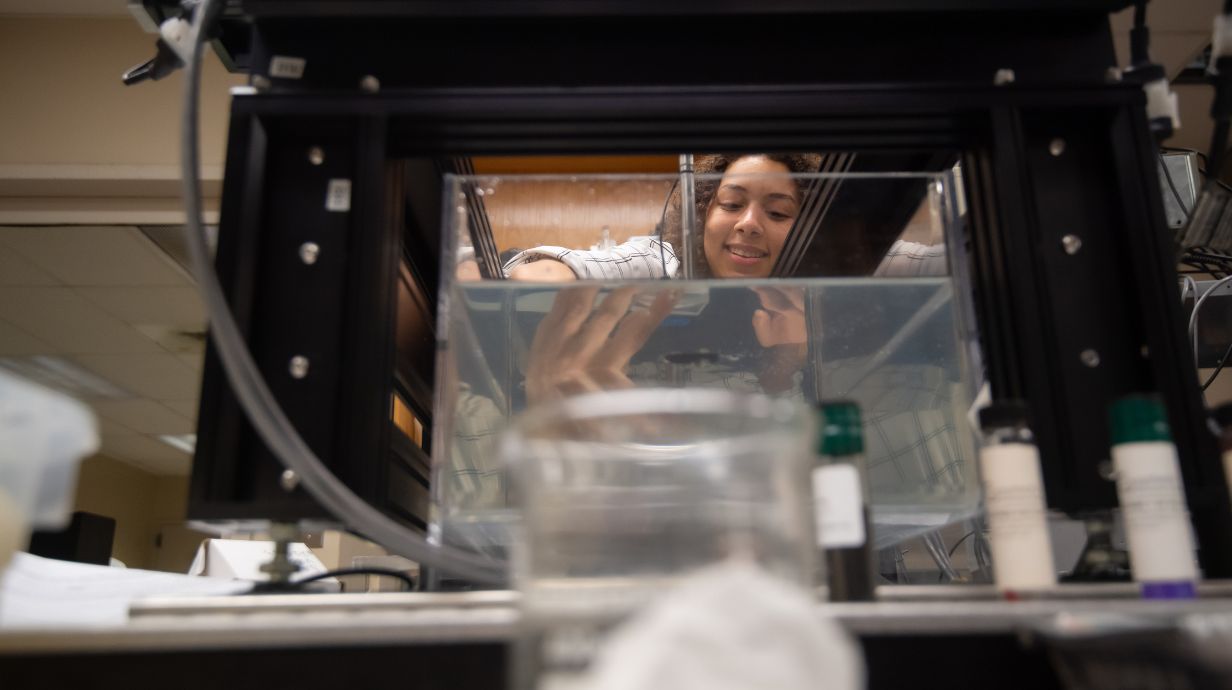
A student works on an experiment

"Physics is a lot more than the physics you might see in high school. Physics expands into quantum mechanics, astrophysics, acoustics, and other areas. It is so multifaceted that there is something for everyone. If you are at all interested in Physics, take a few classes, and see which are you like best and go from there!"

Ally Watrous ('24)

B.A. in Physics and German, B.S. in Chemistry

About the Bachelor of Arts in Physics

The Department of Physics and Astronomy in the College of Liberal Arts offers the B.A. in Physics. Our physics majors acquire a broad understanding of the physical principles of nature, develop critical thinking and quantitative reasoning skills and become creative scientific thinkers. 

Students have the opportunity to become involved in cutting edge research projects with faculty in the fields of acoustics, atmospheric physics, condensed-matter physics, high-energy physics, gravitational physics and astrophysics. 

B.A. vs B.S.

Students can choose between the Bachelor of Arts and the Bachelor of Science in Physics.

  • The B.A. in Physics provides a deeper and wider general education foundation, a broad training in physics, and allows more flexibility for combinations with other areas of study. These students must select a minor field of study (or a double major). It is ideal for pre-med and pre-professional students as the program has a high success rate for acceptance into such programs. Students in the B.A. interested in a health profession may follow the premedical track.
  • The B.S. in Physics is more rigorous, providing training for graduate school in physics and related fields. They have more and higher level mathematics required. Students in the B.S. may choose an optionally emphasis of astrophysics or biophysics.

The Value of a Physics Degree

Physics teaches you to use fundamental laws of nature underlying the interaction of matter and energy to discover new ideas in technology and new solutions to age-old problems. Studying physics provides the foundation for graduate study in experimental or theoretical physics, astronomy, astrophysics, and many other sciences such as chemistry, oceanography, seismology, and astronomy. It can also be applied to health professions such as medicine and dentistry. 

Our course of study leads to a unique and effective approach to problem-solving which many employers value when looking for potential candidates. This makes our majors well prepared to enter the workforce in a wide variety of areas upon graduation. Related careers in physics include education, medicine, business, quality assurance, systems safety, military, energy resources, and law.
On this Page…

    Program Information

    Degree

    B.A. in Physics

    Required Credit Hours

    120

    Program Type

    Major

    Program Location

    Oxford

    Duration

    4 Years

    Department Opportunities

    How do you best prepare for life after graduation? What are the resources for success at the university?

    Video: Get to Know the Department of Physics and Astronomy

    Hear firsthand from students, faculty, and staff about the Physics program.


    Chioma Udemgba poses for a portrait

    Meet an Alumna

    "Physics taught me how to be an abstract thinker and to use science as a tool to unlock my full potential as a learner. It has so many applications in the real world, including the field of medicine and renewable energy. It prepared me well for my path in medicine and can open the door to any career you choose to pursue."

    Dr. Chioma Udemgba (B.A. in Physics)

    Internal Medicine-Pediatrics Resident at Tulane University

    Choosing a Minor or Double Major

    B.A. students must choose a minor (or a double major). Combine your study of physics with many other subjects based on your interests and career goals.

    What Can You Do With a Physics Degree?

    • Senior Technical Advisor at FedEx
    • Physician at Memorial Hospital Gulfport
    • Radiation Safety at St. Thomas Hospitals
    • OB-GYN at Delta Medical Group
    • Physician at Vanderbilt Medical Center
    • Faculty at Yale School of Medicine
    • VP Instruction at Pearl River Comm. College
    • Researcher at Los Alamos National Lab
    • Aerospace Engineer at NASA
    • Senior Research Fellow at DuPont
    • Physicist at Tennessee Valley Authority
    • Curriculum Developer at Science is Elementary
    • Bioinformatician at Max Planck Institute
    Annabelle Harris

    Welcome to the College of Liberal Arts

    As Coordinator of Student Recruitment for the College of Liberal Arts, I work with students, and their parents, who are interested in attending UM for their undergraduate degrees. I coordinate personalized visits to our departments, answer questions about the majors and programs in the CLA and handle all recruitment communications from the CLA. Please feel free to send me any questions you may have. It is my job to make sure you have everything you need to make an informed decision on where to spend your college career, and I hope it will be with the College of Liberal Arts at the University of Mississippi!

    Annabelle Harris

    CLA Coordinator of Student Recruitment

    Future CLA Students

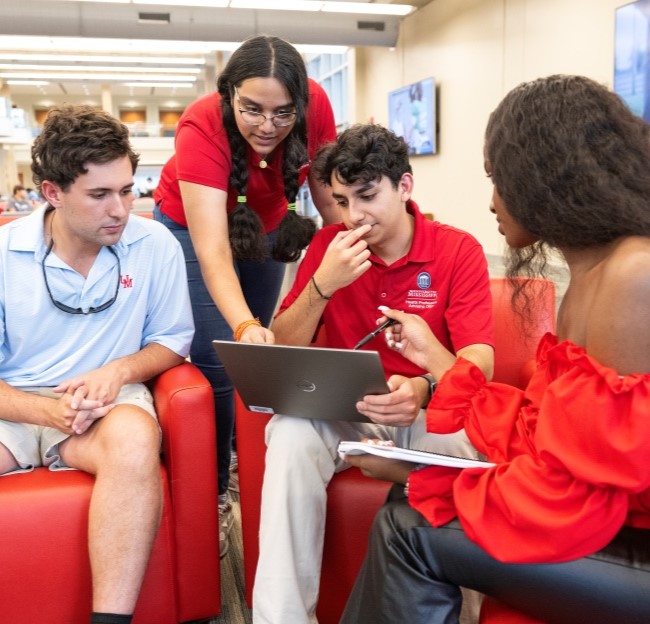
    image of a group of students studying together in the Union

    College of Liberal Arts Undergraduate Students

    We invite future undergraduates to learn about the College of Liberal Arts, the value of the liberal arts education, our programs, career opportunities, and resources to help you succeed. You can also request a personalized degree sheet. 

    Next Steps

    Explore Affordability

    We have a variety of scholarships and financial aid options to help make college more affordable for you and your family.

    Apply to the University of Mississippi

    Are you ready to take the next step toward building your legacy?