
Why I Stayed at the University of Mississippi for My Master's Degree in Food and Nutrition Services
Samantha Oullette came to the University of Mississippi to earn her B.S. in Dietetics and Nutrition and run on our cross-country team. Through the Accelerated Master's Degree Program, she's also pursuing a master's degree here.
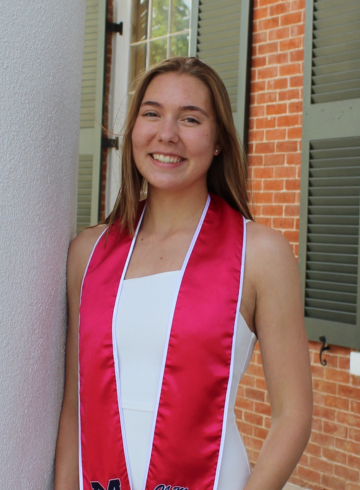

Recruited for Cross Country. Staying for Graduate School.
Andrew: Today we're going to talk about the Accelerated Master's Degree Program, a way for undergraduate students to get a jump-start on their graduate degree by taking graduate courses in their undergraduate years and then shaving time off and saving money when they actually get to their master's degree.
Today, I have Samantha Oullette with us, and she's going to introduce herself real quick and let us know a little bit about herself before we get started.
Samantha: I'm Samantha Oullette, and I just graduated last spring of 2026 with my undergraduate degree in Dietetics and Nutrition, and I am entering my first year of grad school and my last year of grad school for a Master's in Food and Nutrition Services.
So I'm planning to become a registered dietitian. And all four years of undergrad, I also competed on the cross-country team as well.
Andrew: It's great to have you here with us today. We were talking about that earlier before we started filming—how quickly things are moving for you. I was kind of shocked, and I'm still kind of shocked now.
So let's be really clear here: you graduated with your bachelor's in the spring, and you're starting your graduate degree this fall, and you will finish it when?
Samantha: I'll graduate from the master's next spring in 2027. I'll still have a few more credits to take during the summer, which will actually be an internship rotation. So not actual classes. But yeah, I won't officially be done until the summer.
Andrew: Let's say you didn't do the Accelerated Master's Degree Program. You did the normal four years in undergrad, and then you went to graduate school. How long would it have taken you otherwise?
Samantha: It would have taken me at least two years more to finish my master's.
Andrew: Okay. So you've saved a bunch of time?
Samantha: Yes, a whole year.
Andrew: That's awesome. Before we dive into things, let's go all the way back. What made you come to the University of Mississippi for your undergraduate?
Samantha: Yeah. So I feel like looking at colleges as an athlete is a little bit different than a normal student. But I already knew early on in high school that UM has a great athletic program for cross-country and track. And then whenever I was looking at schools and being recruited, I was kind of looking all over.
Mostly I ended up looking in the SEC. It was closer to home since I am from Tennessee, and it just had a lot of great athletic opportunities as well as academic opportunities, and a lot of resources and all that. So yeah, that was really what oriented me towards Ole Miss.
And once I really was looking at it, I just felt like I could get everything that I needed here in a school, academically and athletically. And I just love Oxford and the people here. It's just been a great experience so far.
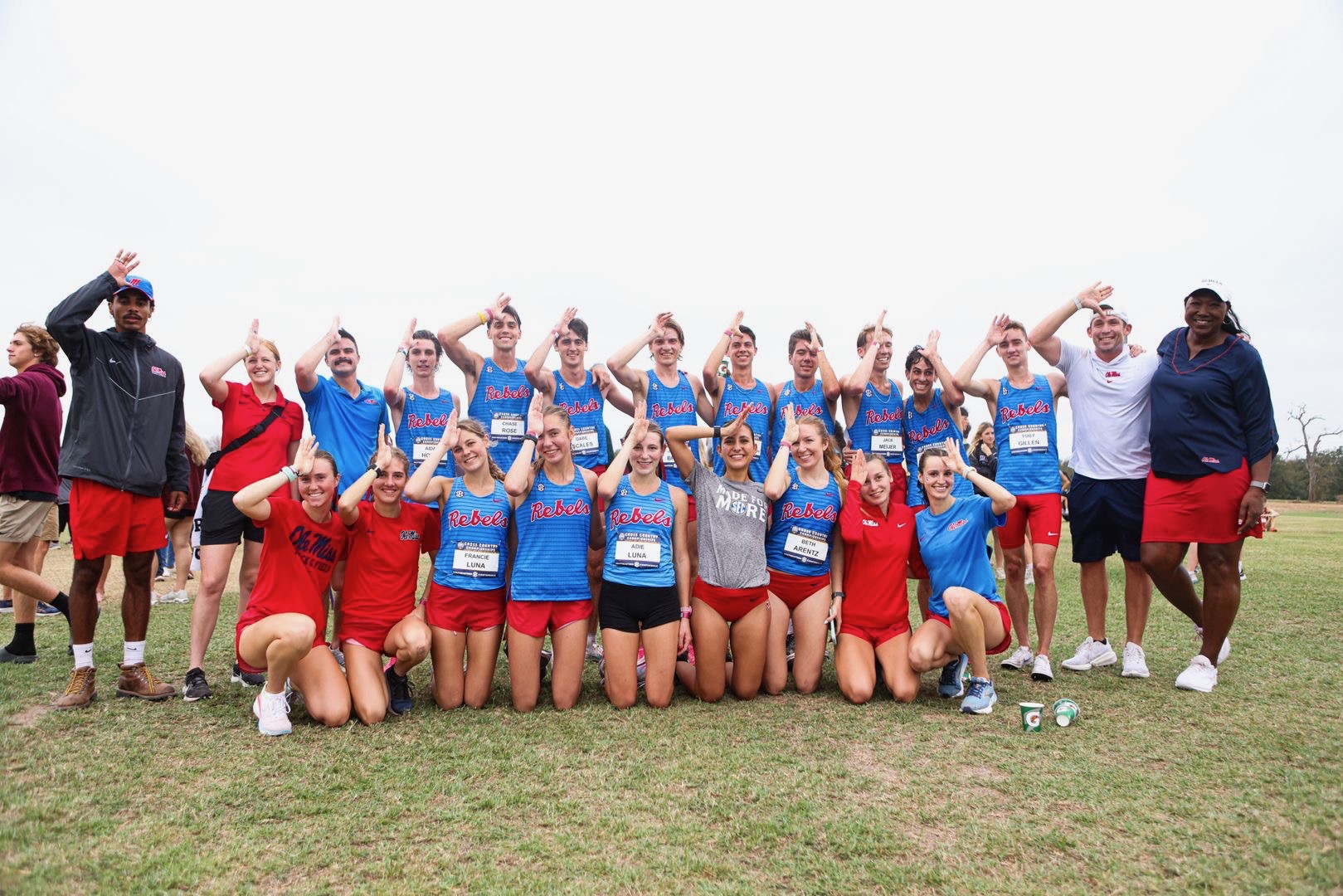
Andrew: I don't know what assumptions people make about student athletes, but you're a pretty academically minded student athlete, is that correct?
Samantha: Yes. I've always been very involved and committed to being a good student. From elementary through high school, I went to a magnet school where you had to test in to get into it. Shout out to Central Magnet School, actually the number one school in the nation right now.
Andrew: Right on. And where is that?
Samantha: That's in Murfreesboro, Tennessee. That's where I grew up.
Andrew: Nice.
Samantha: And that's where I went to middle school and high school. And yeah, I was always just very academically centered. Great teachers, great students, all very oriented toward academics, very intelligent, bright people, and great to go there, and a bit competitive too. So yeah, I think being in an environment like that, it was always kind of pushing me to be my best academically.
And I think it's natural in schools like that. A lot of people are looking at Ivy League-type schools, but really, I found that a lot of my peers, including myself, end up in state schools like Alabama, the University of Mississippi, or Tennessee, because there are just great scholarships. And I really felt like, especially for undergrad, what you're going to put into your academic experience is what you're going to get out of it.
Whether you're going to a state school or somewhere like an Ivy League school, it's not going to make as much difference in terms of what you're getting out of it academically. And honestly, I felt like there were more opportunities for me here to stand out. And so I got a lot of opportunities out of that, like research and stuff like that.
Andrew: Can you describe one opportunity that you had that really stands out to you now?
Samantha: Yeah. I was part of the Honors College here. At the end of the four years you usually defend a thesis in your senior year. So you write a long paper about whatever topic that pertains to your major.
When I was coming into my freshman year, that summer, I got an email from Dr. Mann. She's part of the department and basically said they had a research opportunity that's really goal-oriented towards the seniors or juniors in the Honors College to complete their thesis. And so as a freshman, I was like, you know, I'll just seize every opportunity, and I applied for it.
But I didn't think I was going to get it because I wasn't a junior or senior. But I did get that research opportunity. And so that actually turned into my thesis, and I completed that throughout my freshman year. And then I defended it in the fall of my sophomore year.
Andrew: Pause real quick. You defended your Honors thesis in your sophomore year?
Samantha: Yes.
Andrew: Is that unusual?
Samantha: Very. Yeah. I kind of had to go through and make sure it was okay to actually do that, because whenever I told them I was a sophomore, they were like, why are you defending your thesis now through the Honors College? But yeah, most of my peers were then starting it in their junior year and actually defending it at the end of their senior year.
Very few would actually, like, some defended it in the fall of their senior year, but the majority do it in the spring. So yeah, it was kind of nice for me to sit back and watch.
Andrew: There's a series of opportunities that came your way. You get the call, you apply for it, you get the research opportunity. You start to do your thesis early, you get done, and then all of a sudden you have a new opportunity, which I think—correct me if I'm wrong—the Accelerated Master's Degree kind of filled. Is that right?
Samantha: It became another opportunity for me. Yeah. I actually found out about that program from my thesis advisor, as I mentioned earlier, and she kind of encouraged me to do it because she knew that I was a little bit ahead in my credit hours, a little bit ahead.
Andrew: A little bit ahead?
Samantha: Yeah, I'd completed lots of AP classes in my high school experience, which was fairly normal for my high school. But I did come in here with 32 credit hours. Not all of them counted because a lot of them were electives. But I was about a year ahead when I got here in terms of hours, and then also the classes that I got knocked off.
So I had a lot of space to fill in my four years, and I didn't want to graduate early because of athletics.
Andrew: When did you realize that the AMDP was right for you?
Samantha: I honestly think I knew I was going to apply most of my time in undergrad. I always enjoyed my time at Ole Miss, and knowing I wanted to become a registered dietitian, I knew I would need to get my Master's degree.
Andrew: When did you start taking accelerated classes?
Samantha: I believe it was my junior year.
Andrew: Okay. How did that feel? As an undergrad sitting in a classroom with graduate students, was that weird?
Samantha: I mean, at first it was a little bit odd, but especially once you get to senior year, you kind of get to know the people, especially in your degree program. So it wasn't crazy different, but it was just, you know, you had to do a little bit extra work or whatever the requirements were for the class. So yeah, it didn't feel too different.
And it was the same professors that I had for my other classes too, for my program. So yeah, nothing too crazy. Not too difficult or too different.
Andrew: Was there someone on campus that helped you make your decision to be a part of the Accelerated Master's Degree Program?
Samantha: I met with Dr. Melinda Valliant to ask questions about the program and specifically how the program would look for me, considering I had completed 15 hours through the AMDP already.
Discussing the flexibility the program provided to make the most sense for me financially and in its timeline greatly influenced my decision. I left that meeting knowing the program here was going to be a great opportunity for me and all that I needed.
Andrew: Was there ever a moment where you were like, oh, this is a grad class?
Samantha: I think it was just that if there were some of the classes undergrads were in them too, but they just didn't have to do a couple of the projects.
And a lot of the projects that you did have to do as a master's credit were like presenting or a little bit more research. And I feel like whenever you're getting into the research side of things, it always feels a little bit more mature. In one of my classes, I had to do a whole big presentation. It almost felt like I was defending my thesis again, just a little bit pared down.
Andrew: And that's just for a single course?
Samantha: Yes. So the other undergrad students that weren't in the AMDP, had to do research as we were going through the class. They just didn't have to put together the big presentation and actually, like, explain it all. So it wasn't like a whole lot of time outside the class necessarily on it.
Obviously you have to do work outside the class, but it was more just getting the presentation ready and being professional in front of the whole class and giving a lecture of sorts.
Andrew: Let's talk a little bit about the actual program that you're about to go into and kind of how we got there.
Samantha: So it's a Master's in Food and Nutrition Services. I'm in the coordinated program, which is like a subset of that. Which allows me to become a registered dietitian.
Andrew: So did you always want to be a registered dietitian, or is that something that happened through the Accelerated Master's Degree Program?
Samantha: Coming into college, I knew I wanted to be a dietitian; I was thinking I would be more on the sports side just with my athletic background. And that's really what got me interested in nutrition in the first place. But yeah, that's definitely shifted.
I think my research actually gave me a lot of new ideas of what I wanted to do, because it was more in child nutrition, in like the school and school meal programs, and being able to see how much of an impact that has on the community and children in the community was really, really great and just opened my mind more about the other aspects of nutrition I could work in.
I think I'll figure it out a little more as I do my rotation later, starting in the spring. Of all the different kinds of places you can be placed in nutrition.
So, yeah, I've stepped away from the sports side, and I think I'm a little bit more interested in clinical or community food insecurity.
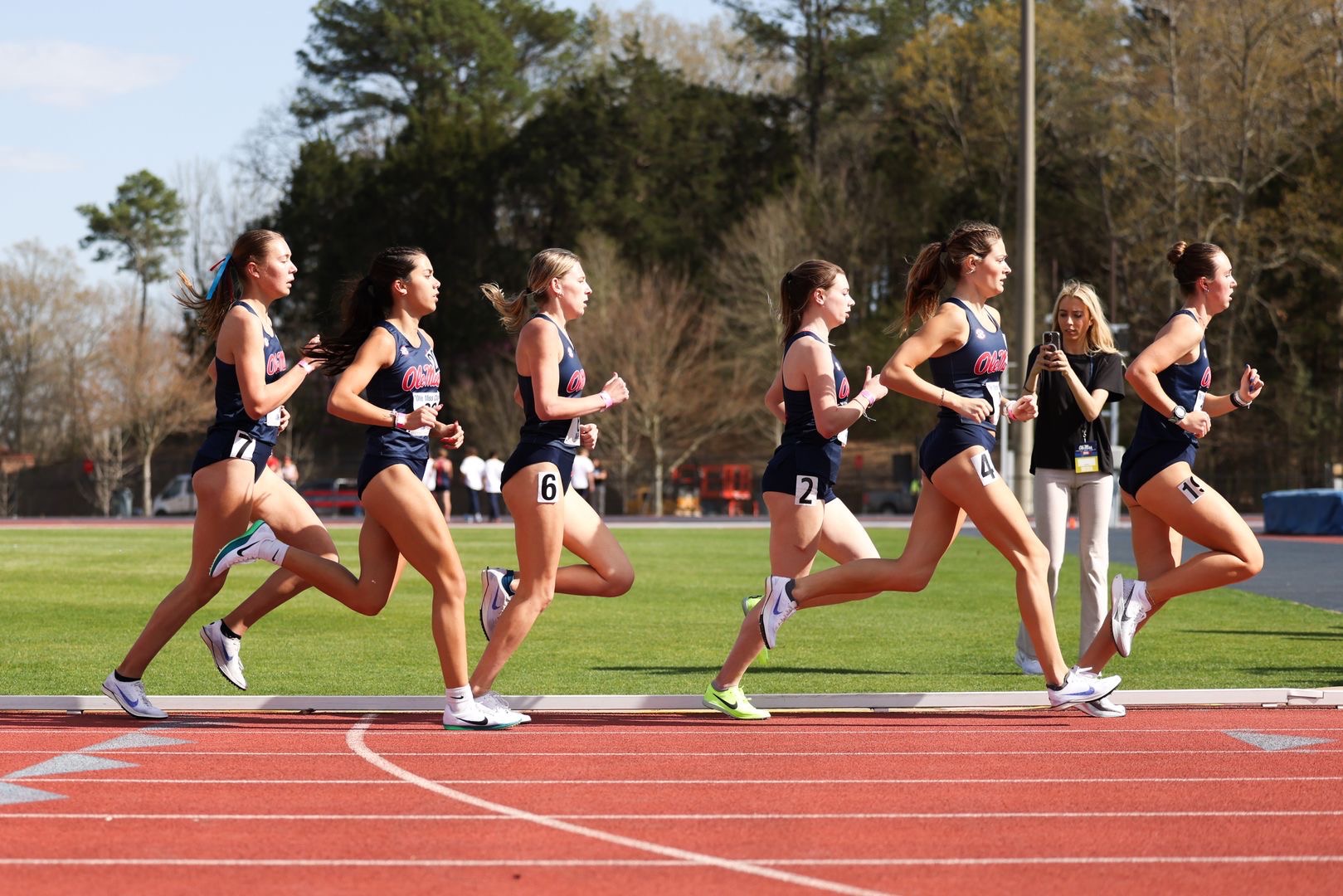
Andrew: That's really cool. And that makes sense, because when you came in, you're running, you're doing cross country. Diet has a lot to do with running well, recovery, all that different stuff. And so you do the research and learn a little more. What did you find that really made you kind of zoom out and say, wait a second, there's a whole different group, a whole different thing to be concerned with?
Samantha: Yeah, I think just really my whole life I really wanted to make an impact on the world and community in a positive way. My research was specifically about school meal plans during COVID and how they could get meals to students during that time, because, you know, students who don't have access to food at home really rely on school meals to provide that.
Whenever COVID shut down schools, it was really difficult for them to get access to food. My research showed how communities were able to adapt and try to get that food for schools in the most efficient and convenient way for those families. I think it was really cool to see, you know?
A lot of those people working to make that change are dietitians and people working in child nutrition. So I think it was just really interesting to see that impact that I could have in an area like that. And I think that really just broadened my view of what I could do in this area, not just in sports.
Andrew: That's cool. I suppose they had to start thinking really quickly to figure out those problems, which I can imagine, since you've seemed to be I don't know how to describe it. Let's say academically competitive.
So, there's something hiding in your answer where you like to, I'm going to imagine, break things down, figure out puzzles, figure out where things fit. Does that sound right?
Samantha: I would say so in some ways.
Andrew: I feel like that's going to be a really interesting job for you. Let's come back to the present real quick. It's August, 2026. You're about to start your graduate year, this short little year that you're going to do for your graduate school.
And you've done your orientation, right? You just did that. When?
Samantha: Yesterday.
Andrew: Yesterday. Okay. So we're in it. We're about to start classes next week. Are there specific courses or specific things you're excited to do? Or are you just like, okay, we're going to hit the books; we're going to get it done?
Samantha: Yeah, I'm just really excited to get into what I'll be working in.
And I feel like the last couple of years of undergrad, and especially with courses that I took in the Accelerated Master's Degree Program, already kind of had that. But it feels like my whole life now is really oriented towards that in terms of school. And I think I'm honestly really excited about my rotation and just getting that experience and really figuring out what I want to do.
But I also have an elective course that we have to take, but I'm actually going to be taking two just because I had a gap in my schedule because I couldn't start my rotation until really this spring. So yeah. So I needed to take an extra class this fall because I didn't really have other classes to take.
I am really excited for that because it's both maternal nutrition and then working in weight management and eating disorders. And I think those classes are just going to be a really interesting and exciting; a new type of thing to learn about that I maybe necessarily wouldn't have otherwise.
Andrew: Those are also places where that kind of empathetic nature you have will also be able to find something cool, because those are extremely personal fields. So we've got the year of classes and then the rotation. What does the rotation look like? What does that do?
Samantha: So from what I understand, it's nine different placements. Things like hospitals and food service type places, like the university community rotations, really just all the different places that a dietitian can be.
You go to a place for a few weeks, and then you rotate to another one and another one and then another one until you get all the way through them. So it really does give you the full experience of what you might expect actually working in those places.
Andrew: Yeah. That's wild. So after talking, I can imagine that someone might be watching and they're thinking, Samantha is really academically driven. She's doing all this stuff before she needs to do it. Getting all these things done so quickly. I don't think that I can do the Accelerated Master's Degree Program because I'm not like that. What would you say to undergrads that are maybe thinking about graduate school, or maybe thinking about applying to the Accelerated Master's Degree Program?
Samantha: I honestly really think if you're willing to do the work, then you'll be fine. It's not like it's an impossible feat. If you're really interested in this subject, which I would hope you would be, if you're thinking about getting a master's in it, then it shouldn't be something that is impossible for you.
And really, like, especially in my experience, the professors have just been great. And you know, if you're ever struggling, you can definitely talk to them. It's the same way as you would in an undergrad class.
I always recommend the program to people. Maybe you're not a full year ahead, but you have a little opening in your schedule, and you have enough credit hours for undergrad. If you're considering going to your masters, even if you're not sure about the masers, the Accelerated Master's Degree Program is going to give you a huge step forward and it's going to save you a lot of money if you go, because I'm not going to have to pay for a full year because of that, and maybe you wouldn't get a full year off, but getting any of those classes off is going to save you money.
Especially if you have scholarships in undergrad and you want to keep that status, it really can save you money. And it's not like you have to go to graduate school; either way, it gives you a little step forward if you want to.
Andrew: I think that's great advice. I also did my graduate school here, and I always find that people have a misconception about what they are capable of.
To so many students, grad school seems impossible. But with the Accelerated Master's Degree Program and the smallest amount of application, you realize like, oh, I can actually do this. All you have to do is start applying yourself more and more and more until all of a sudden you're done.
Samantha: Yeah. I feel like people are more inclined to really commit to something that they're enjoying, too. So if you enjoy the subject, that's really what masters like a master's degree is more about.
Like undergrad has a lot of the general classes that maybe you're not very interested in. And if you're really passionate about a subject or you're really interested in it, your master's or graduate program is going to be a lot different to your first couple of years of undergrad.
Andrew: It should be exciting because it's a whole different experience compared to an undergraduate degree. Right? You're laser-focused on the field.
If there's someone out there that's worried about staying in Oxford for their graduate school, what would you say?
Samantha: I think if you love Oxford and you have a great relationship with those professors from your undergraduate degree, there shouldn't be any fear. I saw the Accelerated Master's Degree as an opportunity to take an extra year in this town with, like, the people that I've really grown to love and care for.
And also, I have great relationships with the professors. I know what my experience is going to be like with them. And there wasn't really any risk, while there are a lot of rewards. So that's really what brought me back.
Andrew: I feel like there needs to be one more question asked or one more thing said. I asked this before we sat down, and I'll ask it again: What's your favorite running movie?
Samantha: Yeah. So I, I feel like there aren't a whole lot of running movies. We kind of talked about that, but the one that really stands out to me is McFarland, USA, which is just one that I think must have come out when I was in middle school, and my middle school cross country team all watched it together.
My coach was really excited about it. So, a big motivational movie, but it's really just a sweet movie, and it shows all of the really awesome sides of running in terms of community and how you're able to push yourself in all of that and challenge yourself. And yeah, so that would probably be my favorite.
Andrew: That's awesome; I'll have to check it out. Well, thank you so much for sharing all that with us. This has been really great talking to you. Thanks for talking to us today.
If y'all are interested in the Accelerated Master's Degree Program at the University of Mississippi, there are over 24 programs to choose from.
Next Steps
Explore Affordability
We have a variety of scholarships and financial aid options to help make college more affordable for you and your family.
Apply to the University of Mississippi
Are you ready to take the next step toward building your legacy?