
Chemical Research
Our chemical research integrates multiple disciplines to uncover the complexities of natural products.

Our chemical research approach
Our center's chemistry expertise encompasses pharmacognosy, analytical chemistry, organic and medicinal chemistry, and computational chemistry, enabling us to elucidate complex chemical structures, evaluate bioactivities, assess purity and safety, and support regulatory compliance.
At NCNPR, our approach starts with natural compounds, identifying the value of these compounds through a process that starts with natural products and extends to the development of synthetic analogs. By analyzing the chemical structure and potential bioactivity of natural compounds, we use advanced techniques such as computational modeling to predict their behavior and interactions within biological systems.
Our process not only helps us discover new therapeutic applications but also enables us to explore uses beyond human health, including agricultural applications, like enhancing plant resilience and growth.
Analyzing natural products through chemical research
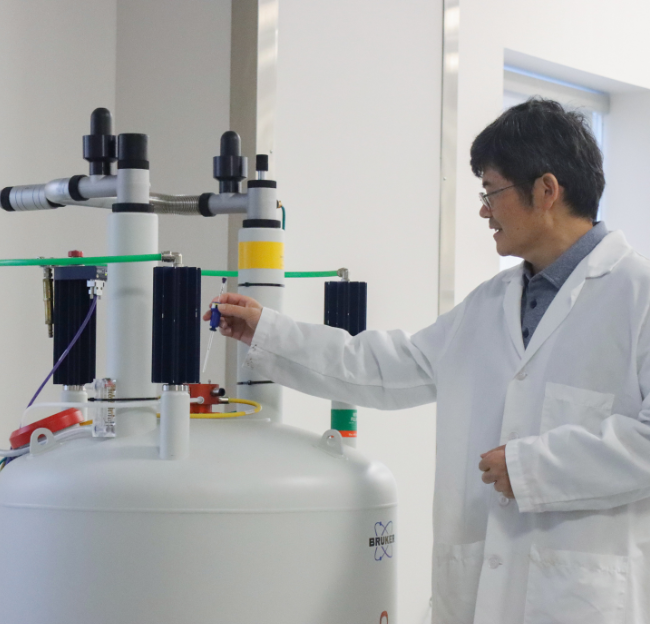
Pharmacognosy
By employing analytical techniques like chromatography and spectroscopy, our researchers can identify and characterize the chemical compounds found in nature. This knowledge is used to investigate potential applications, including the development of bioactive compounds for human health and the exploration of natural alternatives for agrochemicals, pesticides, and herbicides.
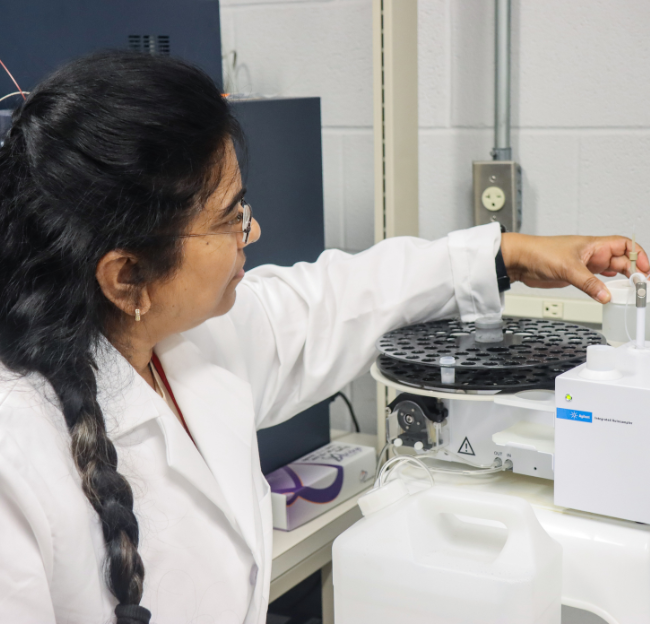
Analytical chemistry
The analytical chemists at NCNPR use advanced instrumentation to standardize and authenticate botanicals, detect contaminants and adulterants, and verify the claimed ingredients in dietary supplements or commercial products. By analyzing the chemical constituents and biological activities of plants, they aid in understanding potential applications. They are able to identify toxic or problematic compounds in natural products, such as pyrrolizidine alkaloids in Crotalaria and Senecio spp. Researchers are also able to investigate the absorption and metabolism of natural product compounds in the body to assess supplement or pharmaceutical safety.

Computational chemistry
Our computational chemists employ advanced molecular modeling, simulations and machine learning techniques to predict the chemical and biological attributes, including potential toxicities of natural products and their derivatives before undertaking tedious experimental validations. These exercises are critical for enabling informed decision-making when experimental data is limited. Collaborative efforts with other teams guide the rational design and optimization of novel compounds.
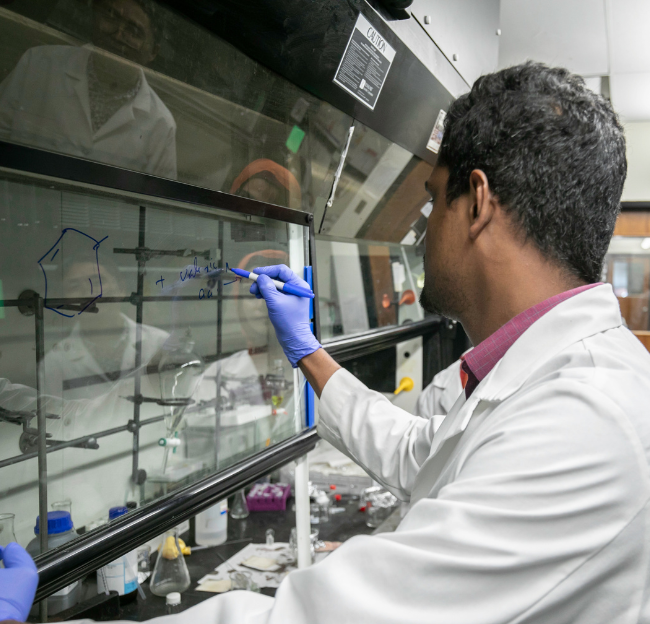
Organic & medical chemistry
With a focus on isolation, structure identification, and synthesis, our organic and medical researchers characterize bioactive compounds. Through chromatography, spectroscopy and computational modeling, the team optimizes compound structures and explores structure-activity relationships.
Chemical research highlights
-
Menthalactone from Mentha piperita L., a Monocot-Selective Bioherbicide
Our researchers explored the phytotoxic effects of menthalactone, a compound derived from peppermint, on invasive weed species. The study found that menthalactone significantly inhibited the germination of bentgrass, showing great potential as a selective bioherbicide for monocot species while being less effective against other species like lettuce.
Read the Menthalactone from Mentha Piperita L., a Monocot-Selective Bioherbicide Study -
Influence of structural characteristics on the binding of synthetic cannabinoids from the JWH family to the CB1 receptor: A computational study
Researchers at NCNPR investigated the binding of synthetic cannabinoids from the JWH family to the CB1 receptor using molecular docking, binding free energy calculations, and molecular dynamics simulations. The findings revealed that the length of the alkyl chain on the naphthalene group significantly influenced the binding affinity to the CB1 receptor, with longer chains showing stronger interactions.
Read the Influence of Structural Characteristics on the Binding of Synthetic Cannabinoids from the JWH Family to the CB1 Receptor: A Computational Study -
Exploring the chemogeographical variation of a commercially important medicinal tree (Prunus africana (Hook.f.) Kalkman) using a metabolomics approach
We inspected the chemotypic variation of Prunus africana stem-bark samples from Cameroon, the Democratic Republic of Congo (DRC), and Zimbabwe using multiple analytical techniques, including HPTLC, UPLC-MS, GC–ToF–MS, and NMR. The results confirmed country-specific chemical markers and highlighted β-sitosterol and ursolic acid as key bioactive compounds, with variations in their concentrations across regions.
Read the Exploring the Chemogeographical Variation of a Commercially Important Medicinal Tree (Prunus Africana (Hook.f.) Kalkman) Using a Metabolomics Approach Study -
Quantity of Melatonin and CBD in Melatonin Gummies Sold in the US
In this study, we explored the quantity of melatonin and CBD in melatonin gummies sold in the U.S. Our researchers found that many products contained significantly less melatonin and CBD than advertised, raising concerns about product consistency and accuracy.
Read the Quantity of Melatonin and CBD in Melatonin Gummies Sold in the US Study
Analytical instruments
- Waters Xevo G2-S Quadrupole/Time-of-Flight LC/MS with electrospray (ESI) and atmospheric pressure chemical ionization (APCI) capabilities; with Waters Acquity UPLC system including autosampler and photodiode array detector.
- Waters Xevo G3 Quadrupole/Time-of-Flight LC/MS with electrospray (ESI) and atmospheric pressure chemical ionization (APCI) capabilities; with Waters ACQUITY I-plus Ultra Performance LC system including autosampler.
- Waters TQ-S employing electrospray ionization (ESI) and atmospheric pressure chemical ionization (APCI), interfaced to ACQUITY I-Class Ultra Performance LC system.
- Waters ACQUITY H-Class Ultra Performance LC system interfaced with Quadrupole Dalton (QDa) employing electrospray ionization (ESI), photodiode array, and evaporative light scattering detectors.
- Waters Arc HPLC system interfaced with Quadrupole Dalton (QDa) employing electrospray ionization (ESI) and photodiode array detectors.
- Waters ACQUITY Classic Ultra Performance LC system interfaced with Single quadrupole (SQD) employing electrospray ionization (ESI), photodiode array, and evaporative light scattering detectors
- Waters ACQUITY H-Class UPLC system integrated with photodiode array (PDA) and fluorescence (FLR) detector
- Waters Alliance HPLC systems with photodiode array (PDA) detector
- Waters Arc HPLC systems with photodiode array (PDA) detector
- Waters Acquity UPC2 system equipped with Waters SQ (single quadrupole) detector and PDA.
- Agilent 6230B Time-Of-Flight LC/MS with electrospray (ESI) and atmospheric pressure chemical ionization (APCI) capabilities; with Agilent 1100 HPLC system including autosampler and photodiode array detector.
Agilent 6530A Quadrupole/Time-of-Flight LC/MS with electrospray (ESI) and atmospheric pressure chemical ionization (APCI) capabilities; interfaced with Agilent 1290 Infinity LC system.
Agilent 6545B Quadrupole/Time-of-Flight LC/MS with electrospray (ESI) capabilities; interfaced with Agilent 1290 Infinity LC system.
Agilent 7250 Accurate-Mass Quadrupole/Time-of-Flight GC/MS with electron impact (EI) capabilities; interfaced with 7890B Agilent GC system
Agilent 5977 MSD GC/MS system employing EI, interfaced with Agilent 7890B GC system.
Agilent 6120 MS system employing electrospray ionization (ESI), interfaced with Agilent 1290 Infinity LC system.
Agilent 6470A QqQ MS system employing electrospray ionization (ESI), interfaced with Agilent 1260/1290 Infinity LC system.
Agilent 5975C GC/MS system employing EI, interfaced with Agilent 7890A GC system.
Agilent 7800 Inductively Coupled Plasma Mass Spectrometer (ICP-MS) with integrated autosampler.
- Agilent 1260 Infinity SFC/UHPLC system equipped with Agilent Quadrupole LC/MS and DAD.
- IonSense DART-100 (Direct Analysis in Real Time) ion source for interface to Agilent 6230B or 6530A systems.
Chemical Research Team
Zulfiqar Ali
- Principal Scientist
Bharathi Avula
- Principal Scientist
Joseph Lee
- Senior R&D Chemist
Xing Cong Li
- Principal Scientist in the National Center for Natural Products Research and Research Professor in Pharmacognosy
Xing Cong Li
- Principal Scientist in the National Center for Natural Products Research and Research Professor in Pharmacognosy
Ahmed Osman
- Principal Scientist
Pankaj Pandey
- Senior Research Scientist
Yanhong Wang
- Principal Scientist
Jianping Zhao
- Principal Scientist
Fazila Zulfiqar
- Principal R&D Chemist