
Neuroscience, Minor
Understand the neural underpinnings of behavior.
- Home
- Academic Programs
- Minor in Neuroscience
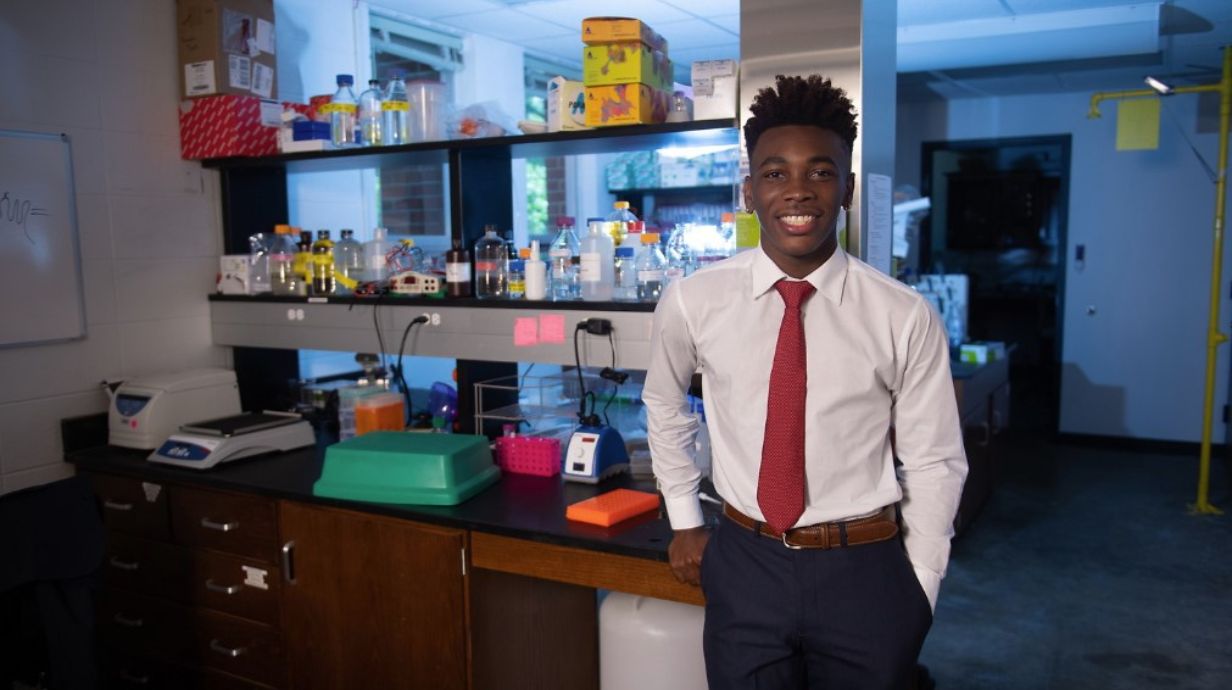
About the Minor in Neuroscience
The College of Liberal Arts offers the interdisciplinary minor in Neuroscience. Students interested in neuroscience can also pursue it as a major field of study through the Interdisciplinary Studies or Multidisciplinary Studies degrees.
Neuroscience study exposes students to fields as diverse as, biology, psychology, physiology, philosophy, and biomedical engineering. This diversity serves the ultimate goals of neuroscience; to develop a comprehensive and unifying theory of behavior and consciousness and train practitioners to treat mental disorders and neurodegenerative diseases.
To prepare students for a range of clinical and academic careers, the neuroscience minor and majors provide a comprehensive and flexible course curriculum to match students’ focal interests. Students will take basic and advanced courses in pure and applied neuroscience from several departments arming students with the ability to critically analyze and communicate information. Hands-on lab experience is encouraged.
Neuroscience prepares students for an array of careers in applied and research fields such as
- medical and allied health careers,
- academic research from biochemistry to animal behavior,
- drug discovery and testing in biotechnology firms,
- clinical psychology and psychiatry practice, and
- biomedical engineering developing AI and brain-computer interface.
On this Page…
Program Information
Degree
Required Credit Hours
18-22
Program Type
Minor
Program Location
School
Academic Requirements
Find out about credit hour and course requirements for the Neuroscience minor from the 2025-26 academic catalog, including information about course prerequisites and the application form for the Neu 491, 492, 493 independent research courses.
Students complete 18-22 credit hours of courses, including four courses at the 300 level or above, of which one must be a formal laboratory course, and at least one 500-level course. Six hours, not including the 2 core courses, must be outside the student's major.
Required Courses
- Psy 319: Brain and Behavior
- Bisc 327: Introductory Neuroscience
Lab Courses
- Bisc 330: Principles of Physiology
- Bisc 427: Methods in Comparative Neuroscience
- Bisc 512: Animal Behavior
- Bisc 518: Microtechnique
- BME 314: Biomedical Measurement
- ES 514: Applied Electromyography
- NEU 491: Directed Research in Neuroscience
- NEU 493: Neuroscience Capstone Research
- NEU 579: Advanced Topics of Neuroscience
- PSY 390: Lab in Psy: Behavioral Neuroscience
Neuroscience Courses
- Bisc 529: Endocrinology
- Bisc 533: Advanced Neuroscience
- Bisc 538: Hormones and Behavior
- Bisc 541: Cell Biology of Neurodegenerative Disorders
- Bisc 543: Functional Neuroanatomy
- BMS 471: Targeting Neurodegenerative Diseases
- CSD 455: Neuroanatamy & Neurophy of Speech & Hearing
- CSD 505: Neurophysiology and Genetics of Communication
- CSD 526: Aphasia and Adult Language Disorders
- BME 313: Physiology for Biomedical Engineering
- BME 413: Biomedical Signal Processing
- ES 344: Aging in 21st Century
- ES 338: Neuroscience of Exercise
- ES 515: Stress and the Brain
- MEDC 416: Intro to the Principles of Medicinal Chemistry I
- MEDC 417: Intro to the Principles of Medicinal Chemistry II
- MEDC 418: Neuroscience Principles of Drug Abuse
- PHCL 586: Receptors and Channels
- PHIL 332: Personal Identity and the Self
- PHIL 342: Philosophy of the Mind
- PSY 309: Learning
- Psy 320: Cognitive Psychology
- PSY 322: Drugs and Behavior
- PSY 326: Sensation and Perception
- PSY 505: Conditioning and Learning
- PSY 511: Neural Basis of Learning and Memory
Students interested in an independent research experience to earn lab course credit should complete the following form.
Neu 491, 492, 493 Enrollment Form
Alternate Prerequisites
Course prerequisites are designed to help students prepare for courses where information builds from one course to another or to help students complete courses in a logical sequence. Given the interdisciplinary nature of the minor, you may be prepared for a course outside of your major without having the prerequisites listed in the course catalog.
Students that believe they have adequate preparation for a Neuroscience Minor course should obtain the the syllabus for the course, list the courses they believe have prepared them for the course, and present their case to the course instructor to determine if they are a good match for the course. Faculty can decide if they will grant permission to be manually enrolled.
Welcome from the Director
Students at UM can study a wide range of topics and be involved in hands on research with faculty experts across the university when pursuing a minor in neuroscience. The study of neuroscience is invaluable for those considering medical school, allied health, or mental health professions, neuroscience-related graduate programs, or those interested in innovating biotechnology.
Please contact me help you plan your Neuroscience journey and to match you with lab if you want to perform research. If you know the relevant faculty research lab you would like to join, you can contact them directly to ask if they have openings.
Lainy Day
Professor of Biology and Director of the Interdisciplinary Minor in Neuroscience
Affiliated Faculty
Lainy Day
- Professor of Biology and Director of the Interdisciplinary Minor in Neuroscience
Jeffery Bednark
- Instructional Assistant Professor of Psychology
Richard Buchholz
- Professor of Biology and Director of the Center for Biodiversity and Conservation Research
Alberto Del Arco Gonzalez
- Associate Professor of Health, Exercise Science and Recreation Management
Robert Doerksen
- Associate Dean of the Graduate School, Professor of Medicinal Chemistry and Research Professor in the Research Institute of Pharmaceutical Sciences and Affiliate Professor of Biomedical Engineering
Sharday Ewell
- Assistant Professor of Biology
Tossi Ikuta
- Associate Professor of Communication Sciences and Disorders
Mika Jekabsons
- Professor of Biology
Bradley Jones
- Associate Professor of Biology
Christopher Leary
- Professor of Biology
Tess Lefmann
- Associate Professor of Social Work
Paul Loprinzi
- Associate Professor of Health, Exercise Science & Recreation Management
Stephanie Miller
- Professor of Psychology and Provost Faculty Research Scholar for Institutional Transformation
Matthew Reysen
- Associate Professor of Psychology
Todd Smitherman
- Professor of Psychology and Director of Clinical Training
Gregory Snyder
- Professor of Communication Sciences & Disorders
Roy Thurston
- Associate Professor of Special Education
Dwight Waddell
- Chair and Associate Professor of Biomedical Engineering and Affiliate Professor of Electrical Engineering
Donovan Wishon
- Professor of Philosophy and Graduate Program
Enhance the Neuroscience Minor
According to national surveys, employers are more likely to hire students who have:
- had professional internships,
- worked with people from diverse backgrounds on community service,
- collaborated with peers on projects,
- taken multiple courses with significant writing,
- produced a senior project or thesis, or
- studied abroad.
These experiences are central to the liberal arts skills of thinking, communicating, and understanding the world around us. Showcase and enhance these skills in an internship opportunity for that first step into the professional world. We also encourage students in the Neuroscience minor to work in faculty research labs, join academic societies, and attend their meetings.
In addition to providing valuable research experience that looks great on a CV, many summer research programs also pay a stipend, provide housing while you are participating in the program, and provide professional development opportunities related to graduate school.
Check out the programs linked below for further information on program specifics, dates, and deadlines to apply.
Institution Name | Program Title |
Mississippi IDeA Network of Biomedical Research Excellence (INBRE) Internship Opportunities | |
UM Science, Technology, Engineering and Math Summer Research Experience for Undergraduates Program | |
Bernard S. and Sophie G. Gould MIT Summer Research Program in Biology | |
NIH Summer Internship Program | |
Summer Undergraduate Research Program in Neuroscience (NeuroSURP) | |
Blazer BRAIN Undergraduate Summer Program | |
Life Sciences Summer Undergraduate Research Program (LSSURP) | |
Summer Research Internship Program | |
Summer Program in Neuroscience | |
Undergraduate Research Program | |
Summer Research Experience for Undergraduates in Molecular Biosciences | |
Summer Undergraduate Research Fellowship | |
REU Summer Research Program | |
REU Biological Discovery in Woods Hole | |
Summer Undergraduate Research Program (SURP) | |
SRF Summer Scholars Program | |
SSRP-AMGEN Scholars Program | |
Chemers Neustein Summer Undergraduate Research Fellowship Program ( SURF) | |
Summer Undergraduate Research Fellows/ Research Experiences for Undergraduates | |
University of Massachusetts Medical School | Summer Undergraduate Research Program |
The Cellular and Molecular Biology of Stress Summer Research Program | |
Summer Institute in Neuroscience Program | |
Summer Intensive Research Experience in Neuroscience (SIREN) | |
MindCORE Summer Fellowship Program | |
BRI Summer Undergraduate Research Experience (BRI-SURE) | |
Carney Summer Scholars | |
Research Experience for Undergraduates |
There are a variety of institutes and societies that offer opportunities to further your neuroscience education.
Faculty for Undergraduate Neuroscience
Society for Integrative and Comparative Biology (SICB)
Mississippi Academy of Sciences
B. Johnston Club for Evolutionary Neuroscience
Federation of European Neuroscience Societies
Cognitive Neuroscience Society
International Behavioral Neuroscience Society
The Social and Affective Neuroscience Society
FAQ
- Due to the interdisciplinary nature of the Neuroscience minor, there may be exceptions made to the standard prerequisites for approved courses.
- If you lack Bisc 327 prerequisites but have made an A or B in the in-person version of Psy 319, you will generally be allowed to enroll in Bisc 327. Send a copy of your unofficial transcript to lainyday@olemiss.edu for final approval.
- For other courses, students who have not completed the formal prerequisite course, but believe they prepared for the course should obtain the syllabus for the course and determine with the instructor if the alternative courses would prepare them for the course.
- Ask for and review the syllabus, find full text or previews of reading materials and skim content to determine if you feel prepared for the course.
- Email the instructor of record and tell them you have reviewed the course materials and believe you are prepared. Send the professor your unofficial transcript and list what you believe are the pertinent courses and the grades you made that best prepare you for the course. Ask the instructor of record if they would allow you to be manually enrolled.
- If the instructor approves, ask them to send an email stating so to the department staff who can manually enroll you in the course.
- You can take approved 600 level courses by enrolling in Neu 579.
Consider a degree in Interdisciplinary Studies or Multidisciplinary Studies where you combine the study of neuroscience with other fields as part of an interdisciplinary major.
- Declare the minor on myolemiss.
- Send lainyday@olemiss.edu your email address for her mailing list.
- Plan to make an appointment with Dr. Day during advising.
- Like the Facebook page and post.
- If you are interested in the Neuroscience Honors Society contact Dr. Lainy Day at lainyday@olemiss.edu
- The best way to fulfill the lab requirement is by doing Directed Research - Neu 491, 492, 493 series – in a research lab.
- Find a professor whose research interests you and ask if they are currently taking Neu 491 students.
- Some research opportunities are listed on NURO- Neuroscience Undergraduate Research Opportunities.
- If a professor accepts you in their lab, complete the attached form below and bring it to the Department of Biology main office (Biology2@olemiss.edu). Professors may e-sign the form, students must print and sign.
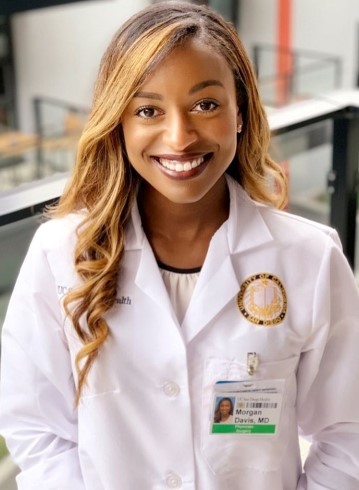
Alum Spotlight
"After serving as a research assistant in Dr. Sufka's lab, I directed my own study that helped establish a valid animal model of migraine that may ultimately lead to treatment of the third most common medical condition in the world! Working with Dr. Sufka inspired me to also conduct medical research."
Dr. Davis earned her M.D. from the University of Mississippi School of Medicine and completed her residency at UC-San Diego in the Department of Otolaryngology - Head and Neck Surgery. Her research interests included facial analysis, tissue regeneration and healing especially in minority populations, head and neck oncology, and vestibular migraine. She then became a Facial Plastic and Reconstructive Surgery Fellow at Johns Hopkins.
Dr. Morgan Davis | BA in Biochemistry, minor in Neuroscience '19
Facial Plastic and Reconstructive Surgery Fellow, Johns Hopkins
What You Can Do After Graduation
- Medical or Nursing School
- Graduate School
- Asst. Behavioral Tech, Brent Woodall Foundation for Exceptional Children
- Patient Care Coord., Nephrology Assoc. of N. Illinois/Indiana
- Clinical Research Associate, IQVIA
- Biopharmaceutical Sales Representative, Amgen
- Consultant, Accessible Health
- Electrical Engineer, Raytheon
- Neuropsychology Researcher, Methodist Rehab Center
- Medical Doctor/Resident, UC San Diego
Your Major + Neuroscience
UG
Understand what motivates people and why people behave the way that they do.
- Oxford
- Booneville
- DeSoto
- Tupelo
UG
Use scientific methods to understand and predict natural phenomena in the world around us.
- Oxford
UG
When you graduate with a Communication Sciences and Disorders degree at Ole Miss, you improve a person’s ability to communicate and improve their foundation for life.
- Oxford
- Online
UG
Cross disciplines. Connect Ideas. Create Insight.
- Oxford
- Booneville
- DeSoto
- Tupelo
UG
Combine three minors to create a customized major that fits your interests and goals.
- Oxford
- DeSoto
- Tupelo
- Booneville
- Grenada
UG
Combine the design and problem-solving skills of engineering with medical and biological sciences to advance healthcare treatment
- Oxford
Stay Connected with Neuroscience
Find out about neuroscience related events and activities on our Facebook channel.
Next Steps
Explore Affordability
We have a variety of scholarships and financial aid options to help make college more affordable for you and your family.
Apply to the University of Mississippi
Are you ready to take the next step toward building your legacy?