CMSE Programs, Projects, & Partnerships
CMSE programs and projects collaborate with many partners across the university, state, and nation.
Programs and Projects
The Center for Mathematics and Science Education (CMSE) is a grant-funded center working to provide professional development for teachers, STEM experiences for students, and opportunities for all to learn and grow together.
Current Programs
-
MS FIRST® Tech Challenge Robotics
FIRST® Tech Challenge teams design, build, and program robots to compete for awards (performance and outreach-based) on a 12′ X 12′ field, in an alliance format, against other teams. Teams, including coaches, mentors, and students, develop strategies and build robots based from a reusable metal platform powered by Android technology, on sound engineering principles.
Explore more about the FIRST® Tech Challenge -
Mobile Planetarium
The Mobile Planetarium Program is an innovative and unique opportunity provided by the CMSE. The best part is that this amazing experience happens without students ever having to leave school! Once your program is scheduled, the CMSE will bring the portable planetarium to your school for sessions of stargazing.
Discover more about the mobile planetarium -
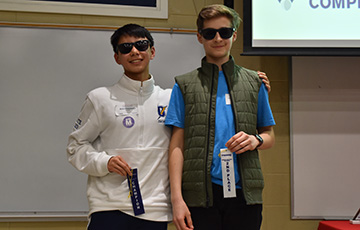
MATHCOUNTS® Competition
The MATHCOUNTS® Competition Program is a nationally recognized program designed to excite and challenge middle school students (6th, 7th, and 8th graders) through fun and challenging levels of mathematics competition. The CMSE hosts the Northeast, Northwest, Tombigbee, and Delta Chapter Competitions. The winners at the chapter competition level will move on to compete at the Mississippi MATHCOUNTS® Competition.
Learn more about MATHCOUNTS® -
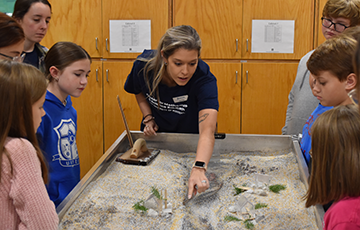
STEM Experiences
The Center for Mathematics and Science Educations offers three different STEM Experiences Programs: STEM Experts, STEM Explorations, and STEM Excursions.
Learn more about our STEM Experiences Programs -
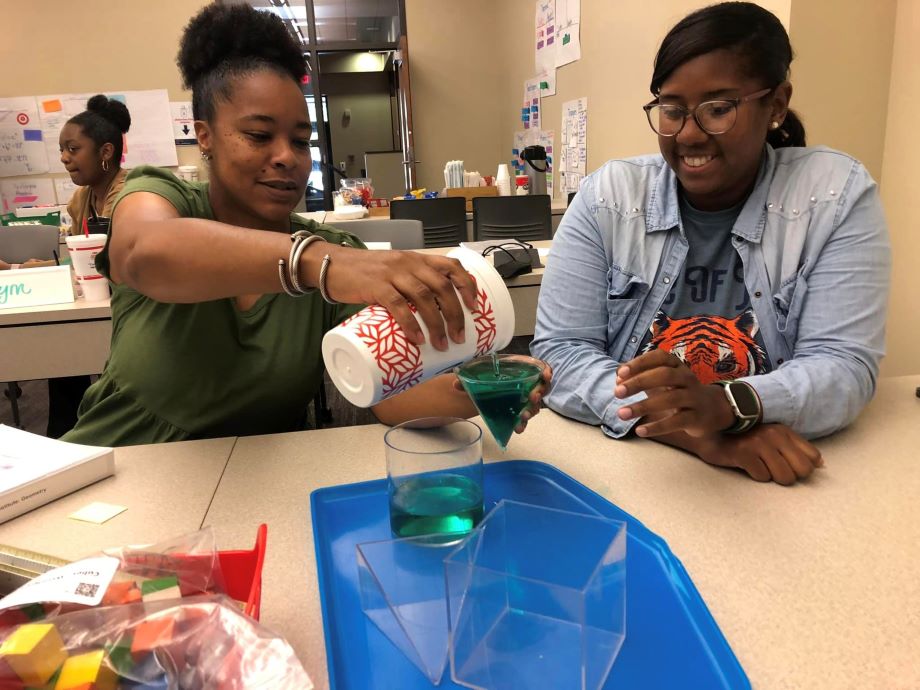
Middle Math Institutes (MMI)
The CMSE Middle Math Institutes are designed to engage educators in dissecting, understanding, and making connections to the mathematics content taught in grades 6-8. Successful completion of all four institutes will allow Mississippi educators to apply for a Supplemental Endorsement in Middle-Level Mathematics (Endorsement Code – 901).
Explore our Middle Math Institutes
Current Projects
-
STEM Teaching with Embedded Primary Sources (STEPS)
Help your students step back in time and explore the history of science, technology, engineering, and mathematics through the Library of Congress’ collection of primary sources. In this two-day workshop, participants will learn how to find, evaluate, and use historical primary sources from the Library of Congress in their science, math, or other STEM lesson planning.
Learn more about STEPS -
Mississippi STEM Education Alliance (MSEA)
The Mississippi STEM Education Alliance (MSEA) is a five-year statewide initiative led by the Center for Mathematics and Science Education (CMSE) at the University of Mississippi. Funded by the National Science Foundation’s National STEM Teacher Corps Pilot Program, it brings together teachers, universities, districts, nonprofits, and industry partners to improve mathematics and data literacy education across Mississippi.
Learn more about MSEA
Past CMSE Projects
We're proud of all the things we've accomplished. Find information about our past projects below.
This two-and-a-half-day camp offered high school students and educators the opportunity to learn more about manufacturing and STEM careers within the accounting, business, and engineering sectors.
Student Leadership Program
Make It Mississippi was a competitive, residential summer experience for rising juniors and seniors in high school interested in Manufacturing and STEM careers within the accounting, business, and engineering sectors.
Students worked directly with faculty and staff from the Haley Barbour Center for Manufacturing Excellence at The University of Mississippi. This was a unique, hands-on opportunity to learn about leadership positions in manufacturing, engineering, supply-chain management, financial analysis, management accounting, and others. Students honed their critical-thinking, problem solving, and communication skills.
Summer Leadership Program for Educators
Make It Mississippi Summer Leadership Program for Educators offered a unique hands-on experience for teachers to learn about new pathways in the manufacturing sectors. This was a unique, hands-on opportunity to learn about the manufacturing industry.
On the University of Mississippi campus, educators worked directly with faculty and staff from the Haley Barbour Center for Manufacturing Excellence and Center for Mathematics and Science Education to help align industry needs with content for the Mississippi College and Career Readiness Standards.
The Haley Barbour Center for Manufacturing Excellence, in partnership with the Center for Mathematics and Science Education funded the Make It Mississippi Manufacturing Leadership Program in 2025.
The Mathematics Mentoring Academy for Teachers of Exceptional Students was a professional learning opportunity provided by the Center for Mathematics and Science Education for mathematics co-teaching teams (one general education math teacher and one special education teacher from the same school).
The goal of the MathMATES project was to support teachers by:
- Strengthening teachers’ mathematical content knowledge, specifically related to conceptual understanding
- Reinforcing collaboration between math teachers and special education teachers using a collaborative consultation model; and,
- Fusing the collective knowledge of the team along with the individual strengths of each team member to best meet the diverse learning needs of exceptional students.
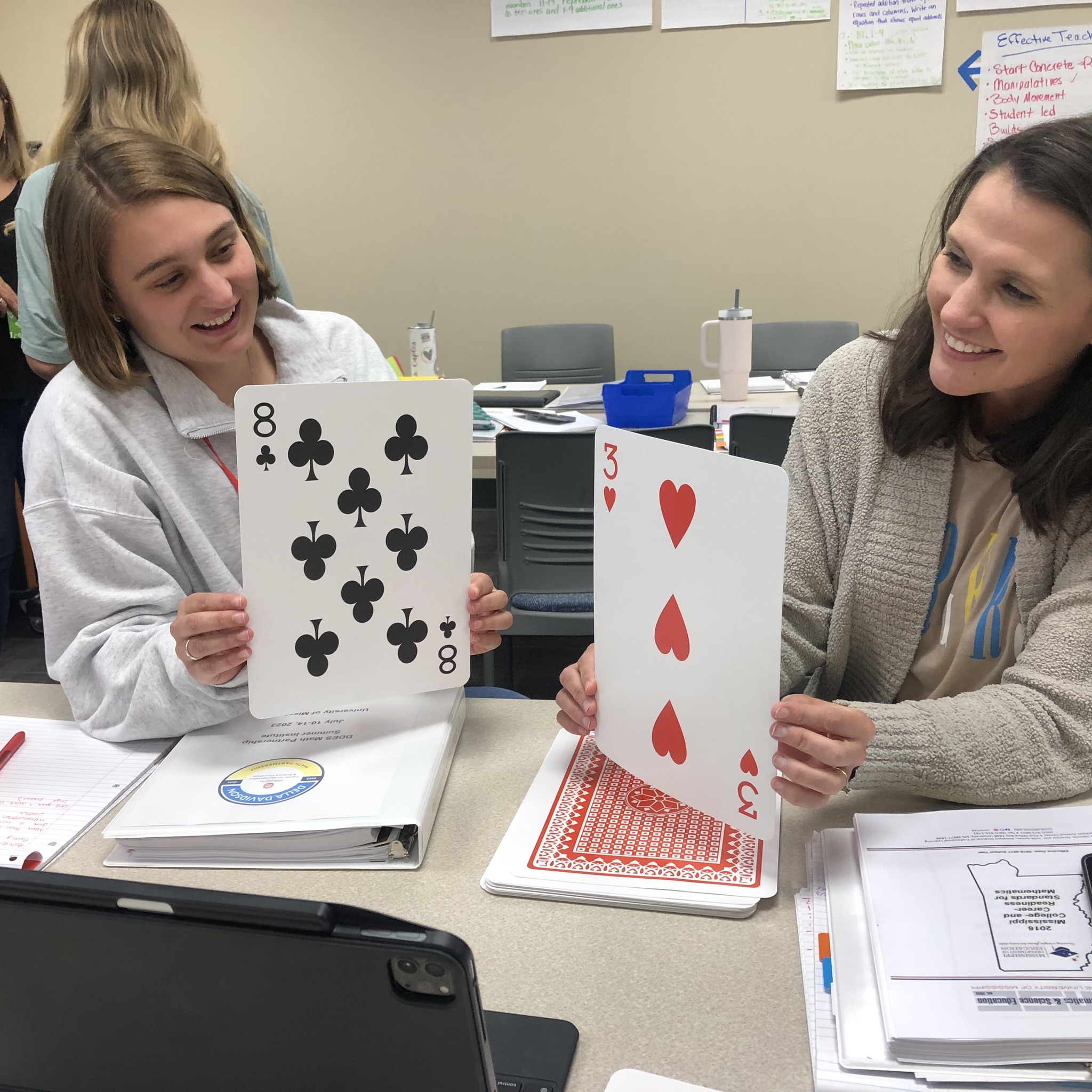
The DDES Math Partnership program was a professional development project for the 2023-2024 academic year between the CMSE and Della Davidson Elementary School in the Oxford School District.
This partnership was designed to analyze the impact of long-term mathematics professional development within a whole-school setting in teachers’ perceptions of mathematics teaching and learning.
This project was funded in part by the Mississippi Space Grant Consortium.
The Mississippi Forge Forward initiative was a grant funded by the U.S. Department of Defense which fostered collaboration between the Haley Barbour Center for Manufacturing Excellence and the Center for Mathematics and Science Education both located on the University of Mississippi campus.
- Two summer programs were offered in 2022.
- The student summer experience engaged “work-eligible” students in hands-on experiences focused on how cutting-edge technology provides a new pathway for manufacturing.
Educators attended a summer institute focused on providing information about the manufacturing industry to enable instructors/teachers/counselors to prepare the next generation of the manufacturing workforce for the state of Mississippi.
The Building Content Knowledge of Elementary Teachers of Science (BuCKETS) Project was an National Science Foundation IUSE: EHR Exploration and Design Tier for Engaged Student Learning project designed to bridge the gap between research, best practices, and curricular supports in the undergraduate classroom for preservice elementary teachers (PSETs) at the University of Mississippi.
Using a Design-Based Research (The Design-Based Research Collective, 2003) approach with an embedded treatment-control design, BuCKETS provided robust learning experiences for non-science majors, specifically preservice elementary teachers (PSETs) majors, resulting in
- increasing PSETs’ content knowledge (CK) in science,
- increasing science pedagogical content knowledge (PCK), and
- hanging teaching practices related to non-major science undergraduates.
This project was implemented 2018 through 2022.
The UM Noyce Teachers for a New Tomorrow (TNT) Scholarship Program at the University of Mississippi was funded by the National Science Foundation (NSF) Robert Noyce Program.
- The scholarship program (2012-2021) was part of the Professional Learning Division of the Center for Mathematics and Science Education.
- Qualified recipients received a scholarship in the amount of up to $10,000 per term (not to exceed the cost of attendance).
Upon completion of the teacher education program, Noyce Scholars committed to teaching in any public school in Mississippi (or a high-need school district in any other state) for one year for each term scholarship funds were received.
In 2018 and 2019, the Science Teacher Leaders Academy (STLA) provided a year-long professional development program for elementary and secondary science teachers.
- The goal of both academies were to establish leaders across the state who are knowledgeable about the 2018 Mississippi College-and Career- Readiness Standards for Science.
- Both programs sought to develop leaders who understood and were willing to share research-based practices for implementing core elements such as Science and Engineering Practices and Crosscutting Concepts with other teachers at the school, district, and state level.
STLA and STLA 2 were funded in part by the Mississippi Space Grant Consortium.
The Creating Continuity and Connections across Content (C4) project envisioned consistent and coherent mathematics instruction across kindergarten through eighth grade mathematics classrooms in which students engaged in learning through problem solving and teachers utilized ongoing formative assessment.
The year-long professional development course for teachers consisted of the following: a two week summer institute, three academic follow-ups, an annual conference, and online interaction and resources.
The goals of this project were to:
- Provide quality, research- based mathematics professional development for teachers in grades K-8 that deepened the content knowledge of the teachers in order for them to better prepare students to become college and career ready.
- For teachers to gain a deeper understanding of the progression of content as it is developed across the elementary and middle school grade levels.
- For participants to enhance their understanding of formative assessment and how to act on formative assessment data when planning instruction.
C4 was funded from 2016-2018 by the Mississippi Department of Education Math & Science Partnership program.
The Developing Excellence in Education through Professional Learning Communities (DEEP LC) project focused on supporting professional learning communities among 4th-8th grade teachers at partner school sites.
Participants learned effective way to foster a classroom environment that engaged students by having them develop a deep understanding of mathematics concepts, making sense of problems, constructing viable arguments, and making use of the structure of mathematics.
DEEP LC was funded from 2013-2016 by the Mississippi Department of Education Mathematics and Science Partnership program.
Promoting Innovation in Mathematics Education (PrIME) was funded from 2010 to 2013 to support mathematics instruction in 4th-8th grades.
- Project PrIME mobilized more than 100 Mississippi educators, primarily in high-needs districts, to undergo in-depth summer institutes that focused on mathematics content knowledge and practices.
- Over 20,000 students were impacted by the 131 teachers who attended the summer institutes.
- Eighty-seven percent of teachers in attendance represented high-need schools.
The Mississippi Department of Education Math & Science Partnership program funded Project PrIME.
In 2010 and 2011, the Mathematically Proficient Leaders in Elementary Schools (MaPLES) project brought together second and third grade mathematics teachers in Lee County, Mississippi.
The instructors utilized content-focused workshops that enhanced their mathematical knowledge and increased their average performance on a university-administered content exam by more than four points just after one year.
Seventeen teachers participated in MaPLES that impacted three hundred and eighty students. There was a seventeen percent increase in students scoring proficient or advanced on the 3rd grade state mathematics assessment.
This project was funded by a U.S. Congressional Initiative.
Collaborative Partners
We appreciate the funding and programmatic support of our collaborative partners.