Undergraduate

Environmental Studies, B.A.

Prepare for careers dedicated to solving environmental challenges and building a sustainable, just, and climate-resilient future.

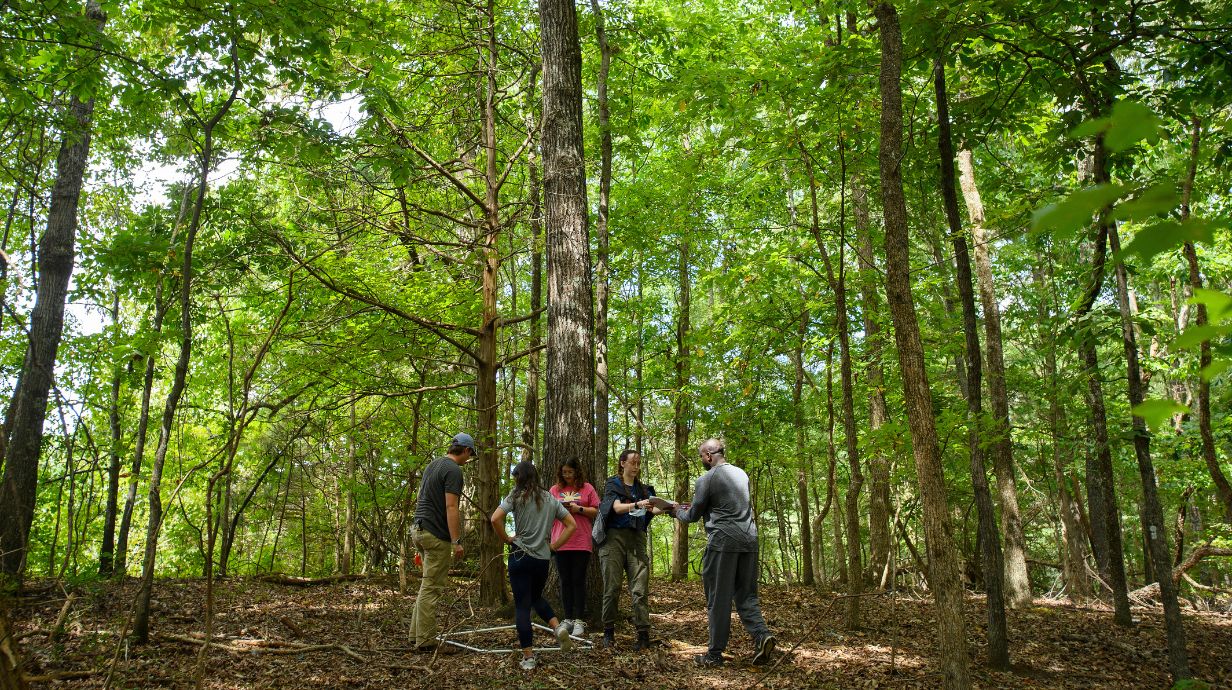
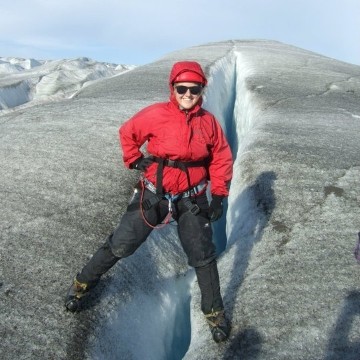
Students get hands-on experience in the forest

About the Bachelor of Arts in Environmental Studies

After nearly two decades of offering an Environmental Studies minor, the College of Liberal Arts now offers the interdisciplinary Bachelor of Arts in Environmental Studies. Students evaluate vital environmental issues of today and learn how to become part of the range of innovative responses to current and future environmental challenges. 

Through coursework in the natural sciences, social sciences, and humanities, students build a comprehensive understanding of the scientific, social, and cultural dimensions of humanity's relationship to the environment. They gain knowledge of:

  • Environmental science, including the ecological, biological, chemical, atmospheric, and geological systems involved in climate change, species conservation, and pollution mitigation. 
  • The political, social, and psychological dimensions of human-environmental interactions and policy design.
  • The ethics of human-environment interactions and the role of the environment in human history, philosophy, religion, literature, and art.

Beyond the classroom, our students gain hands-on experience through internships and may also earn credits through fieldwork and study abroad.

On this Page…

    Program Information

    Degree

    B.A. in Environmental Studies

    Required Credit Hours

    120

    Program Type

    Major

    Minor

    Program Location

    Oxford

    Enhance Your Academic Experience 

    According to national surveys, employers are more likely to hire students who have: 

    • had professional internships, 
    • worked with people from diverse backgrounds on community service, 
    • collaborated with peers on projects, 
    • taken multiple courses with significant writing,
    • produced a senior project or thesis, and
    • studied abroad.

    These experiences are the core of the liberal arts skills of thinking, communicating, interpersonal skills, and understanding the world around us. Showcase and enhance these skills in an internship opportunity for that first step into the professional world. 

    Environmental Studies students combine coursework with hands-on, experiential learning opportunities. Environmental studies students have had internship experiences with a broad range of organizations, including UM Office of Sustainability, Gulf Restoration Network, The Nature Conservancy, Citizens Climate Lobby, The Black Earth Institute, Energy and Natural Resources Division of the MS Development Authority, Delta Wind Birds, Homeplace Pastures Farm, Farmstead Florals, NIHT, Inc. (carbon credit sales), Mississippi Farm to School Network, and Oxford Community Market.

    ENVS 385: Internship in Environmental Studies

    Find out what you need to know about internships. Learn about the credit hour expectations and how to create a work arrangement with a supervisor.

    The Internship in Environmental Studies (ENVS 385) provides a unique opportunity to gain valuable pre-professional training through hands-on experience in environment-related work outside of the traditional classroom.

    ENVS 385 is a Z-graded, three-credit-hour course that may be repeated with approval. Envs majors are required to complete at least one internship during their studies. Envs minors are encouraged but not required to complete an internship for elective credit (however internship credit will not count toward a specific requirement in the humanities, natural sciences, or social sciences).

    Requirements and Process for Enrolling in and Receiving Credit for an ENVS Internship

    Students enroll in ENVS 385 in the semester after completion of the internship. The steps are as follows:

    1. Before you begin the internship: You and the outfit you’re interning for will fill out the internship agreement form and submit it to Envs for approval prior to the start of the internship. Eligible internships must include a significant environmental component and entail at least 120 hours of internship work. All internships must be pre-approved by Envs before the start of the internship; any arrangement not pre-approved will not be eligible for credit.
    2. During your internship: You and the outfit you’re interning for must ensure that your work fulfills the terms of the internship outlined in the internship agreement form.
    3. At the conclusion of the internship: Your supervisor at the interning site must complete the Final Intern Evaluation Form. A “unsatisfactory” assessment constitutes grounds to deny eligibility for enrollment in or credit for ENVS 385.
    4. Within a year of completing your internship: Enroll in ENVS 385 and complete two independent projects during the semester in which you are enrolled: an original 6-8 page (~1800-2400 word) reflection analyzing your internship experience and an original 10-page (~3000 word) academic research paper on a larger environmental issue toward which your internship work contributed (or was at least relevant). If applicable, students may also submit any work they produced during the internship as further evidence of the writing ability and/or analytical skills they employed as an intern.
    5. Upon successful completion of the requirements for ENVS 385 you will receive Envs credit for your internship.

    The awarding of academic credit is dependent on fulfillment of each of the requirements stated above. Please contact the Environmental Studies program at envs@olemiss.edu for questions regarding ENVS 385.

    Learning Objectives

    The purpose of ENVS 385 is to integrate academic learning with the practical experience that students gain during an internship. The internship itself constitutes the practical component of the course; reflection upon the experience and the synthesis of theory and practice take place during the academic phase, in ENVS 385. Academic credit is granted for completing a series of academic assignments that are based on the internship experience.

    Upon successful completion of ENVS 385, students will have developed:
    • a reflective and critical understanding of what it means to work in an environment-related field
    • the ability to communicate in writing their understanding of an environmental issue related to the internship experience

    Before starting the internship

    You and the outfit you’re interning for will fill out the internship agreement form below and submit it to Envs for approval prior to the start of the internship. All internships must be pre-approved by Envs before the start of the internship; any arrangement not pre-approved will not be eligible for credit.

    Internship Agreement Form

    At the conclusion of the internship

    Your supervisor at the interning site must complete the Final Intern Evaluation Form below. A “unsatisfactory” assessment constitutes grounds to deny eligibility for enrollment in or credit for ENVS 385.

    Final Intern Evaluation Form

    Find Out About Student Opportunties in the Office of Sustainability

    There’s never been a better time to get involved as a student on campus with sustainability initiatives. Whether you are a freshman, a senior, or graduate student, there are opportunities for you.

    Get Involved

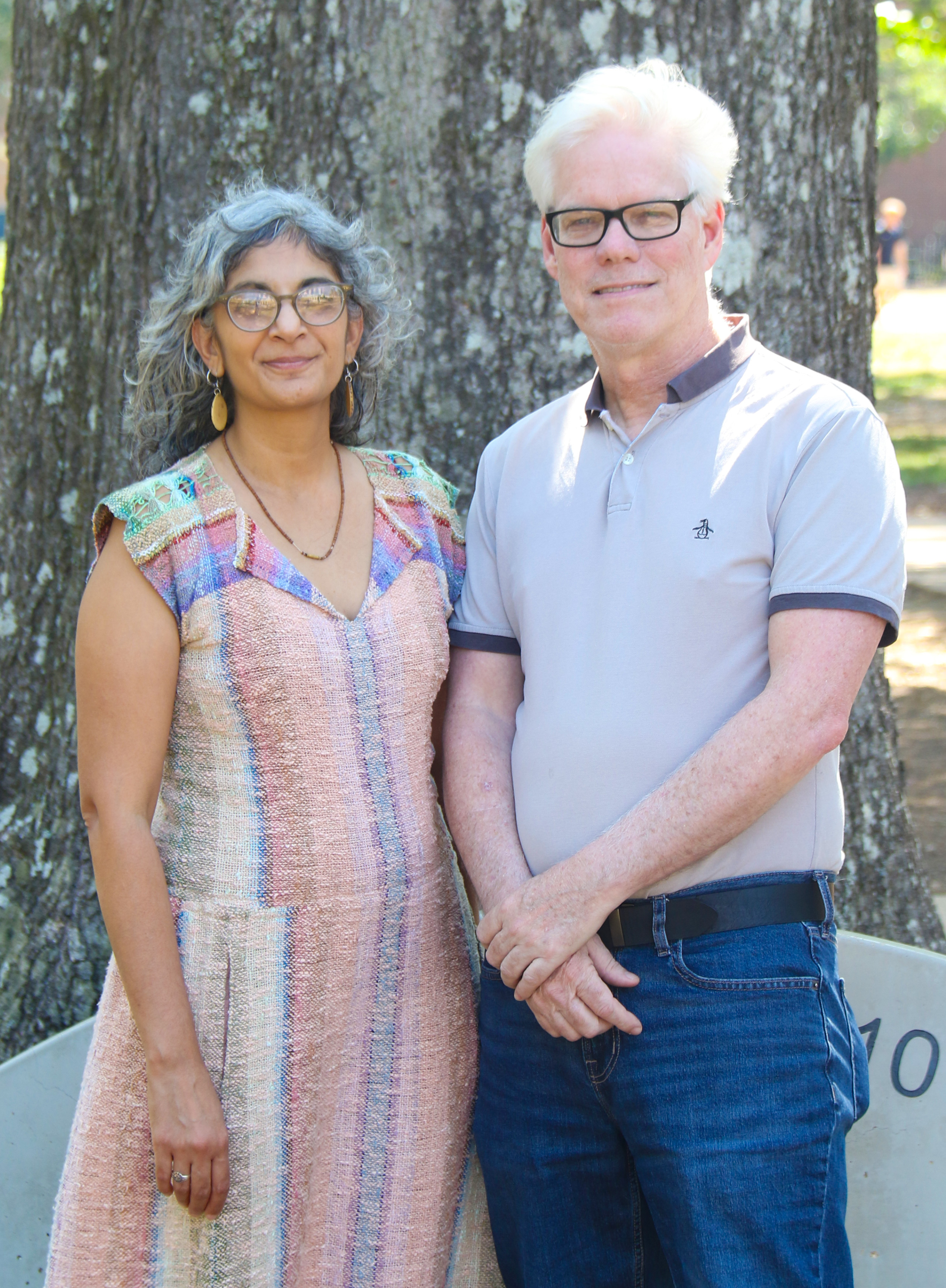
    Dr. Ellis and Dr. Kreisel sit outside Bondurant Hall.

    A Word from Our Directors

    "The Environmental Studies program at UM prepares students to become innovators and leaders in an effort to meet environmental challenges head-on. We believe it’s crucial to train students for careers that help create sustainable, just, and climate-resilient communities in Mississippi and beyond. As the shift to sustainability continues to become a major driver of economic growth, technological innovation, and social policy, we aim to ensure that University of Mississippi students are prepared to succeed in the new climate economy."

    Dr. Cristin Ellis and Dr. Deanna Kreisel

    Co-Directors of the Environmental Studies Program

    Affiliated Faculty

    Meet the faculty members teaching Environmental Studies courses.
    Jeffery Bednark

    Jeffery Bednark

    • Instructional Assistant Professor of Psychology
    John Brewer

    John Brewer

    • Professor of Biology and Interim Director of the Interdisciplinary Program in Environmental Studies
    James Cizdziel

    James Cizdziel

    • Chair and Professor of Chemistry and Biochemistry
    Cristin Ellis

    Cristin Ellis

    • Associate Professor of English
    Andy Harper

    Andy Harper

    • Director of Media & Documentary Projects and Associate Professor of Practice
    Jason Hoeksema

    Jason Hoeksema

    • Professor of Biology, Associate Chair and Graduate Program Coordinator
    Erik Hom

    Erik Hom

    • Associate Professor of Biology
    Vivian Ibrahim-Dinius

    Vivian Ibrahim-Dinius

    • Croft Associate Professor of History and Director of the Office of National Scholarship Advisement
    Laura Johnson

    Laura Johnson

    • Professor of Psychology
    Deanna Kreisel

    Deanna Kreisel

    • Associate Professor of English
    Scott Mackenzie

    Scott Mackenzie

    • Director of Undergraduate Studies and Associate Professor of English
    Marcos Mendoza

    Marcos Mendoza

    • Associate Professor of Anthropology and Co-Director of the Interdisciplinary Minor in Latin American and Caribbean Studies
    Timothy Menzel

    Timothy Menzel

    • Instructional Assistant Professor of Biology
    Aimee Nezhukumatathil

    Aimee Nezhukumatathil

    • Professor of English and Creative Writing
    Michel Ohmer

    Michel Ohmer

    • Assistant Professor of Biology
    Karen Raber

    Karen Raber

    • Distinguished Professor of English
    Ishana Ratan

    Ishana Ratan

    • Assistant Professor of Political Science
    Jason Ritchie

    Jason Ritchie

    • Associate Professor of Chemistry & Biochemistry and Stefani-Miller Chair for Teaching Excellence
    Nora Sylvander

    Nora Sylvander

    • Croft Assistant Professor of Anthropology and International Studies
    Jesse Tune

    Jesse Tune

    • Associate Professor of Anthropology and Director, Center for Archaeological Research
    Zachary Vereb

    Zachary Vereb

    • Assistant Professor of Public Policy Leadership
    Shaila Wadhwani-Greenhalgh

    Shaila Wadhwani-Greenhalgh

    • Instructional Assistant Professor of Liberal Arts
    Peter Zee

    Peter Zee

    • Associate Professor of Biology

    Where are our Environmental Studies graduates working?

    Here is a sample of positions held by alumni of the Environmental Studies minor. 

    Law, Policy, and GovernmentEnvironmental Research
    Legislative Policy Fellow, US SenateResearcher, Hawaii Institute of Marine Biology
    Environmental Policy Consultant, US House of RepresentativesResearcher, Savannah River National Lab
    Environmental Planner, New Orleans Regional Planning CommissionResearcher, Auburn University College of Forestry, Wildlife, and Environment
    Assistant City Planner, City of StarkvilleWildlife Biologist, MS Dept of Wildlife, Fisheries, and Parks
    Senior Attorney, FL Dept of Environmental ProtectionConservationist, MS Museum of Natural Science
    Energy Transactional and Regulatory Attorney, Balch & Bingham LLP
    Environmental Education and AdvocacyPrivate Sector Work
    Director, Cedar Crest Environmental Education CenterInvestor Relations, GRC SinoGreen Fund
    Environmental Educator, South Carolina Dept of Natural ResourcesEnvironmental Sustainability Program Manager, Cox Enterprises, Inc
    Environmental Organizer, Green CorpsWater Resources Engineer, Gresham Smith
    Program Coordinator, Working LandscapesProgram Director, Yellow Dog Flyfishing
    Horticulturist, AquaTerra Designs, Inc

    Alumni Spotlight

    Meet some of the alumni of the minor in Environmental Studies, an interdisciplinary minor that has been offered for nearly two decades. 

    Choosing a Minor

    College of Liberal Arts students earning the B.A. degree complete a minor field of study (or double major.) Combine your study of the environment with many other subjects based on your interests and career goals. Here are a few to consider.

    Annabelle Harris

    Welcome to the College of Liberal Arts

    As Coordinator of Student Recruitment for the College of Liberal Arts, I work with students, and their parents, who are interested in attending UM for their undergraduate degrees. I coordinate personalized visits to our departments, answer questions about the majors and programs in the CLA and handle all recruitment communications from the CLA. Please feel free to send me any questions you may have. It is my job to make sure you have everything you need to make an informed decision on where to spend your college career, and I hope it will be with the College of Liberal Arts at the University of Mississippi!

    Annabelle Harris

    CLA Coordinator of Student Recruitment

    Future CLA Students

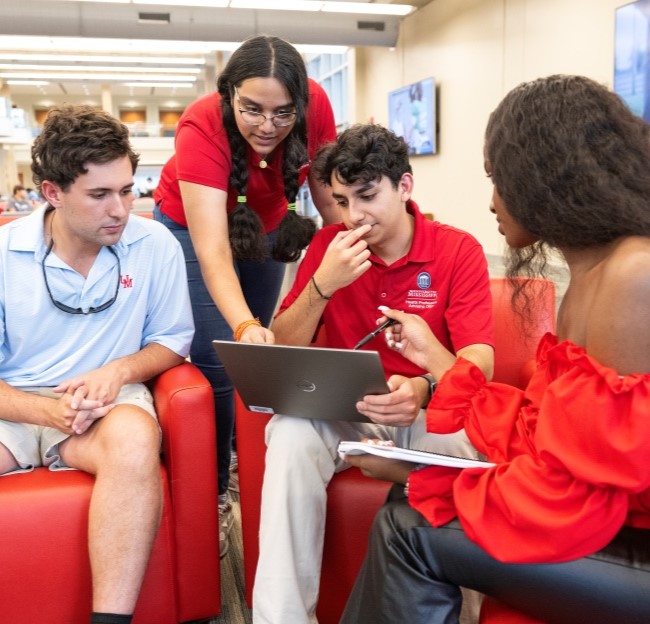
    image of a group of students studying together in the Union

    College of Liberal Arts Undergraduate Students

    We invite future undergraduates to learn about the College of Liberal Arts, the value of the liberal arts education, our programs, career opportunities, and resources to help you succeed. You can also request a personalized degree sheet. 

    Next Steps

    Explore Affordability

    We have a variety of scholarships and financial aid options to help make college more affordable for you and your family.

    Apply to the University of Mississippi

    Are you ready to take the next step toward building your legacy?