
Center for STEM Learning
The Center for STEM Learning at the University of Mississippi strengthens STEM education through innovative teaching, student support programs and interdisciplinary collaboration.
Email:
jfdwyer@olemiss.eduOffice Location:
4th Floor Duff Center (Suite D)Phone:
662-915-4025Office Hours
8:00 AM - 5:00 PM
- Home
- Departmental Directory
- Center for STEM Learning
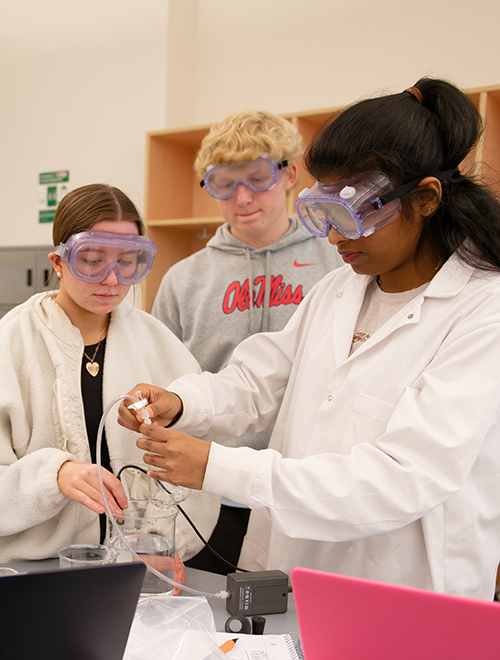
Advancing STEM Teaching and Learning
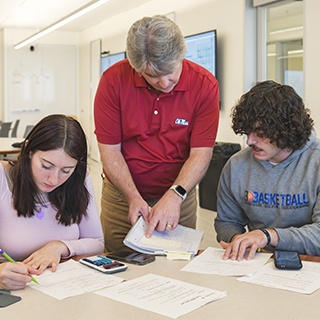
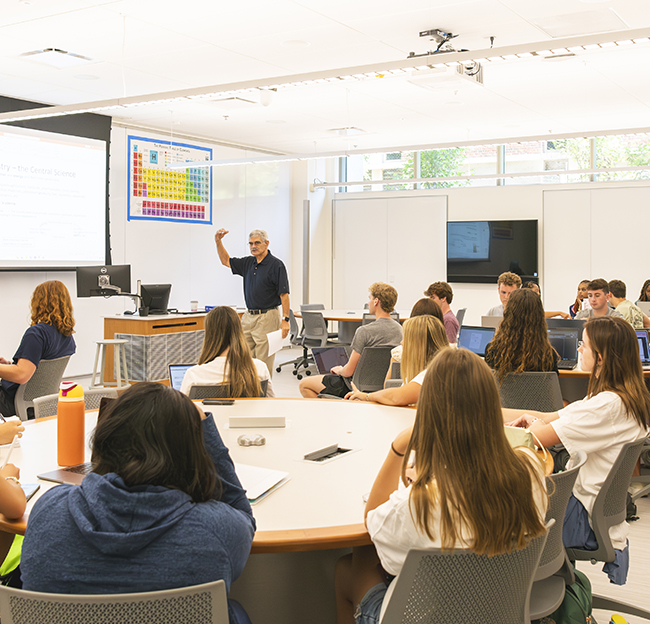
Innovative Teaching
The center works with instructors to develop teaching approaches that encourage students to participate actively in the learning process through discussion, collaboration and hands-on problem solving.
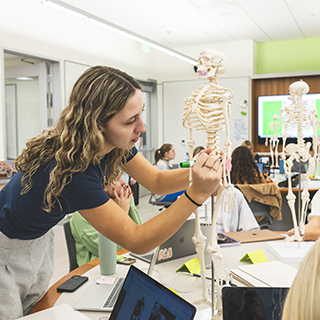
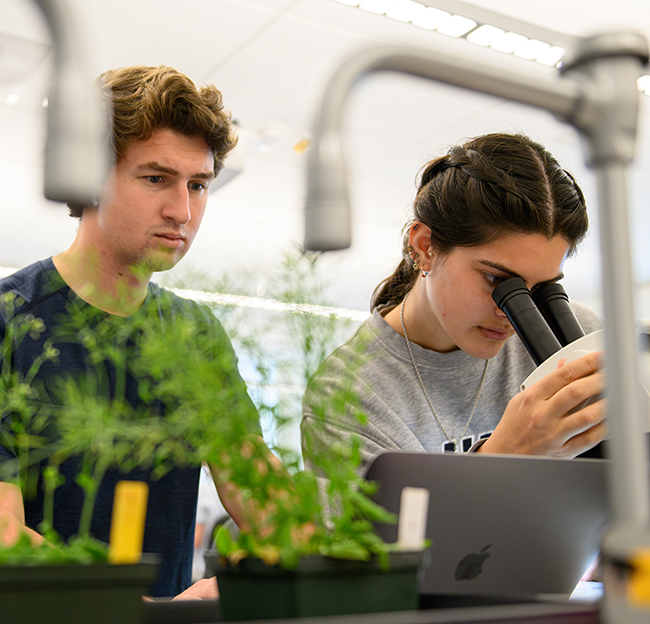
Connecting Lecture and Laboratory Learning
Many STEM courses combine lecture and laboratory experiences into a single learning environment. This approach allows students to immediately apply new concepts through experimentation and data analysis.
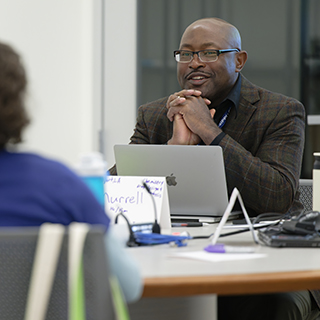
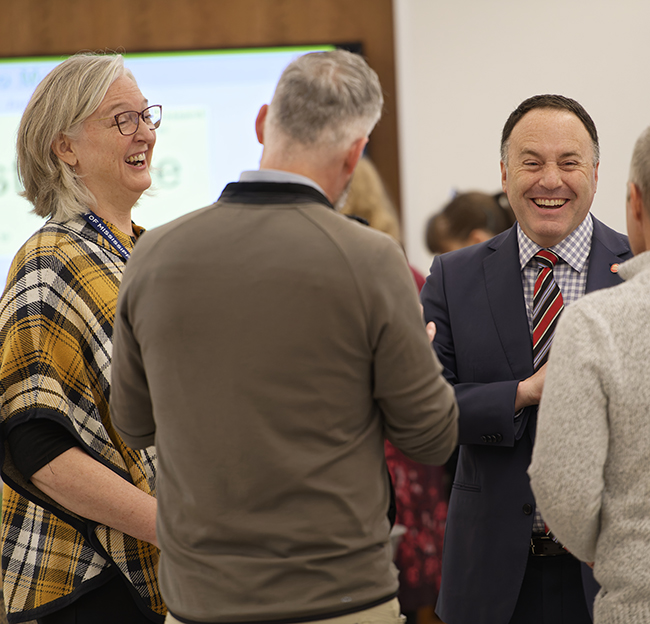
Faculty Collaboration Across Disciplines
The center helps connect faculty from different STEM fields to share ideas, develop new teaching strategies and strengthen curriculum design.
About the Center
Learn more about the Center for STEM Learning, including who we serve and how our work supports STEM education at the University of Mississippi.
Vision
The Center for STEM Learning works to create a campus environment that promotes and enhances teaching and learning in the STEM disciplines and supports all initiatives that facilitate that vision, with an emphasis on activities that support all learners in the STEM disciplines.
Mission
The Center for STEM Learning strives to promote and enhance teaching and learning in the STEM disciplines and increase recruitment and retention of students from underserved populations in the STEM disciplines. That mission is achieved through initiatives such as pedagogical and curricular enhancement, optimal use of the Duff Center facilities, educational research, faculty development and reward structures, community outreach, K-12 teacher education, and fundraising.
Students
The center helps create engaging learning environments that support student success in STEM courses and encourage exploration of scientific ideas.
Faculty
Faculty partners work with the center to explore innovative teaching strategies and strengthen STEM curriculum design.
Academic Departments
Departments collaborate with the center to improve course structures, enhance learning outcomes and support interdisciplinary teaching.
Community and K–12 Partners
Through outreach and partnerships, the center helps promote STEM learning opportunities for schools and communities across Mississippi.
- STEM Experts (Pre-K-12) is a unique opportunity in which the CMSE helps bring STEM Faculty and/or Ambassadors to a classroom for engaging lessons, dynamic demonstrations, and/or intriguing lectures.
Goal 1: Enhance teaching and learning in the STEM disciplines.
Objectives- Collaborate with the Center for Excellence in Teaching and Learning to facilitate workshops for faculty and students on pedagogy, assessment, and active learning.
- Increase faculty familiarity with evidence-based STEM teaching strategies.
- Facilitate dialogue on required courses and degree pathways.
- Optimize use of the Duff Center facilities, liaising with the building manager and STEM laboratory group.
- Conduct research on teaching effectiveness and learning outcomes.
- Increase passing rates in STEM gateway courses.
- Increase the number of students majoring in STEM fields and completing STEM degrees.
- Develop interdisciplinary courses.
- Increase opportunities for undergraduate research in the STEM disciplines.
- Collaborate on pedagogical training of graduate teaching assistants.
- Create an internal pedagogy advisory group to include faculty and students.
Goal 2: Increase recruitment and retention of students from underserved populations in the STEM disciplines.
Objectives
- Target K-12 outreach to schools serving underserved populations.
- Collaborate with other campus units to provide pre-college bridge programs in critical STEM subjects.
- Collaborate with community colleges and UM STEM departments on transfer pathways.
- Facilitate mentor training and mentoring programs for STEM majors.
- Collaborate with other campus units on services for first-generation and financially needy students.
- Collaborate with the School of Education on the recruitment and training of K-12 STEM teachers.
Goal 3: Develop programs and collaborate on community engagement.
Objectives
- Collaborate with other campus units to assist with after-school and summer programs for K-12 students.
- Collaborate with community colleges on STEM student recruitment.
- Facilitate tours of the Duff Center.
- Create and maintain visual and interactive artifacts throughout the Duff Center.
- Host seminars and facilitate dialogue on faculty reward systems for Engaged Scholarship.
- Seek donors to support community engagement.
- Develop and maintain an informative and engaging website and social media presence.
- Supplement website with interactive online STEM learning and publicity modules.
- Create an external advisory board to include business and K-12 interests.
- Hire an associate director/coordinator with expertise in community engagement.
Goal 4: Support faculty involvement in educational, teaching, and community-engaged scholarship.
Objectives
- Collaborate with the Center for Excellence in Teaching and Learning to facilitate workshops for faculty and students on pedagogy, assessment, and active learning.
- Host weekly seminars on STEM learning topics.
- Create STEM Learning Network.
- Create STEM Learning Fellows program.
- Facilitate dialogue on faculty reward systems.
- Create an internal faculty advisory board.
Goal 5: Lead and support fundraising for STEM learning initiatives.
Objectives
- Collaborate with the Office of Research and Sponsored Programs to facilitate workshops on grant writing.
- Provide mentorship on grant writing.
- Collaborate with grant writers on developing broader impacts for proposals.
- Collaborate with the Office of Research and Sponsored Programs on deadlines, budgets, and faculty assistance.
- Develop relationships with external donors.
- Hire program coordinator/grant writer.
Our Impact
- 2,000+ students learning and collaborating daily
- Interdisciplinary approaches to STEM education
- Faculty collaboration across campus
- Active learning environments for students
A Message from the Director
At the Center for STEM Learning, we are dedicated to advancing innovative, and evidence-based STEM education at the University of Mississippi. Our work supports students and faculty by strengthening teaching practices, fostering interdisciplinary collaboration, and promoting student success across STEM disciplines.
Jerry Dwyer
Director of the Center for STEM Learning and Professor of Mathematics
Meet Our Team
Jerry Dwyer
- Director of the Center for STEM Learning and Professor of Mathematics
James Durham
- Assistant Director of Instruction
Drew Windham
- Facility Manager of the Center for STEM Learning
Katie Mullins
- Learning Specialist
Meredith Pyle
- Learning Specialist
Darrienne Martin
- Administrative Assistant
Beckie Symula
- Instructional Professor of Biology and Faculty Fellow for STEM Learning
Brenda Prager
- Associate Professor of Chemical Engineering and Faculty Fellow for STEM Learning
Lydia Lytal
- Instructional Assistant Professor of Biology and Faculty Fellow for STEM Learning